Bronze corydoras
The bronze corydoras, Corydoras aeneus, is a small armoured catfish from South America, found across a very wide range from Colombia to Argentina.
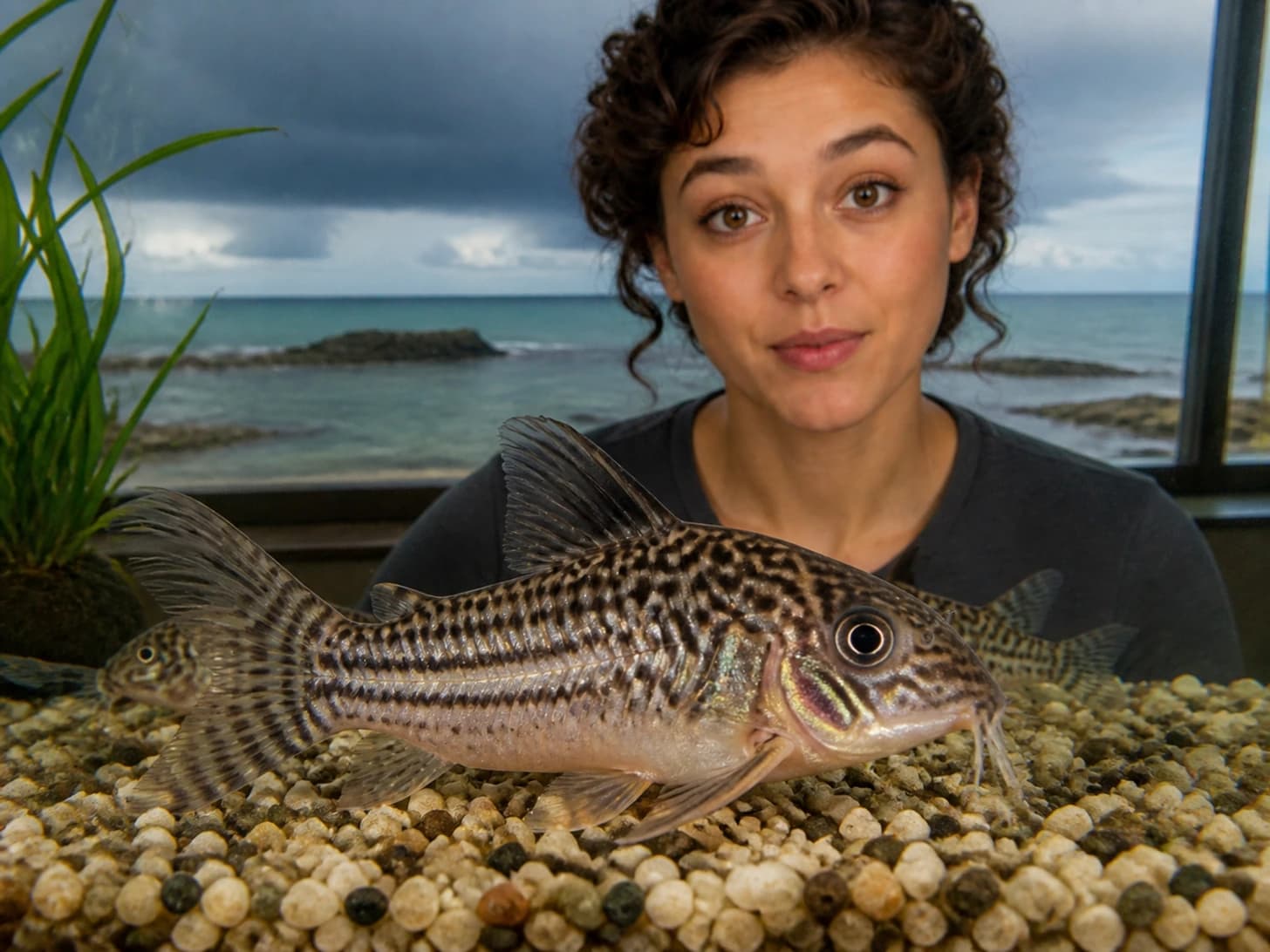
It is covered in overlapping bony plates rather than scales, and has three pairs of sensitive barbels around the mouth for finding food in sand.
It reaches six or seven centimetres and lives five to ten years, sometimes considerably longer. Corydoras are shoaling animals and are visibly happier in numbers — a group of six or more will forage together, rest in a pile and periodically dash to the surface to gulp air, which they absorb through the gut and which is entirely normal behaviour.
- Origin
- South America, from Colombia to Argentina
- Adult size
- 6–7 cm
- Lifespan
- 5–10 years, often longer
- Minimum tank
- 75 litres for a group of six or more
- Substrate
- Soft sand — gravel wears the barbels away
- Temperature
- 22–26°C
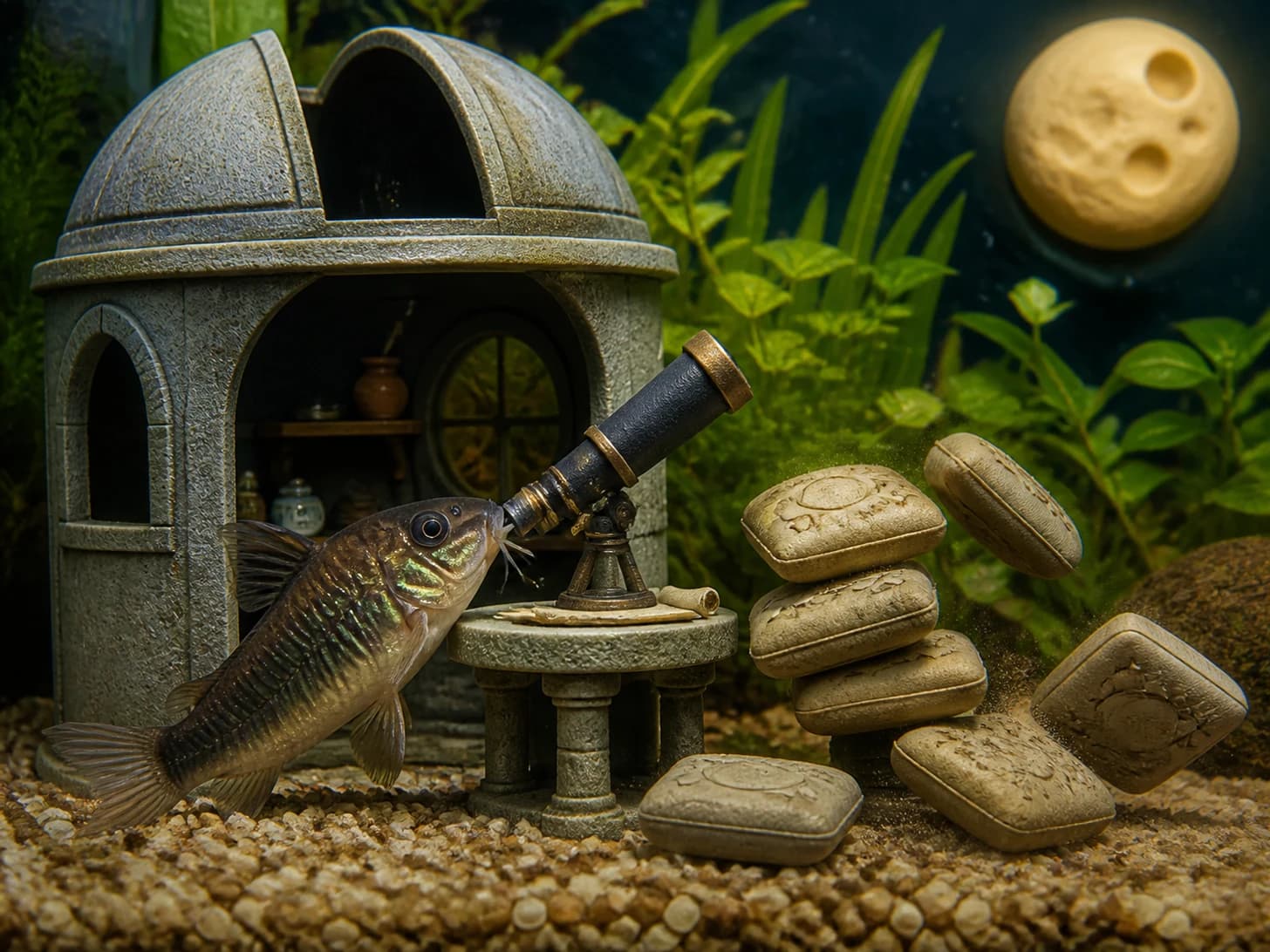
2 bronze corydoras photos, newest first
Living with a bronze corydoras
Sand, not gravel. This is the one thing that matters most and the one most often got wrong: corydoras feed by pushing their barbels into the substrate, and sharp gravel erodes them until they are stubs, after which the fish cannot find food properly and infection follows.
Keep six at an absolute minimum. Ones and twos are visibly subdued.
They are not a clean-up crew. A corydoras needs its own sinking food — waiting for leftovers from the fish above is how they slowly starve in an otherwise well-kept tank.
Leave a gap between the water and the lid. They surface to gulp air, and a tank filled to the brim traps them.
Occasional surface dashes are normal. Constant ones, with rapid gill movement, mean the water is bad.
General guidance, not veterinary advice. Individual fishs vary, and anything about a specific animal is a question for a vet who has seen it.
Worth reading alongside this
More fish by breed
Every fish breed somebody has posted a photo of.