Black moor
The black moor is a fancy goldfish variety: a velvety black telescope-eyed fish with protruding eyes set on stalks, an egg-shaped body and a flowing double tail.
It was developed in China and refined in Japan, where the telescope eye is called demekin.
It reaches 15 to 20 centimetres and lives ten to fifteen years or more. The protruding eyes look dramatic and they come at a cost: a black moor sees poorly, far worse than a single-tailed goldfish, and its rounded body makes it a slow and clumsy swimmer. Both facts shape how it has to be kept. Many also fade from black towards bronze or orange as they age, particularly in warmer water.
- Origin
- China, refined in Japan as the demekin
- Adult size
- 15–20 cm
- Lifespan
- 10–15 years
- Minimum tank
- About 150 litres for one, 75 litres more per fish
- Temperature
- 18–22°C — cold water, no heater needed
- Note
- Poor eyesight and slow swimming; keep with fancies only
Related: Goldfish · Black skirt tetra
3 black moor photos, newest first
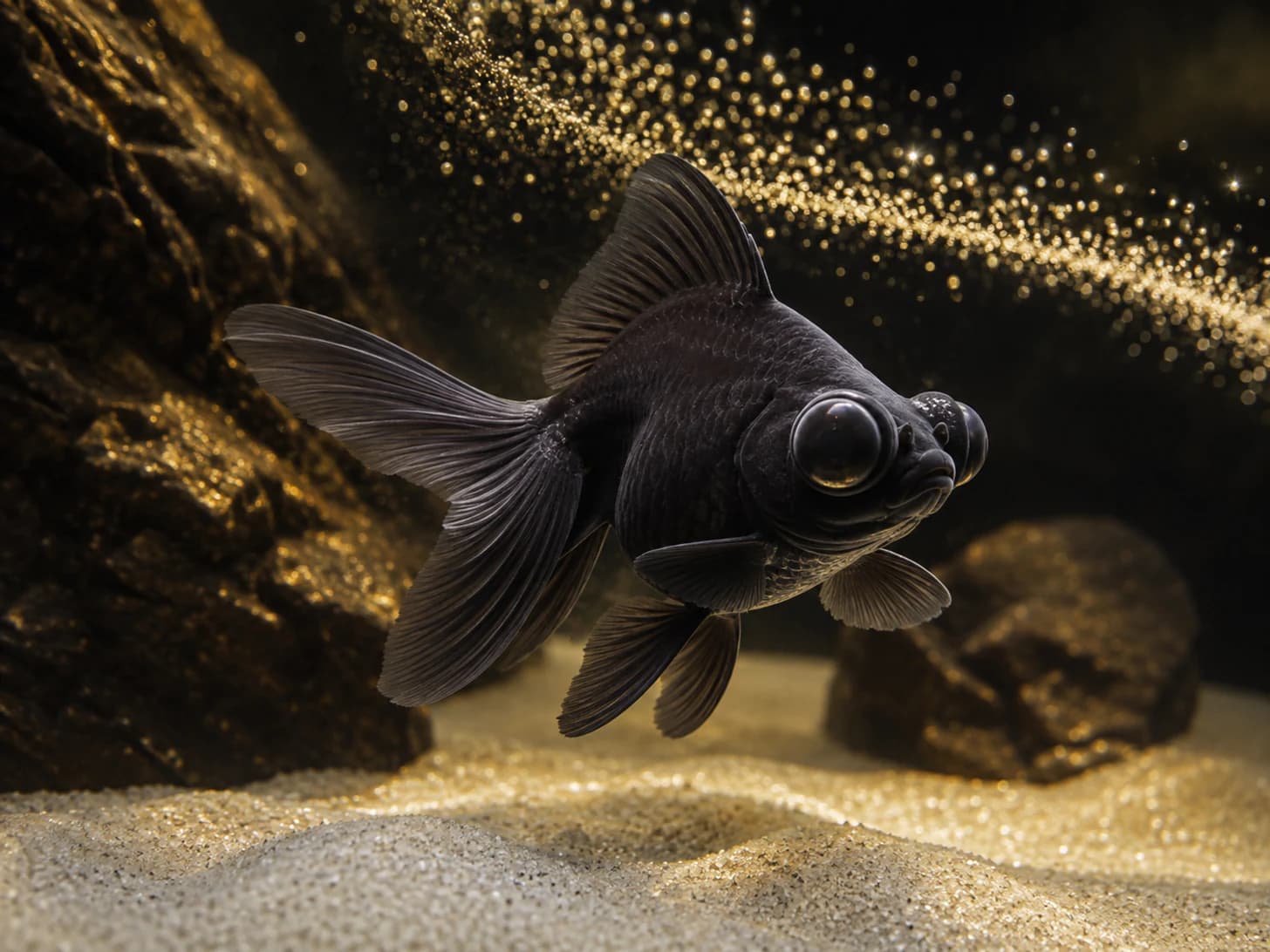
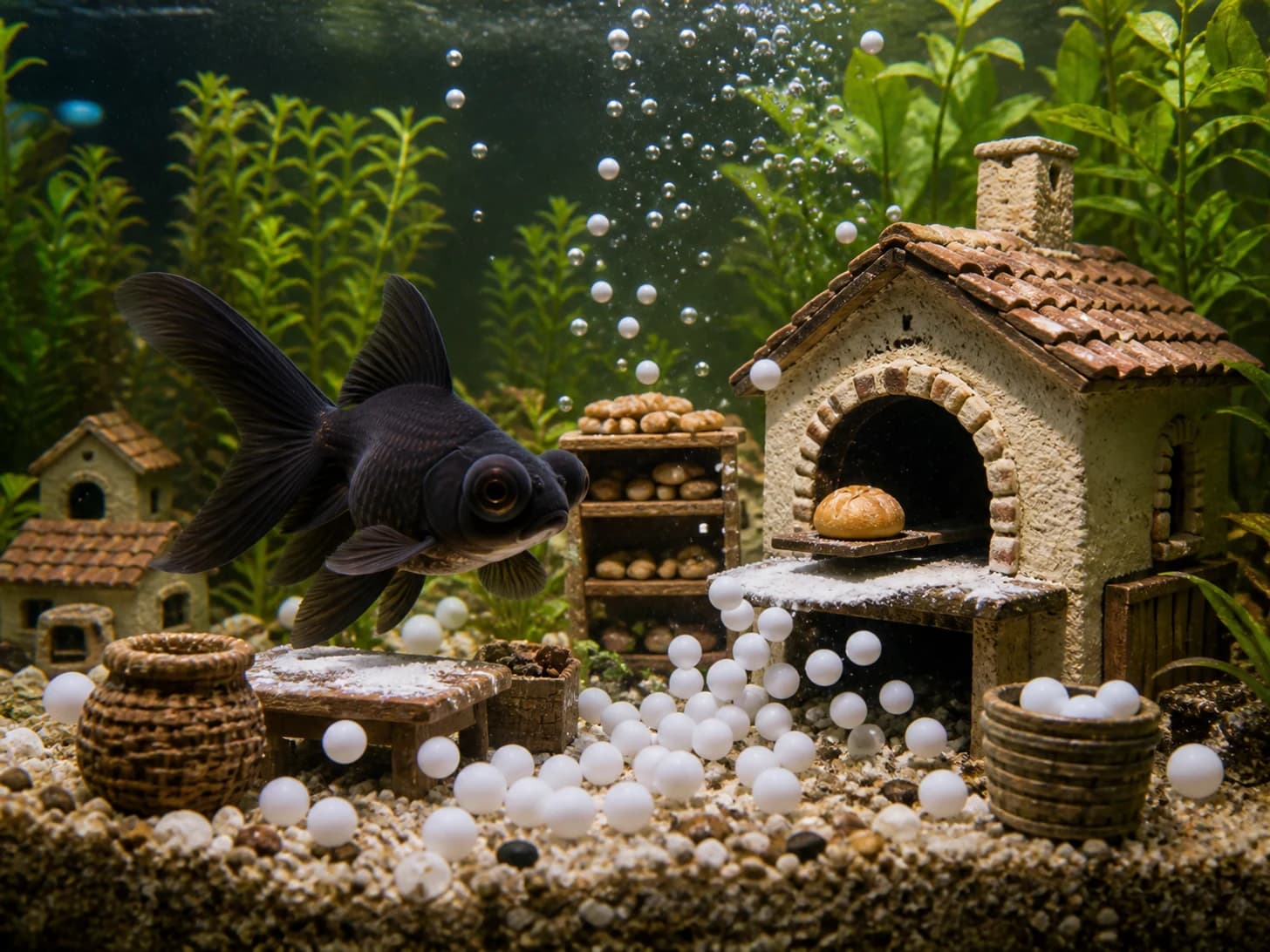
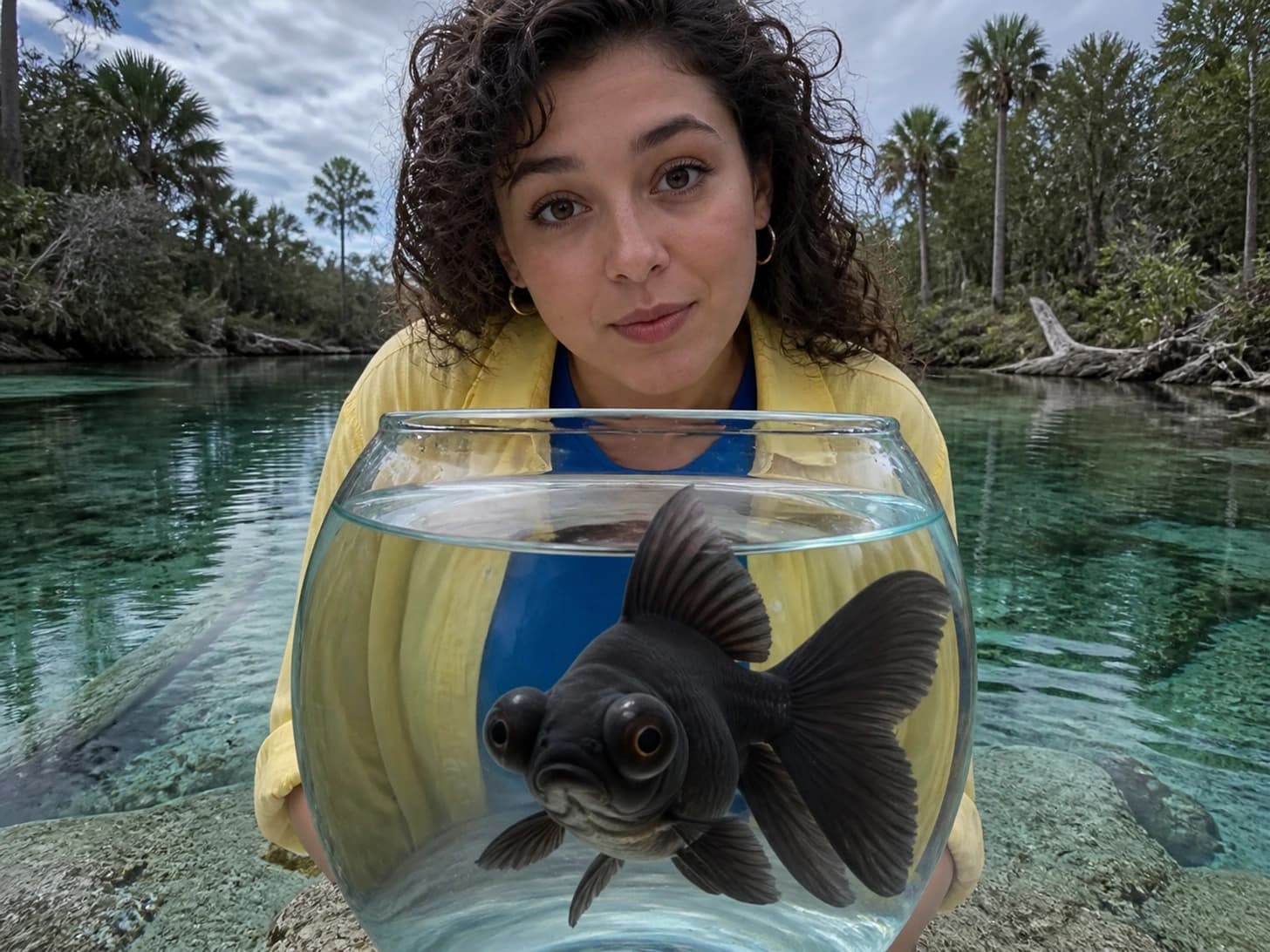
Living with a black moor
Keep them only with other slow fancy goldfish. A black moor cannot compete for food with a comet or a shubunkin, and it will slowly starve in the same tank while looking outwardly fine.
Because the eyes protrude they injure and infect easily. No sharp gravel, no rough ornaments, and nothing with narrow gaps a fish can wedge an eye into.
Drop food in the same place each time and give them long enough to find it — poor eyesight means they hunt by scent and by habit.
The deep body pushes the swim bladder out of shape, so buoyancy trouble is common. Soaking dry food before feeding, or switching to sinking pellets, prevents most of it.
Cold water, heavy filtration and large regular water changes, as for any goldfish. The colour is best kept out of strong light.
General guidance, not veterinary advice. Individual fishs vary, and anything about a specific animal is a question for a vet who has seen it.
More fish by breed
Every fish breed somebody has posted a photo of.