Apistogramma
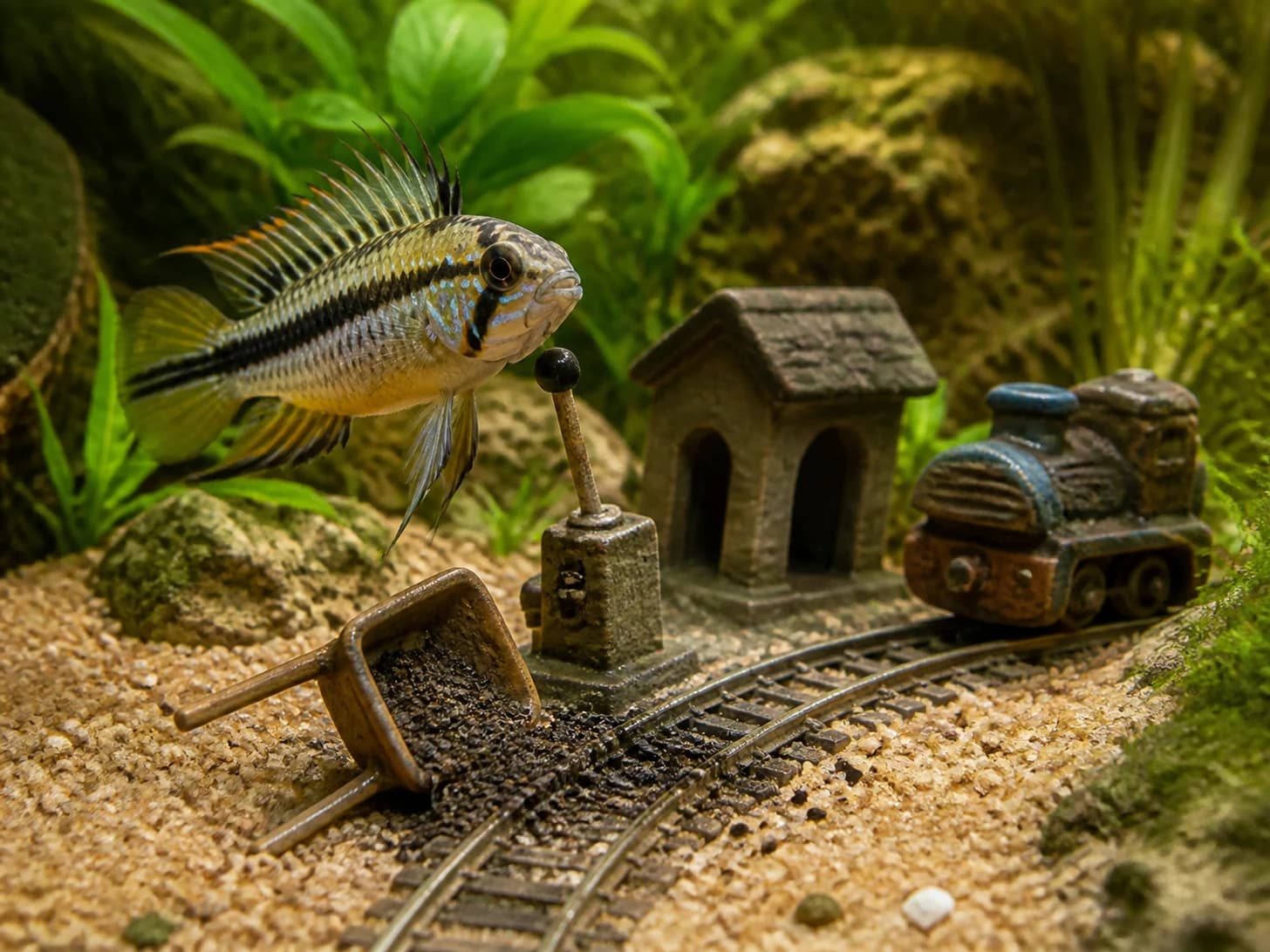
Apistogramma is a genus of around a hundred South American dwarf cichlids from the blackwater streams and flooded forest of the Amazon and Orinoco.
The species kept most often are the cockatoo, agassizii and borellii.
They reach five to eight centimetres and live three to five years. Despite the size they are full cichlids in behaviour: males display, hold territories and court, and females turn brilliant yellow and become fiercely protective when guarding fry in a cave. That behaviour in a fish small enough for a 60-litre tank is why they are so well regarded, and why they suit a planted tank far better than a bare community one.
- Origin
- Amazon and Orinoco blackwater, South America
- Adult size
- 5–8 cm
- Lifespan
- 3–5 years
- Minimum tank
- 60 litres for a pair, more for a harem
- Water
- Soft and acidic — pH 5.5–7.0 suits most species
- Temperature
- 24–28°C
2 apistogramma photos, newest first
Living with a apistogramma
Water chemistry is the part that decides success. Most apistogrammas want soft, acidic water, and many wild-caught fish will not breed or thrive in hard tap water. Rainwater or reverse osmosis blended down, with leaf litter or alder cones, gets far better results than any additive.
Give each female a cave — a small clay pot, a coconut shell, a piece of bogwood. Without defensible territories a male will harass females continuously.
They are bottom-dwellers, so floor area matters more than height, and dense planting breaks up sightlines.
Keep tankmates small, peaceful and mid-water: pencilfish and small tetras work well.
They are sensitive to nitrate and to sudden water changes. Smaller, more frequent changes suit them better than large ones.
General guidance, not veterinary advice. Individual fishs vary, and anything about a specific animal is a question for a vet who has seen it.
More fish by breed
Every fish breed somebody has posted a photo of.