Bichir
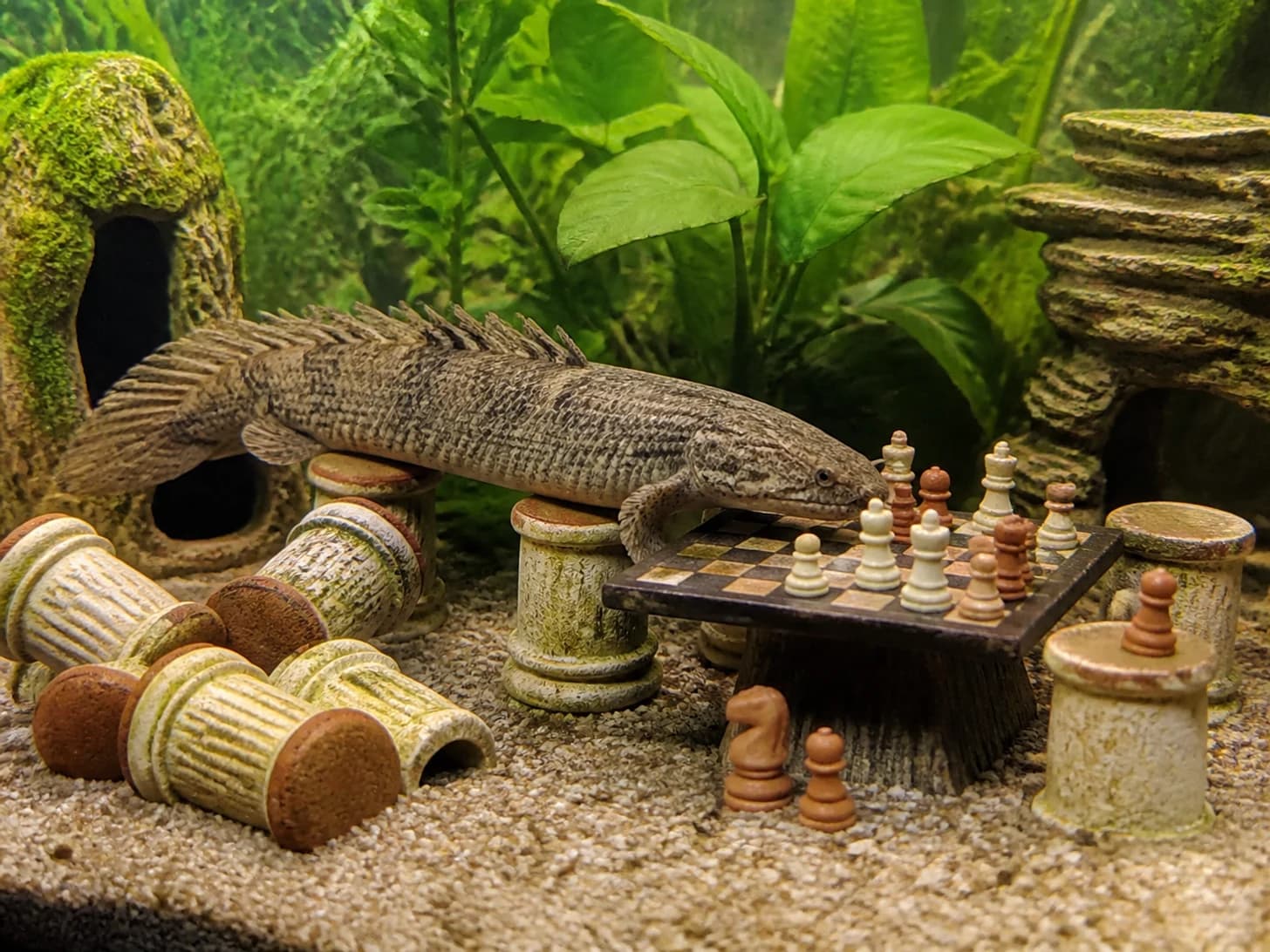
Bichirs, genus Polypterus, are African fish that look prehistoric because they broadly are — the lineage is among the oldest of the ray-finned fishes, with thick interlocking ganoid scales, a row of separate dorsal finlets and a pair of functional lungs.
Depending on species they reach 30 to 75 centimetres and live ten to twenty years. They must reach the surface to breathe air; a bichir denied surface access drowns. They are nocturnal ambush predators with very poor eyesight, hunting by scent, and they are notorious escape artists — a bichir will leave through a gap of a couple of centimetres and can survive out of water for a surprising while.
- Origin
- Freshwater across tropical Africa
- Adult size
- 30–75 cm depending on species
- Lifespan
- 10–20 years
- Minimum tank
- 300 litres for the smaller species, far more for the large
- Breathing
- Obligate air-breather — must reach the surface
- Temperature
- 24–28°C
2 bichir photos, newest first

Living with a bichir
Seal the tank. This is the first rule with bichirs: every gap around pipework and every unweighted lid corner is an exit, and most bichirs lost by keepers are found dried out on the floor.
Leave an air gap between the water and the lid so they can surface to breathe.
Feed meaty foods at night — frozen bloodworm, prawn, mussel, sinking carnivore pellets. They find food by smell and are slow, so anything fast will steal it before they arrive.
Do not keep them with fish small enough to swallow, which given their gape means anything under about half their own length.
Check the species before buying. A delhezi stays around 35 centimetres; an ornate or a lapradei is a very different proposition.
General guidance, not veterinary advice. Individual fishs vary, and anything about a specific animal is a question for a vet who has seen it.
Worth reading alongside this
More fish by breed
Every fish breed somebody has posted a photo of.