A rabbit that stops eating is an emergency
4 min read · Updated
 Rabbits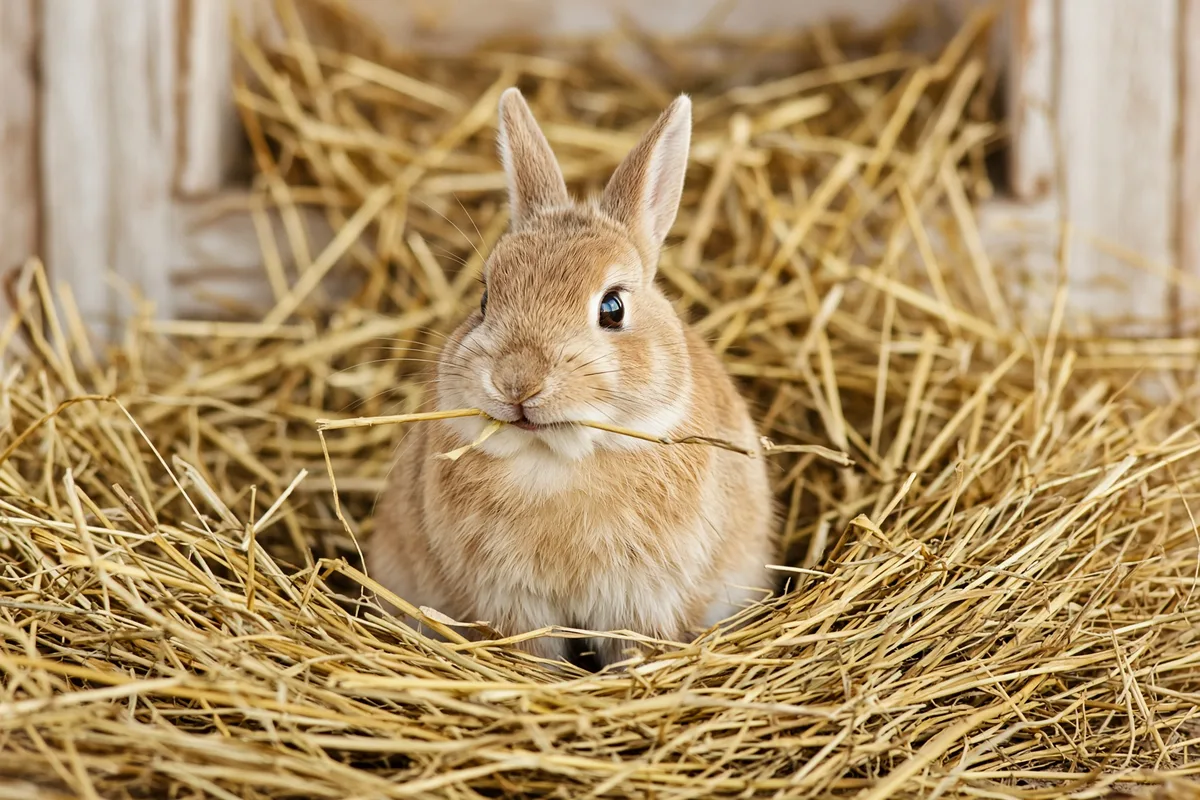
A dog that skips a meal is usually a dog that will eat later. A rabbit that skips a meal is a rabbit with a clock running. Its digestive system depends on constant movement, and once that movement stops it does not restart on its own — which makes not eating, in a rabbit, a symptom rather than a mood.
Why a rabbit cannot simply not eat
A rabbit is a hindgut fermenter. Fibre goes in at one end and is broken down by a population of bacteria in the caecum, and that whole system is built around material moving through it continuously. A rabbit grazes for hours a day because the gut is designed to be fed for hours a day.
When movement slows, several things go wrong at once. Food already in the stomach sits and dries out. Gas builds up behind it, which is painful, and pain reduces appetite further — so the problem feeds itself. The bacterial population shifts, and the wrong bacteria produce toxins the rabbit then has to deal with.
Within twelve to twenty-four hours a rabbit in full stasis is genuinely unwell, and a rabbit that has not eaten for twenty-four hours can develop liver damage from mobilising its own fat stores. Rabbits are also poor at surviving anaesthesia and shock, which narrows the margin further.
The term you will hear is ileus, or gut stasis, and it is usually a symptom of something else — dental pain, a urinary problem, stress, a diet with too little long fibre — rather than a disease in its own right. Treating the stasis without finding the cause gets you a rabbit that blocks up again in a fortnight.
What you will actually see
No droppings, or droppings that have gone small, hard and dark. This is the clearest sign, and it is why a rabbit's litter tray is worth a glance every day: you are counting output.
No interest in food — including, crucially, the things it always wants. A rabbit turning down a piece of banana or a handful of fresh herbs is a different animal from one ignoring its pellets.
Sitting hunched, pressing its belly to the floor, unwilling to move, grinding its teeth quietly. Rabbits are prey animals and do not complain, so the pain signs are postural rather than vocal.
A belly that feels tight or sounds hollow when tapped, and no gurgling at all when you put an ear to it. A healthy rabbit's abdomen is noisy.
Lethargy, and a coat that looks unkempt because it has stopped grooming.
If you see no droppings for twelve hours in a rabbit that is also off its food, that is a vet appointment the same day. Rabbit-experienced vets are not every vet, and it is worth knowing before you need one which practice near you sees rabbits properly and what they do out of hours.
What treatment looks like
Pain relief first, and this is the part owners are most often surprised by. A rabbit in gut pain will not eat, so analgesia is not comfort care — it is what makes everything else possible. Expect an anti-inflammatory, and an opioid in a rabbit that is badly affected.
Fluids, under the skin or intravenously, to rehydrate the contents of a gut that has dried out.
Syringe feeding with a fibre recovery formula, in small amounts, often. This is the mechanical part: putting fibre through the system to get it moving again.
A prokinetic drug to stimulate movement, once the vet is satisfied there is no physical obstruction — and that distinction matters, because a true blockage is a surgical emergency and stimulating a gut to push against it is harmful. A rabbit with a hard, painfully distended, drum-tight abdomen needs imaging before anything is given to speed the gut up.
Then the search for the cause: a proper look at the back teeth under sedation if needed, a check for bladder problems, and an honest conversation about the diet.
Most rabbits caught early recover fully in a couple of days. The ones that do badly are almost always the ones that waited.
The diet that prevents it
Hay, and then more hay. Unlimited grass hay should be about eighty per cent of what a rabbit eats, and it should be available at every hour of the day. The long fibre in hay is what keeps the gut moving; nothing else does the same job.
If a rabbit will not eat hay, the usual reason is that something better is available. Cut the pellets right back and the hay becomes interesting.
Pellets are a supplement, not a meal — a small measured amount, once a day. A bowl of pellets topped up whenever it empties is the most common cause of a rabbit that never touches hay.
No muesli-style mixes. A rabbit picks out the sugary flakes and leaves the fibrous pellets, which produces both a bad diet and bad teeth.
Fresh greens daily, introduced gradually. Not lettuce as a staple, not fruit as anything other than a rare treat.
Water always, in a bowl as well as a bottle if you can — rabbits drink more from bowls.
And hay does the teeth at the same time. Rabbit teeth grow continuously and are worn down by the sideways grinding that long fibre requires; a rabbit on soft food develops overgrown molars, which hurt, which stops it eating, which is where this article started.