Butterfly koi
The butterfly koi, also called the longfin or dragon koi, was produced in the 1980s by crossing traditional koi with a long-finned Indonesian river carp.
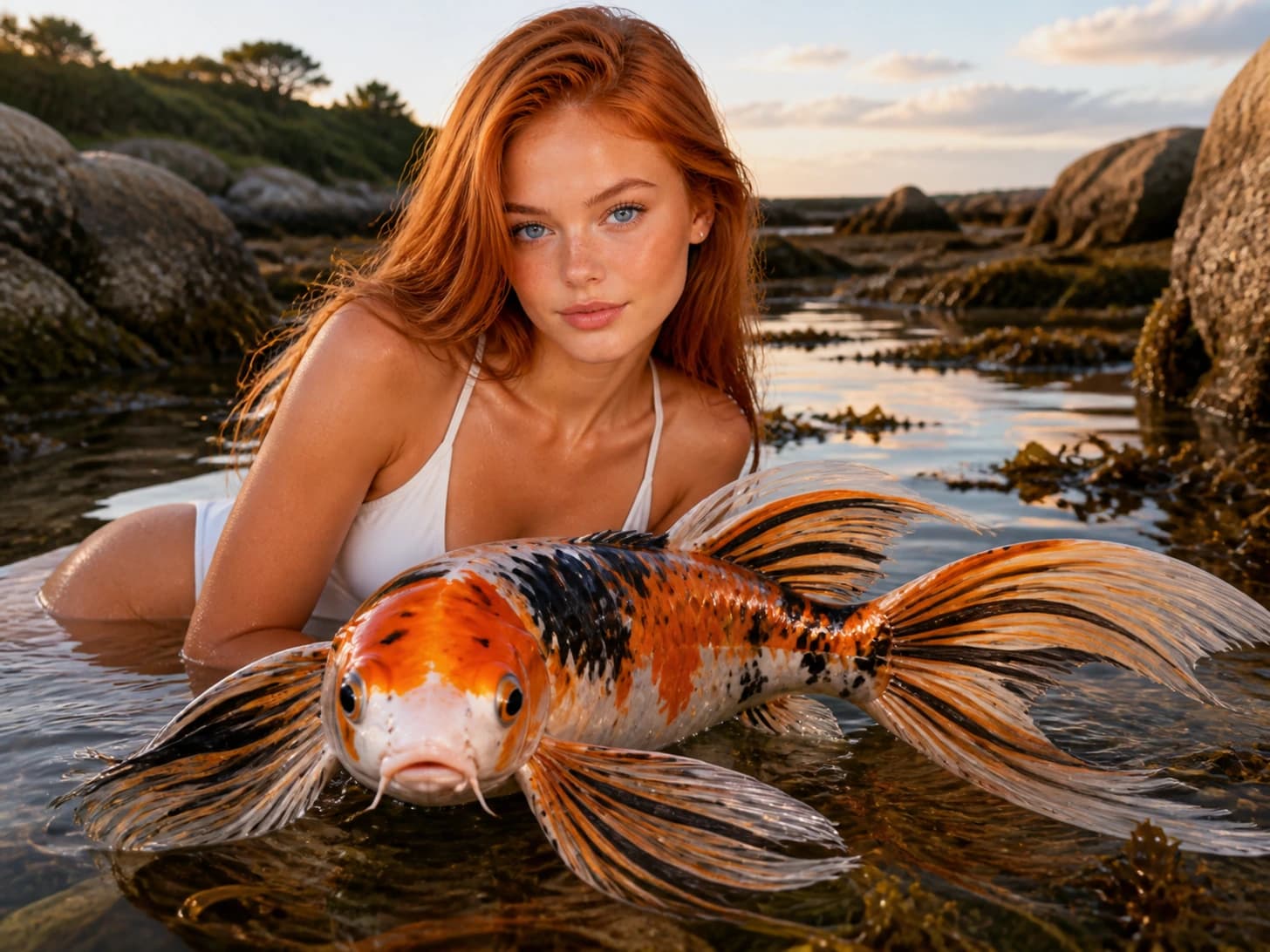
The result carries the colour of a koi with trailing fins, tail and barbels that flow behind it as it swims.
It reaches 90 centimetres or more — often longer than a standard koi, though more slender — and lives twenty-five years or more. Japanese show organisations generally do not recognise it, and traditionalists dislike it, so it is judged in its own classes where it is judged at all. As a pond fish it is kept exactly as any other koi, with one addition: the fins need looking after.
- Origin
- 1980s cross of koi with a longfin Indonesian carp
- Adult size
- 90 cm or more, more slender than standard koi
- Lifespan
- 25+ years
- Minimum pond
- 4,000+ litres, at least 1.2 m deep
- Temperature
- 15–25°C; feeding stops below about 10°C
- Show status
- Not recognised by traditional Japanese standards
2 butterfly koi photos, newest first
Living with a butterfly koi
The long fins are the vulnerability. They tear on rough pond edges and sharp rock, and torn fins are where fin rot and fungal infections start, so keep the pond edges smooth and the water clean.
Everything else is standard koi keeping. A pond of thousands of litres, at least 1.2 metres deep, filtration sized for large messy fish, and heron protection.
Stop feeding below about 10°C.
The trailing fins make butterfly koi slower and more conspicuous than standard koi, which makes them the first fish a heron takes.
Quarantine new arrivals for several weeks before they meet the pond. Koi herpesvirus is a real risk and it moves on new stock.
General guidance, not veterinary advice. Individual fishs vary, and anything about a specific animal is a question for a vet who has seen it.
More fish by breed
Every fish breed somebody has posted a photo of.