Asagi koi
The asagi is one of the oldest koi varieties and the ancestor of several others.
It has a blue-grey back in which each scale is pale-edged, producing a distinct net or reticulated pattern, with red running along the flanks, the belly and the base of the fins, and a clean pale head.
It reaches 60 to 90 centimetres and lives twenty-five to thirty-five years. Asagi are prized in Japan precisely because the pattern is hard to get right: the netting has to be even, the head clear, and the red must stay below the lateral line. The variety is also known for growing large, and specimens are often among the biggest fish in a pond.
- Origin
- Japan — one of the oldest koi varieties
- Adult size
- 60–90 cm; often among the largest in a pond
- Lifespan
- 25–35 years
- Minimum pond
- 4,000+ litres, at least 1.2 m deep
- Pattern
- Pale-edged blue-grey scales in a net, red on the flanks
- Temperature
- 15–25°C; feeding stops below about 10°C
Related: Koi · Bekko koi · Butterfly koi
2 asagi koi photos, newest first
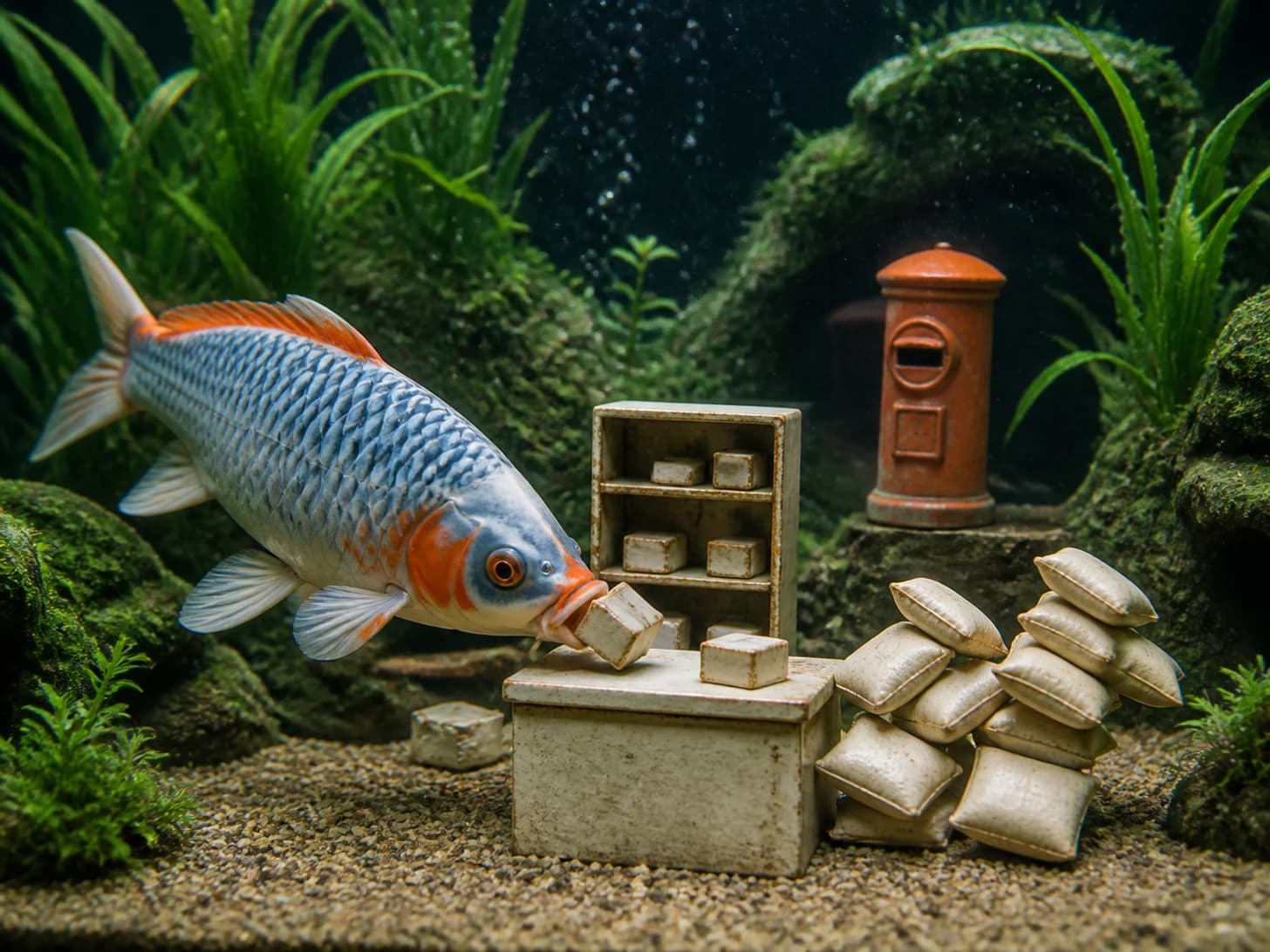

Living with a asagi koi
Expect the pattern to change. The red on an asagi commonly spreads upward with age and diet, and a fish that was crisply marked as a two-year-old may creep above the lateral line by the time it is six. Nothing is wrong with it; it is what the variety does.
Keep the water clean and the pond large. Asagi grow, and a fish approaching 90 centimetres needs the volume and filtration to match.
Stop feeding below about 10°C, and make sure the pond is deep enough not to freeze through.
Strong sunlight can wash out the blue. Some shade over part of the pond helps hold the colour.
Quarantine new fish for several weeks. Every pond disease arrives the same way.
General guidance, not veterinary advice. Individual fishs vary, and anything about a specific animal is a question for a vet who has seen it.
More fish by breed
Every fish breed somebody has posted a photo of.