Blue tang
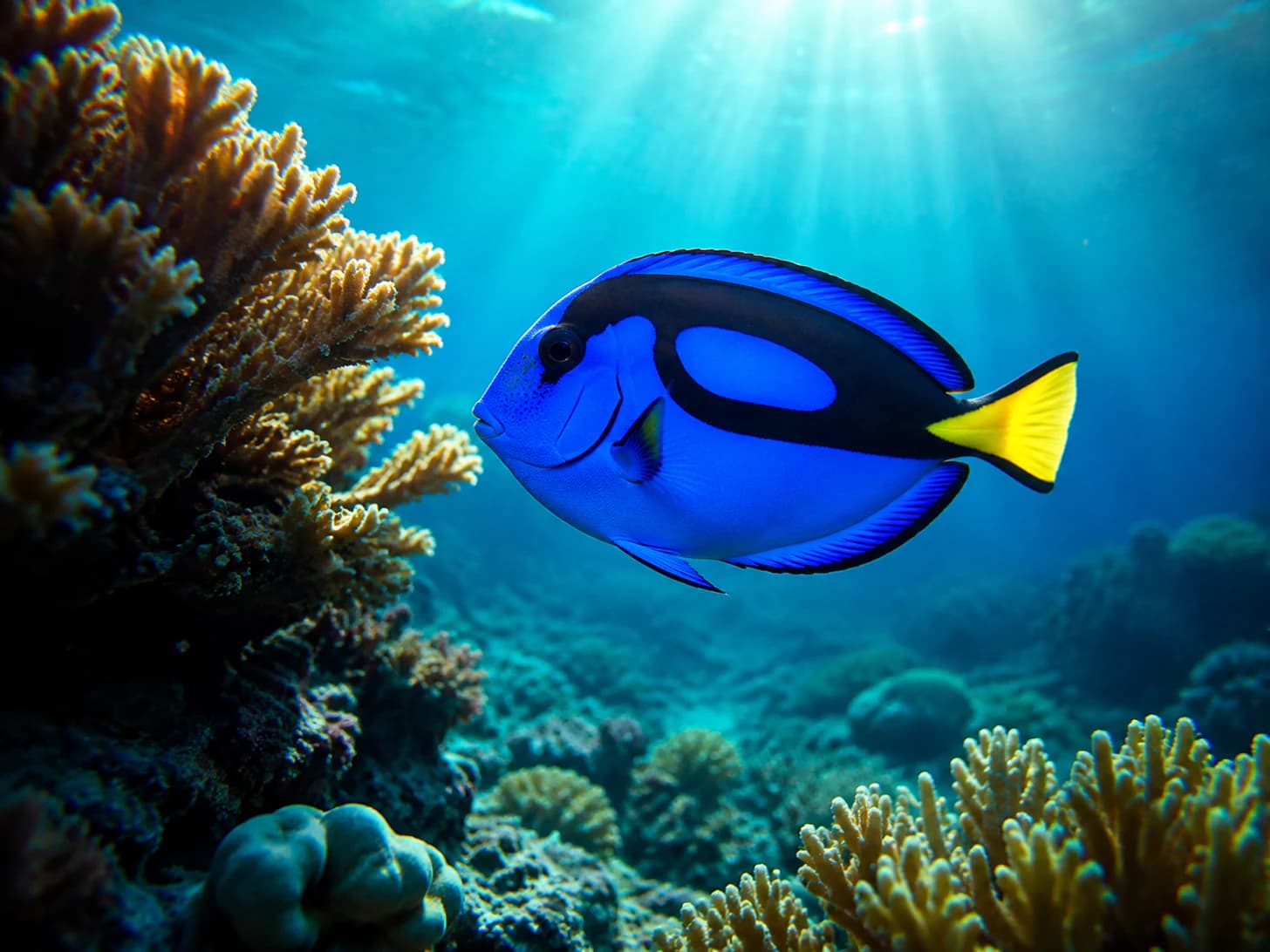
The blue tang or regal tang, Paracanthurus hepatus, is a bright blue reef surgeonfish of the Indo-Pacific with a black palette marking and a yellow tail.
It carries a scalpel-sharp spine at the base of the tail, which is where surgeonfish get their name and which can cut a careless hand.
It reaches about 30 centimetres and lives eight to twenty years. Its popularity is almost entirely down to the film character it resembles, and the resulting demand fell on a fish that was, until very recently, not bred in captivity at all. Aquaculture has only succeeded in the last decade and remains limited, so most fish in trade are still wild-caught.
- Origin
- Indo-Pacific coral reefs
- Adult size
- About 30 cm
- Lifespan
- 8–20 years
- Minimum tank
- 1,100+ litres — a large marine system
- Salinity
- 1.023–1.025 specific gravity, 24–27°C
- Note
- Mostly wild-caught; prone to marine ich
3 blue tang photos, newest first

Living with a blue tang
This is a big fish that needs a big system. A 30-centimetre surgeonfish that swims continuously needs a tank measured in the high hundreds of litres at least, and the small ones sold at four or five centimetres grow steadily into that.
Quarantine before adding to a display tank, without exception. Blue tangs are notoriously susceptible to marine ich and to head and lateral line erosion, and an unquarantined tang is how a whole reef tank becomes infected.
Feed marine algae. They are largely herbivorous, and a diet of meaty frozen foods alone causes the lateral line erosion the species is known for. Dried seaweed on a clip, daily.
They need rockwork with places to wedge into at night, and open water to swim in by day.
Captive-bred stock exists now and is worth seeking out and paying more for.
General guidance, not veterinary advice. Individual fishs vary, and anything about a specific animal is a question for a vet who has seen it.
More fish by breed
Every fish breed somebody has posted a photo of.