Leopard gecko
The leopard gecko, Eublepharis macularius, comes from the rocky dry grassland of Afghanistan, Pakistan and north-west India.
Unlike most geckos it has movable eyelids and no toe pads, so it walks rather than climbs and can blink.
It reaches 20 to 27 centimetres and commonly lives fifteen to twenty years, which is longer than most new keepers expect. It is nocturnal and crepuscular, ground-dwelling, calm to handle and slow-moving. Leopard geckos store fat in the tail, which they can drop if seized — the tail regrows, but never in the original shape.
- Origin
- Afghanistan, Pakistan and north-west India
- Adult size
- 20–27 cm including tail
- Lifespan
- 15–20 years
- Warm end
- 30–32°C floor temperature, with a cool end near 22°C
- UVB
- Low-level UVB is now recommended, though long kept without it
- Diet
- Live insects only; calcium and D3 supplementation
Related: African fat-tailed gecko
3 leopard gecko photos, newest first
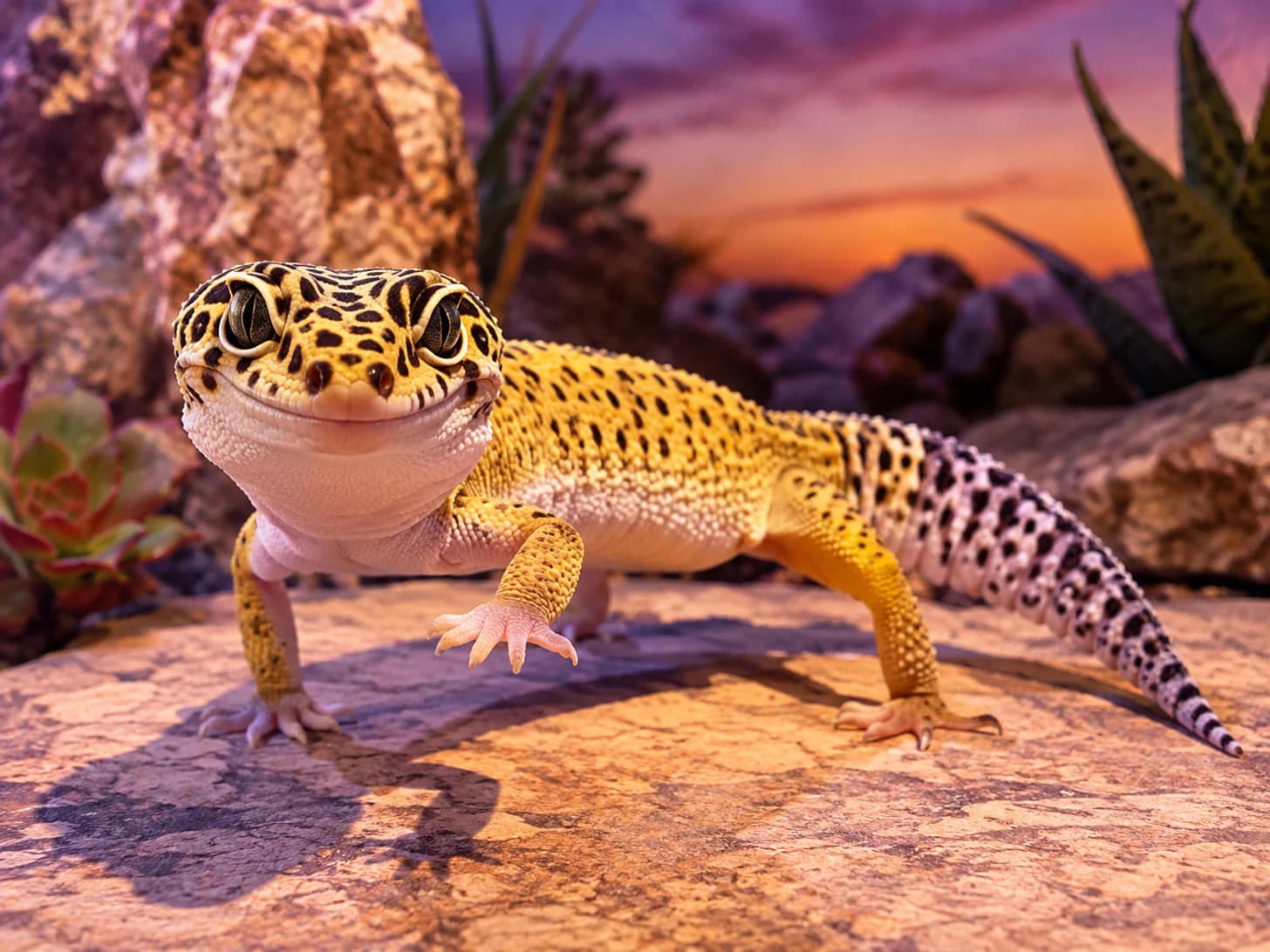

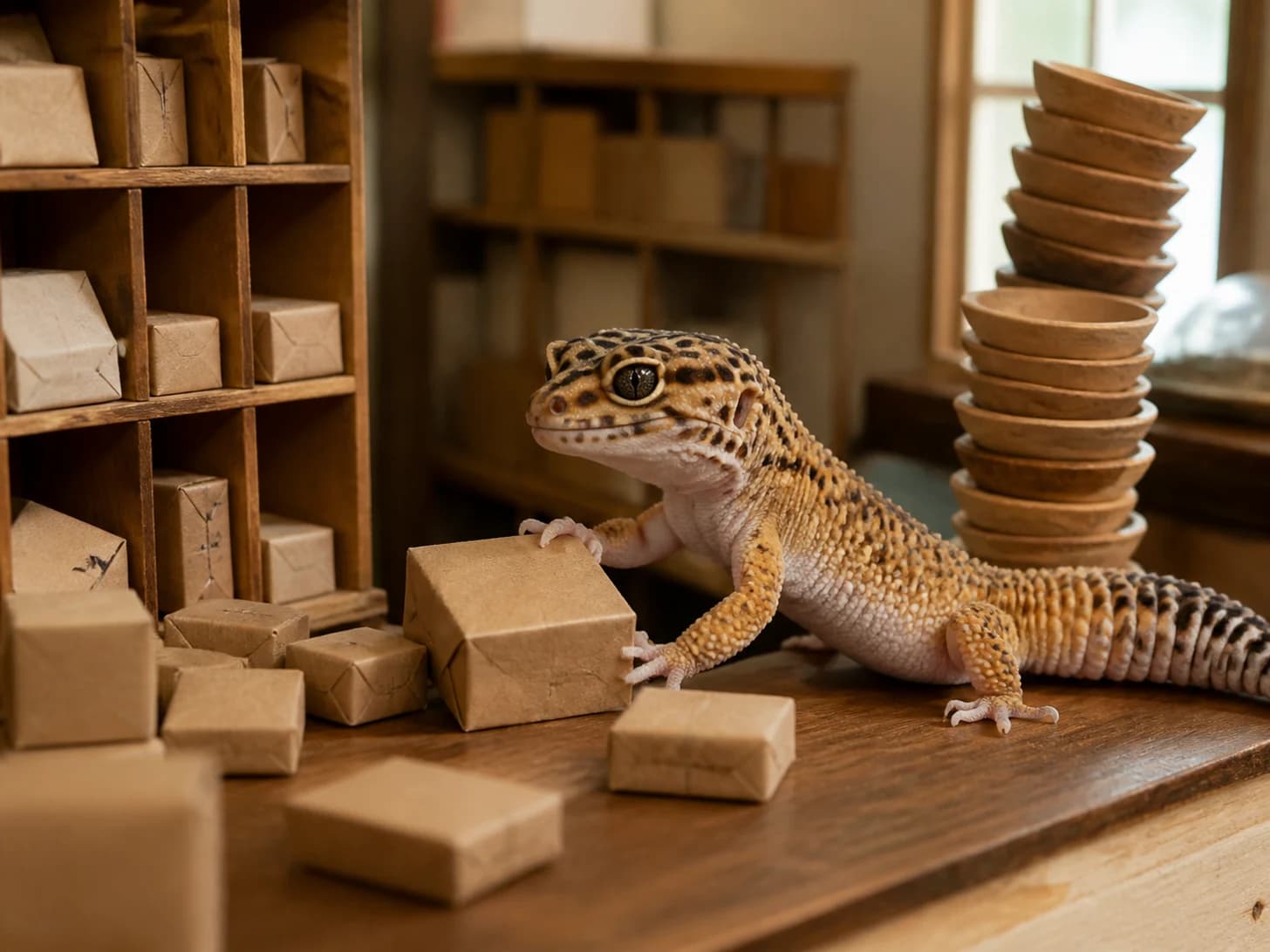
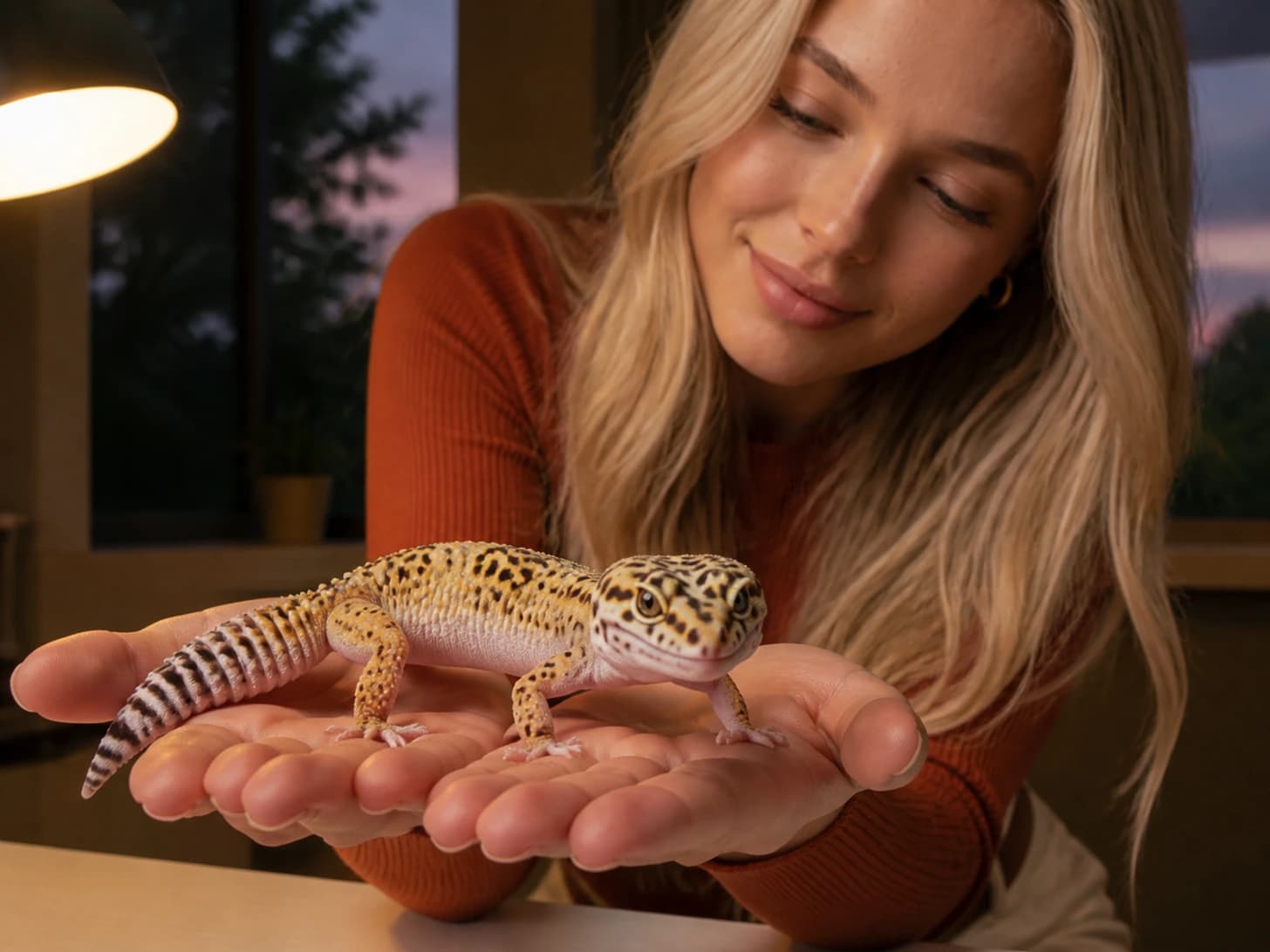
Living with a leopard gecko
Give belly heat. Leopard geckos digest using warmth absorbed through the abdomen from rock, so a heat mat or radiant panel producing a floor surface of 30–32°C at one end matters more than air temperature. Always on a thermostat.
The UVB advice has changed. These were kept for decades under no UV at all, and they survive it, but current research shows low-level UVB improves bone density and behaviour, and the modern recommendation is a low-output tube.
Provide a humid hide — a box with damp moss — because shedding failure around the toes and eyes is the commonest problem, and retained shed on a toe can cost the toe.
Feed live insects dusted with calcium. Never house two males together.
A dropped tail is a stress response, so support the body and never grasp the tail.
General guidance, not veterinary advice. Individual reptiles vary, and anything about a specific animal is a question for a vet who has seen it.
Worth reading alongside this
More reptiles by breed
Every reptile breed somebody has posted a photo of.
- Blue-tongued skink5
- Ackie monitor3
- African fat-tailed gecko3
- Aldabra tortoise3
- Argentine black and white tegu3
- Ball python3
- Bearded dragon3
- Boa constrictor3
- Box turtle3
- Brazilian rainbow boa3
- California kingsnake3
- Amazon tree boa2
- Asian water monitor2
- Black rat snake2
- Blood python2
- Brown anole2
- Bull snake2
- Burmese python2