African fat-tailed gecko
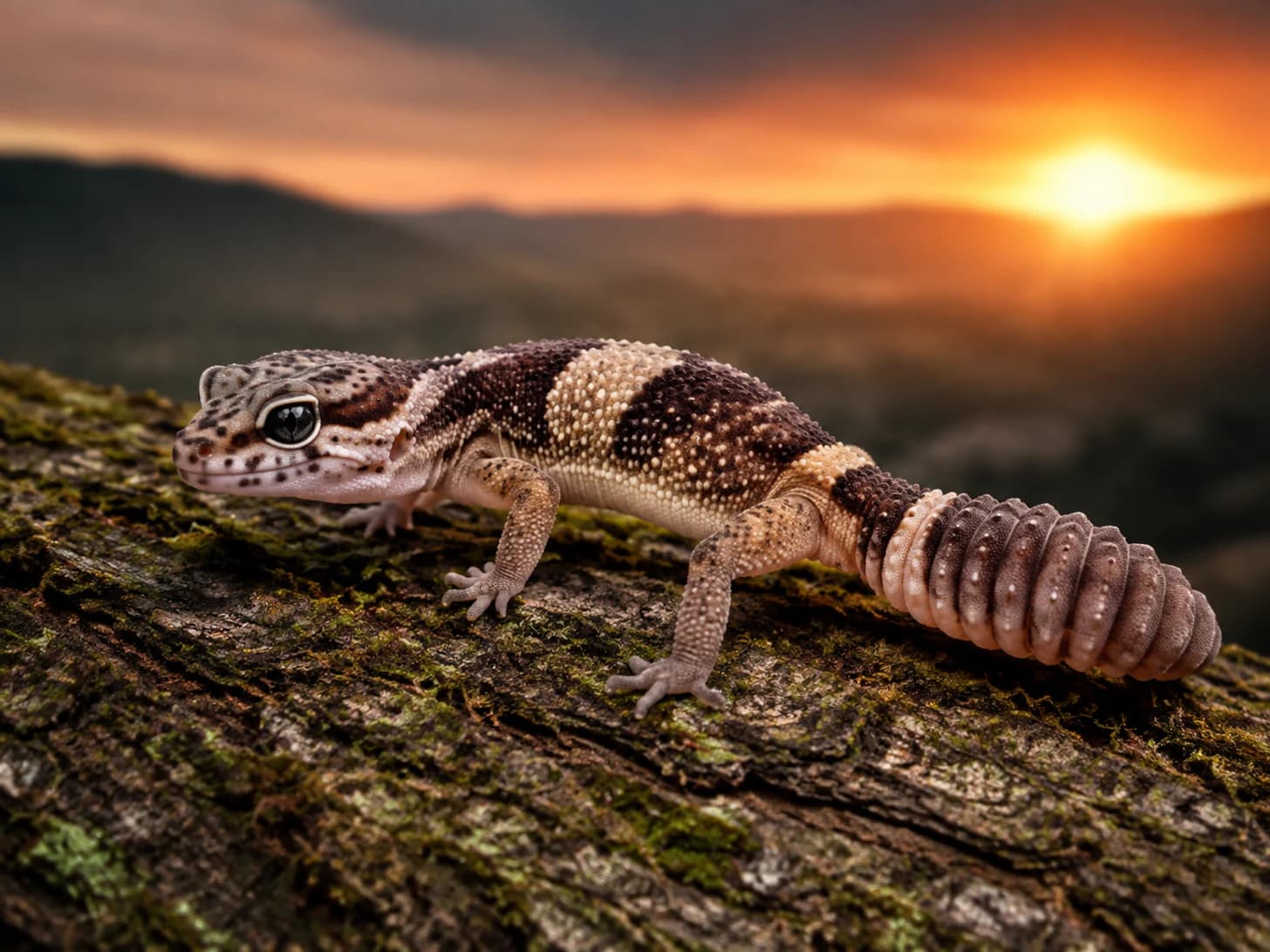
The African fat-tailed gecko, Hemitheconyx caudicinctus, comes from dry savannah and river margins in West Africa.
Like the leopard gecko it is a ground-dwelling eyelid gecko with no toe pads, and it stores fat in a thick tail — but it comes from a more humid habitat, and that difference drives its care.
Adults reach 20 to 25 centimetres and live fifteen to twenty years. They are slower and, by most keepers' accounts, calmer than leopard geckos, and are nocturnal and largely hidden by day. A wide, striped white dorsal line is common in captive-bred lines.
- Origin
- Dry savannah of West Africa
- Adult size
- 20–25 cm including tail
- Lifespan
- 15–20 years
- Warm end
- 30–32°C floor temperature, cool end near 24°C
- Humidity
- 50–70% — higher than a leopard gecko needs
- Diet
- Live insects, dusted with calcium and D3
Related: Leopard gecko
3 african fat-tailed gecko photos, newest first


Living with a african fat-tailed gecko
The difference from a leopard gecko is humidity. Fat-tails need 50–70%, and kept at leopard gecko dryness they shed badly and lose toes to retained skin. A humid hide with damp moss is essential rather than optional, and a substrate that holds a little moisture helps.
Belly heat at 30–32°C at one end, on a thermostat, with a proper cool end.
Low-level UVB is now generally recommended, as for leopard geckos.
Feed live insects dusted with calcium; a fat-tail with a thin tail is an underfed or ill fat-tail.
House alone or as one male with females — two males will fight.
The tail can be dropped under stress and regrows as a rounded stub, so never restrain one by the tail.
General guidance, not veterinary advice. Individual reptiles vary, and anything about a specific animal is a question for a vet who has seen it.
Worth reading alongside this
More reptiles by breed
Every reptile breed somebody has posted a photo of.