Brazilian rainbow boa
The Brazilian rainbow boa, Epicrates cenchria, is a medium-sized boa from the Amazon basin, and its name is literal: microscopic ridges on the scales split light into an iridescent sheen that shifts across the whole spectrum as the animal moves.
Adults reach 1.5 to 2 metres and are more slender than a common boa. They are nocturnal and, as juveniles, often nippy, though most settle with consistent handling. The species is beautiful and popular, but it is genuinely less forgiving than a ball python for one reason: it needs high humidity maintained constantly, and it declines quickly when it does not get it.
- Origin
- Amazon basin, South America
- Adult size
- 1.5–2 m
- Lifespan
- 20+ years
- Ambient temperature
- 26–29°C, hot spot no higher than 30°C
- Humidity
- 75–90% — the hardest part of keeping one
- Diet
- Appropriately sized rodents every 1–2 weeks
Related: Ball python · Amazon tree boa · Boa constrictor
3 brazilian rainbow boa photos, newest first
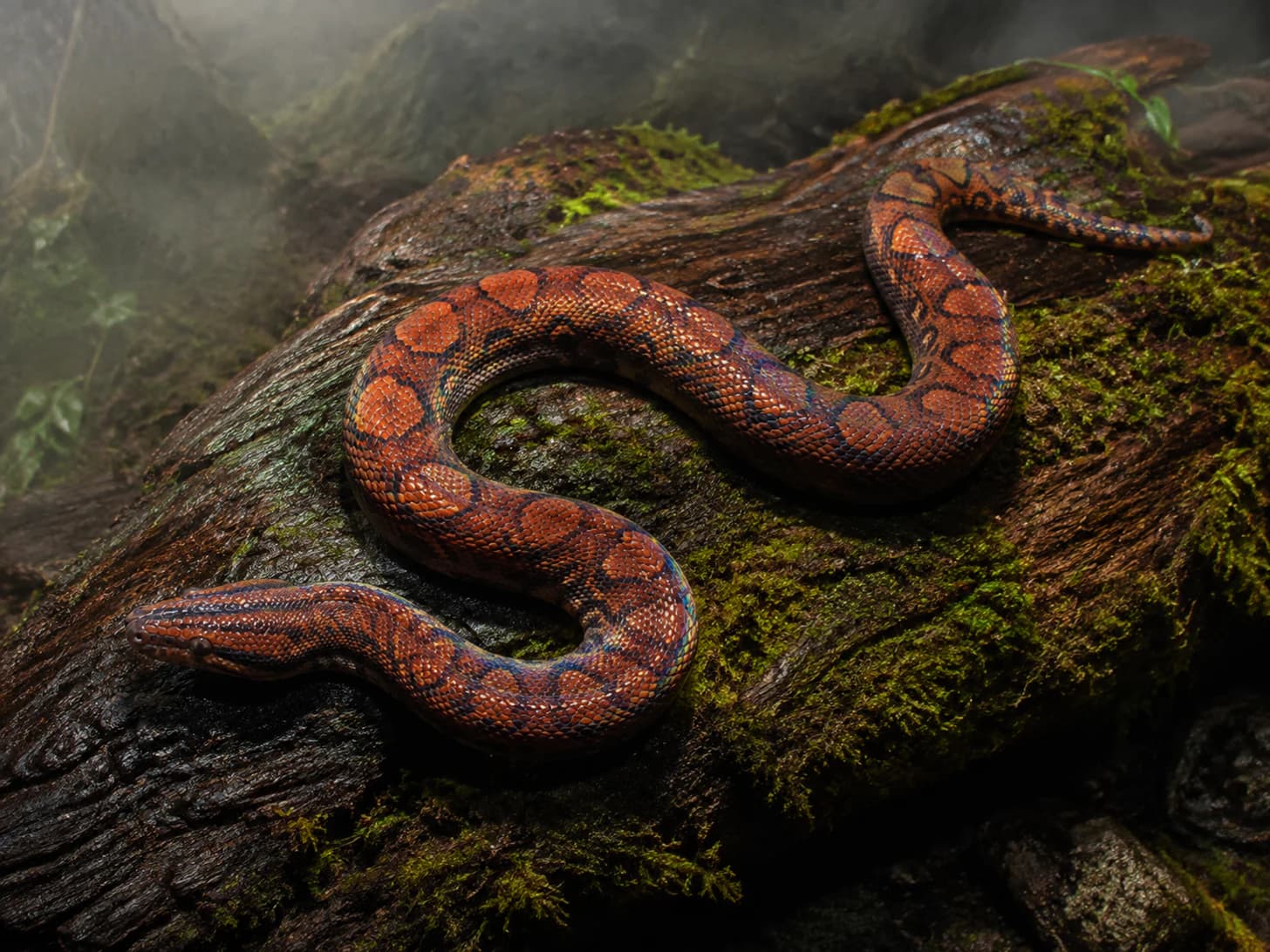



Living with a brazilian rainbow boa
Humidity is the whole game. Rainbow boas need 75–90%, which in a centrally heated house means a sealed-sided enclosure, a deep moisture-holding substrate such as cypress mulch, a large water bowl and often a fogger on a timer. Too dry gives bad sheds, then respiratory problems.
Equally, they overheat easily. Keep the hot spot at or below 30°C — this is a species that does not want a scorching basking site, and heat stress kills them.
Juveniles bite. It is defensive rather than aggressive and most grow out of it with regular, calm handling.
Provide sturdy branches; they climb more than a common boa.
A hygrometer and a thermostat are not optional equipment for this species.
General guidance, not veterinary advice. Individual reptiles vary, and anything about a specific animal is a question for a vet who has seen it.
Worth reading alongside this
More reptiles by breed
Every reptile breed somebody has posted a photo of.