California kingsnake
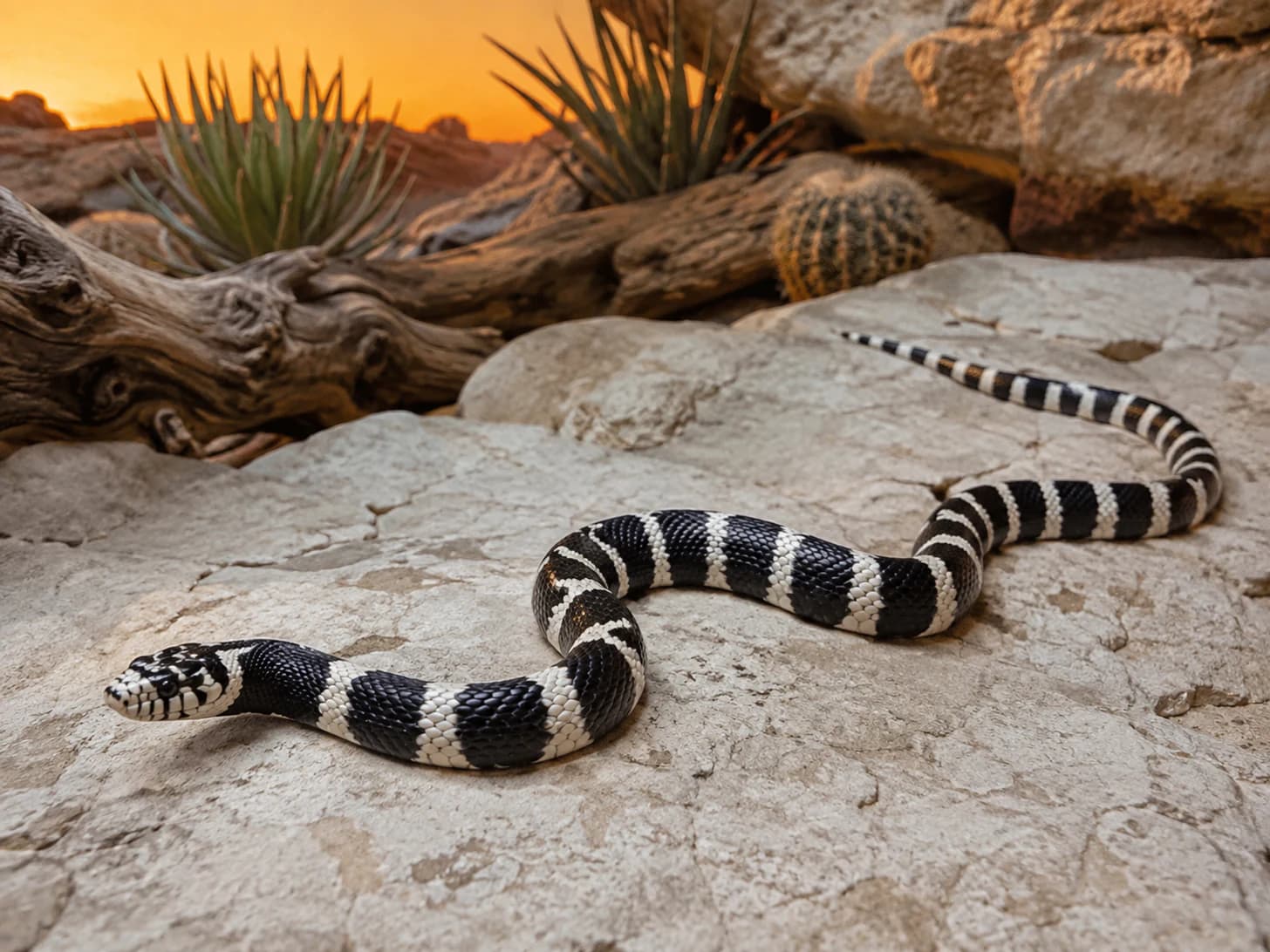
The California kingsnake, Lampropeltis californiae, is a medium colubrid from the western United States and northern Mexico, usually banded in black and white though a striped form occurs naturally.
The name comes from the diet: kingsnakes eat other snakes, including rattlesnakes, against whose venom they are largely immune.
Adults reach 90 to 120 centimetres and live over twenty years. They are hardy, feed reliably, tolerate a wide range of conditions and stay a manageable size, which together make this one of the two or three best first snakes there is. The one absolute rule follows from the diet.
- Origin
- Western United States and northern Mexico
- Adult size
- 90–120 cm
- Lifespan
- 20+ years
- Basking temperature
- 28–30°C hot spot, 22–25°C cool end
- Humidity
- 40–60% — undemanding
- Housing
- Alone, without exception — kingsnakes eat other snakes
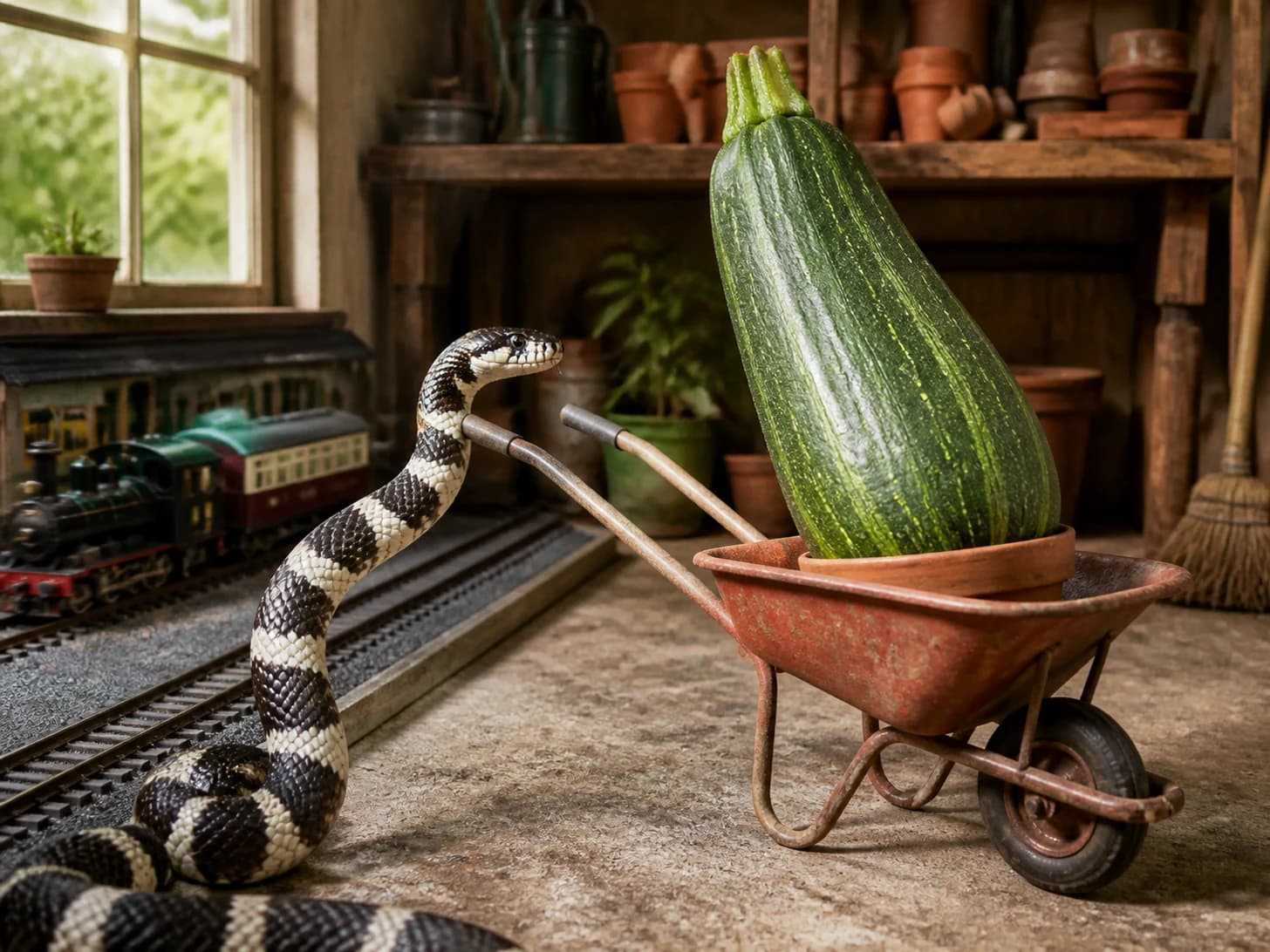
3 california kingsnake photos, newest first


Living with a california kingsnake
Never house two kingsnakes together, even briefly, even as hatchlings. They eat snakes, and they will eat each other. This is the single rule that matters and it is not a probability but a certainty given time.
Beyond that they are undemanding: a hot spot around 28–30°C, a cool end in the low twenties, ordinary room humidity, a water bowl and two hides.
They are strong escape artists and will find any gap or push a poorly weighted lid. Locking or clipped enclosures.
Feeding response is enthusiastic — use tongs and do not hand-feed, since a kingsnake that associates an opening door with food will investigate a hand.
Hatchlings may musk and rattle the tail when startled; nearly all outgrow it with routine handling.
General guidance, not veterinary advice. Individual reptiles vary, and anything about a specific animal is a question for a vet who has seen it.
Worth reading alongside this
More reptiles by breed
Every reptile breed somebody has posted a photo of.