Box turtle
Box turtles are the North American Terrapene species, named for a hinged plastron that lets the animal close its shell completely — a defence no other North American turtle has.
The eastern box turtle is the one most often kept.
They reach 12 to 20 centimetres and live extraordinarily long: fifty years is unremarkable and animals over a hundred are documented, which makes one a genuine multi-generational commitment. They are terrestrial rather than aquatic, omnivorous, and wild populations are declining sharply — collection from the wild is a significant cause, and several states now protect them.
- Origin
- Eastern and central North America
- Adult size
- 12–20 cm
- Lifespan
- 50+ years; over 100 documented
- Housing
- Outdoor pen where climate allows, with deep damp substrate
- Humidity
- High — 60–80%, with a soaking area
- Diet
- Omnivore — invertebrates, greens, fruit, fungi
3 box turtle photos, newest first
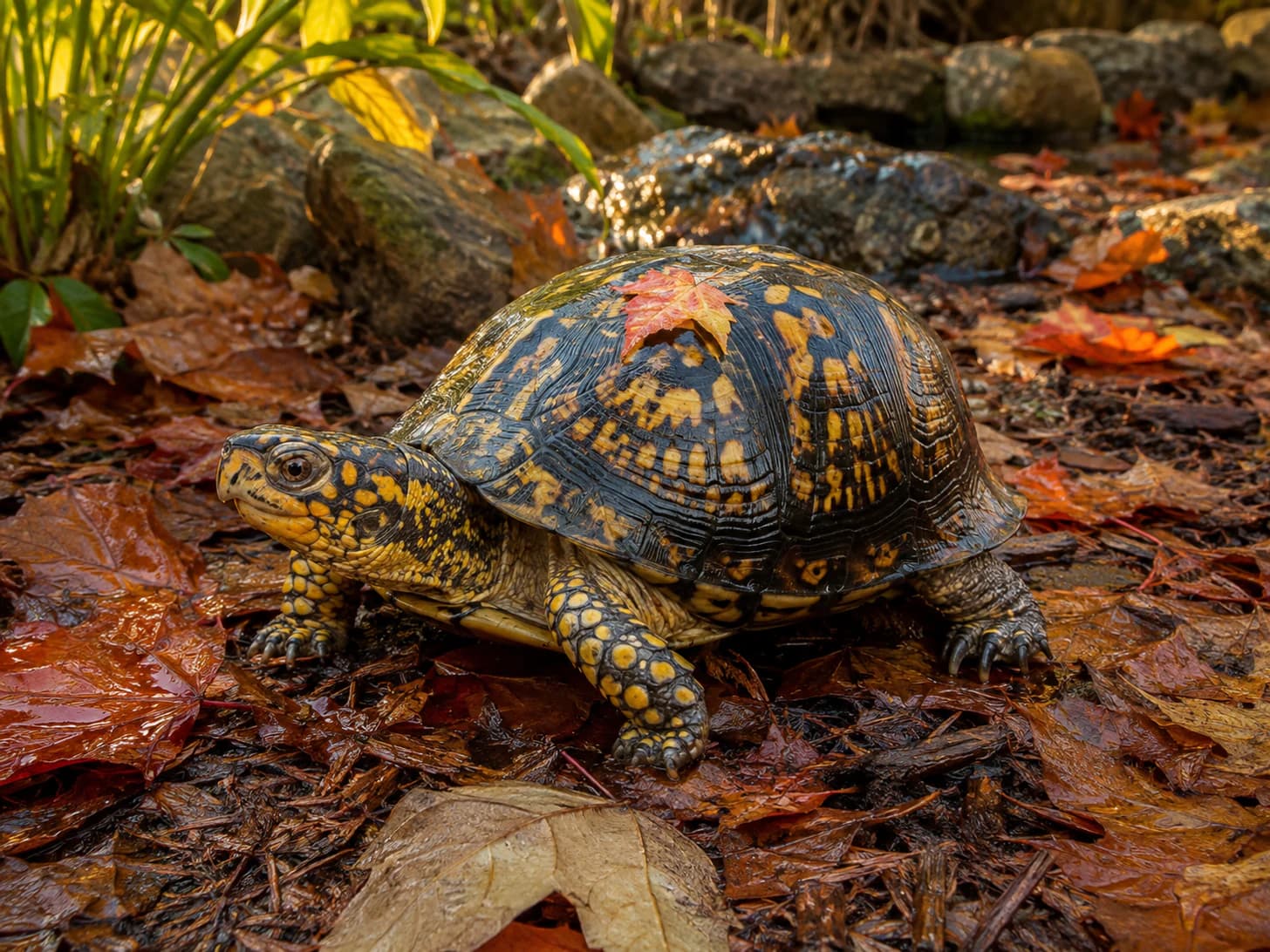


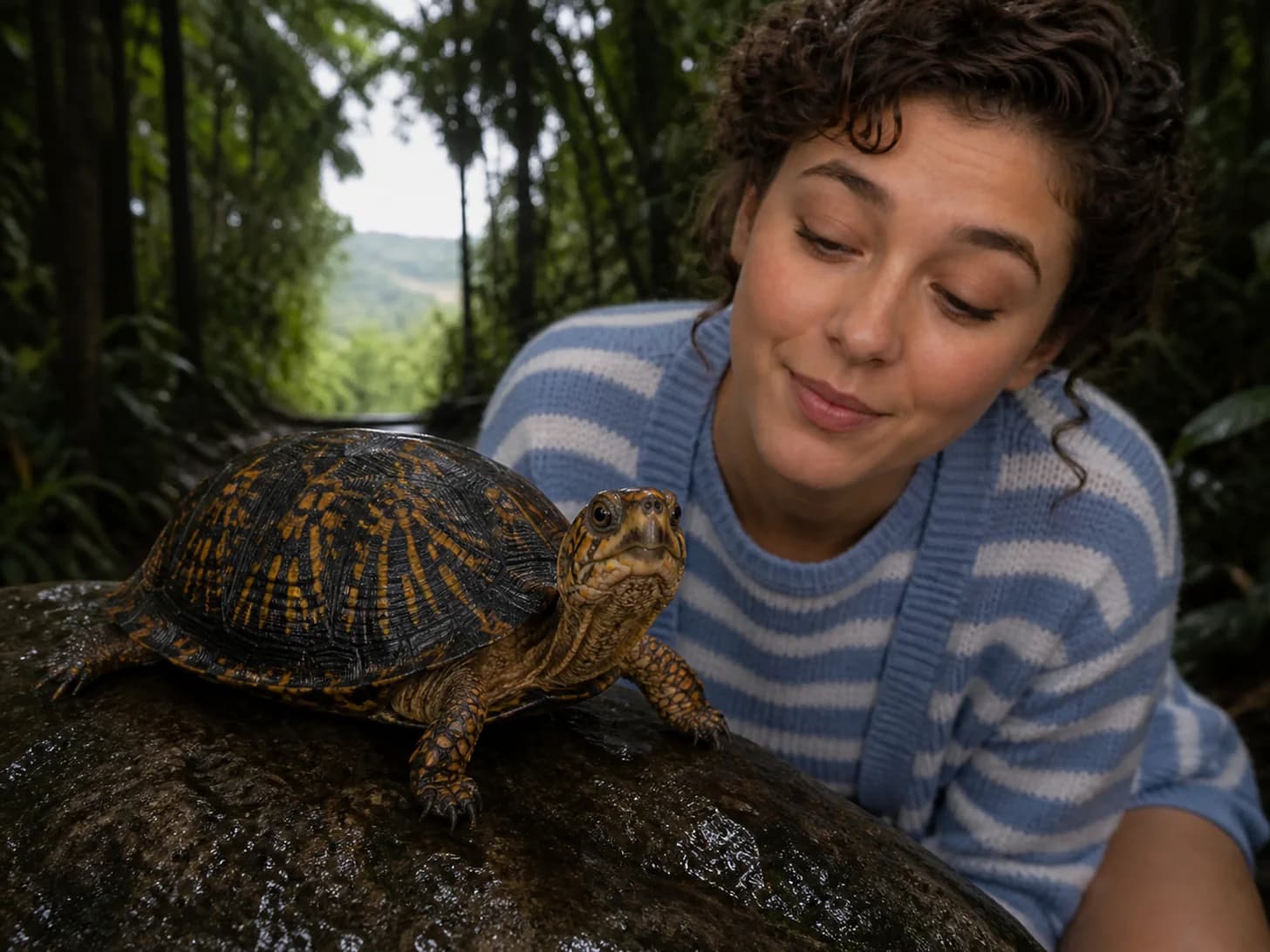
Living with a box turtle
Never take one from the wild, and never release a captive one. Wild box turtles have precise home ranges and a displaced turtle will wander trying to return, usually dying in the attempt. Collection is a major driver of the decline, and buying a wild-caught animal funds it.
An outdoor pen with a secure buried perimeter, shade, planting and a shallow water area is far better than any indoor setup where climate allows it.
They need high humidity and a damp substrate deep enough to burrow into. Kept dry indoors they develop shell and eye problems, including the swollen eyelids of vitamin A deficiency.
Indoors, UVB and a basking spot around 30°C.
They brumate through winter in temperate climates. Plan for a lifespan that may outlast you, and say so in a will.
General guidance, not veterinary advice. Individual reptiles vary, and anything about a specific animal is a question for a vet who has seen it.
Worth reading alongside this
More reptiles by breed
Every reptile breed somebody has posted a photo of.
- Blue-tongued skink5
- Ackie monitor3
- African fat-tailed gecko3
- Aldabra tortoise3
- Argentine black and white tegu3
- Ball python3
- Bearded dragon3
- Boa constrictor3
- Brazilian rainbow boa3
- California kingsnake3
- Leopard gecko3
- Amazon tree boa2
- Asian water monitor2
- Black rat snake2
- Blood python2
- Brown anole2
- Bull snake2
- Burmese python2