Bearded dragon
The central bearded dragon, Pogona vitticeps, comes from the arid interior of eastern Australia and is the most widely kept pet lizard in the world.
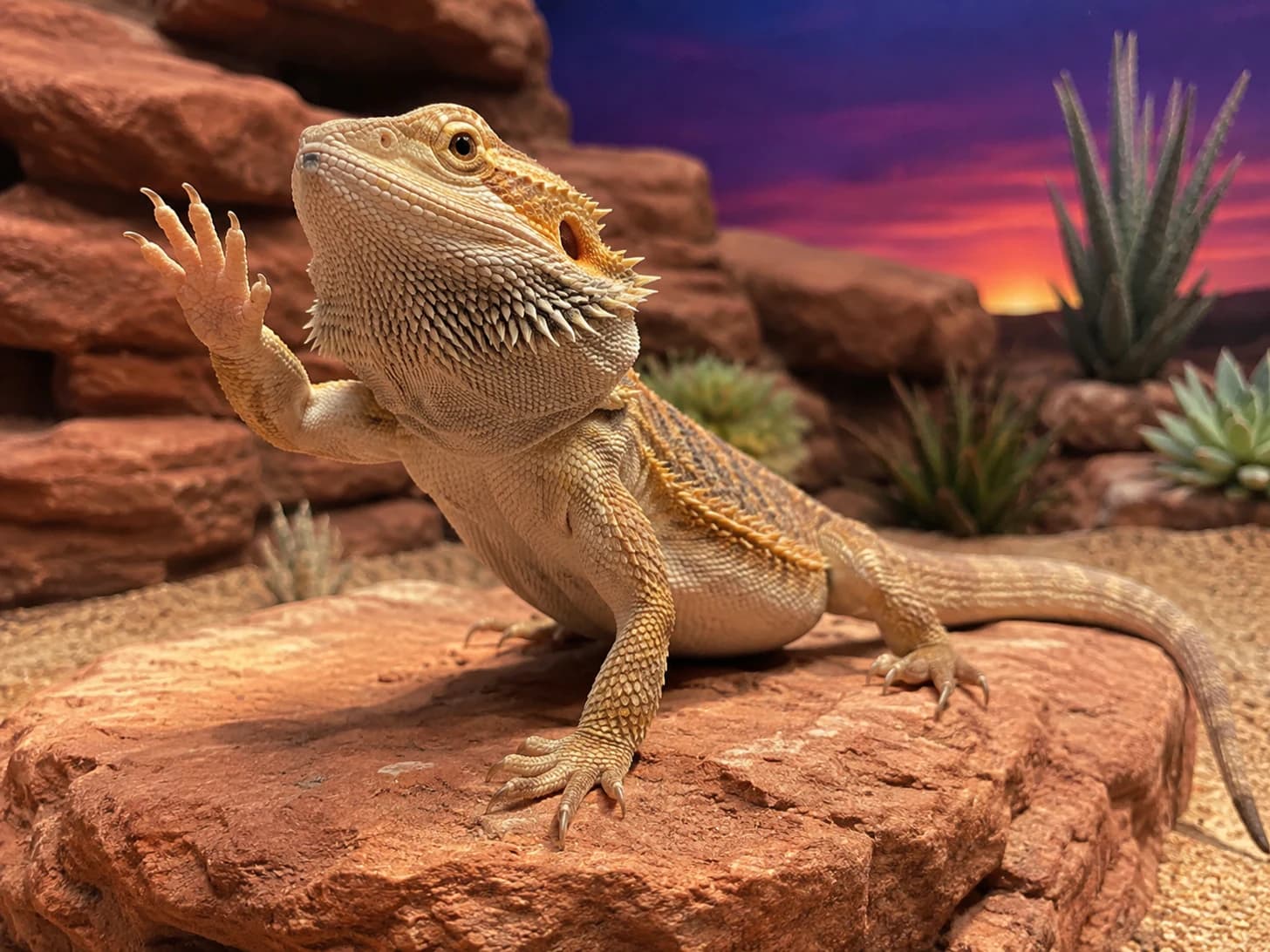
The name is for the spiny throat pouch, which the animal flares and darkens when threatened or displaying.
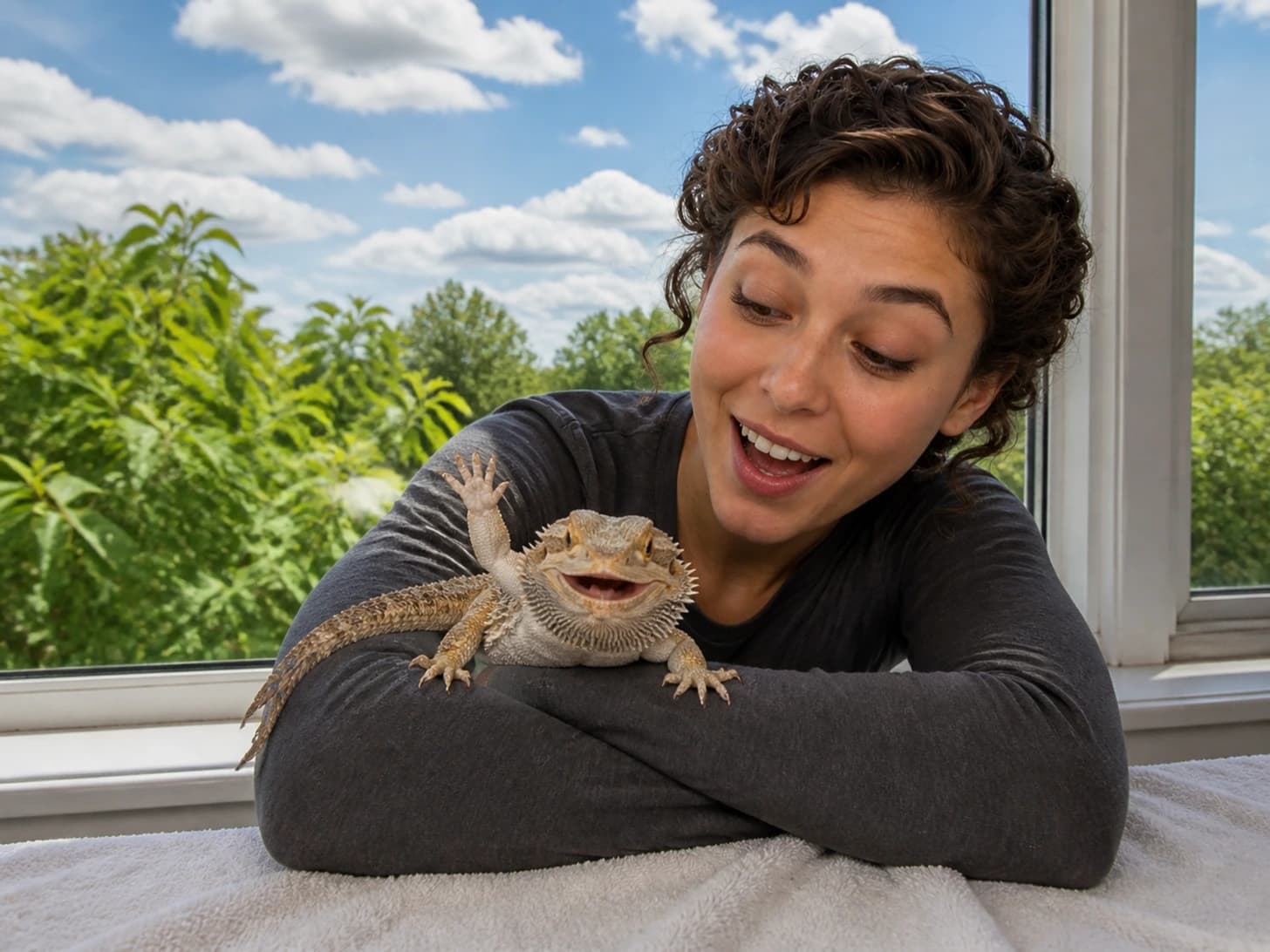
It reaches 40 to 60 centimetres including the tail and lives eight to twelve years. Bearded dragons are diurnal, sit out in the open, tolerate handling better than almost any other lizard, and communicate visibly — arm-waving, head-bobbing and beard-darkening are all readable. That combination is why they are recommended so often, and the recommendation is fair, provided the lighting is right.
- Origin
- Arid interior of eastern Australia
- Adult size
- 40–60 cm including tail
- Lifespan
- 8–12 years
- Basking temperature
- 38–42°C surface, with a cool end near 24°C
- UVB
- Essential — a strong linear tube, replaced every 6–12 months
- Diet
- Insects and greens; the ratio shifts towards greens with age
3 bearded dragon photos, newest first


Living with a bearded dragon
UVB is the thing that decides whether a bearded dragon is healthy. Without it they cannot make vitamin D3, cannot use dietary calcium, and develop metabolic bone disease — bent limbs, a rubbery jaw, tremors, eventually fractures. Use a strong linear tube across a third of the enclosure, not a coil, and replace it every six to twelve months even though it still emits visible light.
Run a thermal gradient: a basking surface at 38–42°C at one end and around 24°C at the other, so the animal chooses.
Juveniles eat mostly insects; adults should be mostly greens, because obesity and fatty liver disease are the common adult problems. Dust insects with calcium.
House alone. Adults are territorial and will fight.
An adult needs a 120 × 60 cm enclosure at minimum — most kits sold with juveniles are outgrown within a year.
General guidance, not veterinary advice. Individual reptiles vary, and anything about a specific animal is a question for a vet who has seen it.
Worth reading alongside this
More reptiles by breed
Every reptile breed somebody has posted a photo of.
- Blue-tongued skink5
- Ackie monitor3
- African fat-tailed gecko3
- Aldabra tortoise3
- Argentine black and white tegu3
- Ball python3
- Boa constrictor3
- Box turtle3
- Brazilian rainbow boa3
- California kingsnake3
- Leopard gecko3
- Amazon tree boa2
- Asian water monitor2
- Black rat snake2
- Blood python2
- Brown anole2
- Bull snake2
- Burmese python2