Ragdoll
The ragdoll is a recent and unusually well-documented breed, developed in California in the 1960s by Ann Baker from a white domestic longhair called Josephine and her offspring.
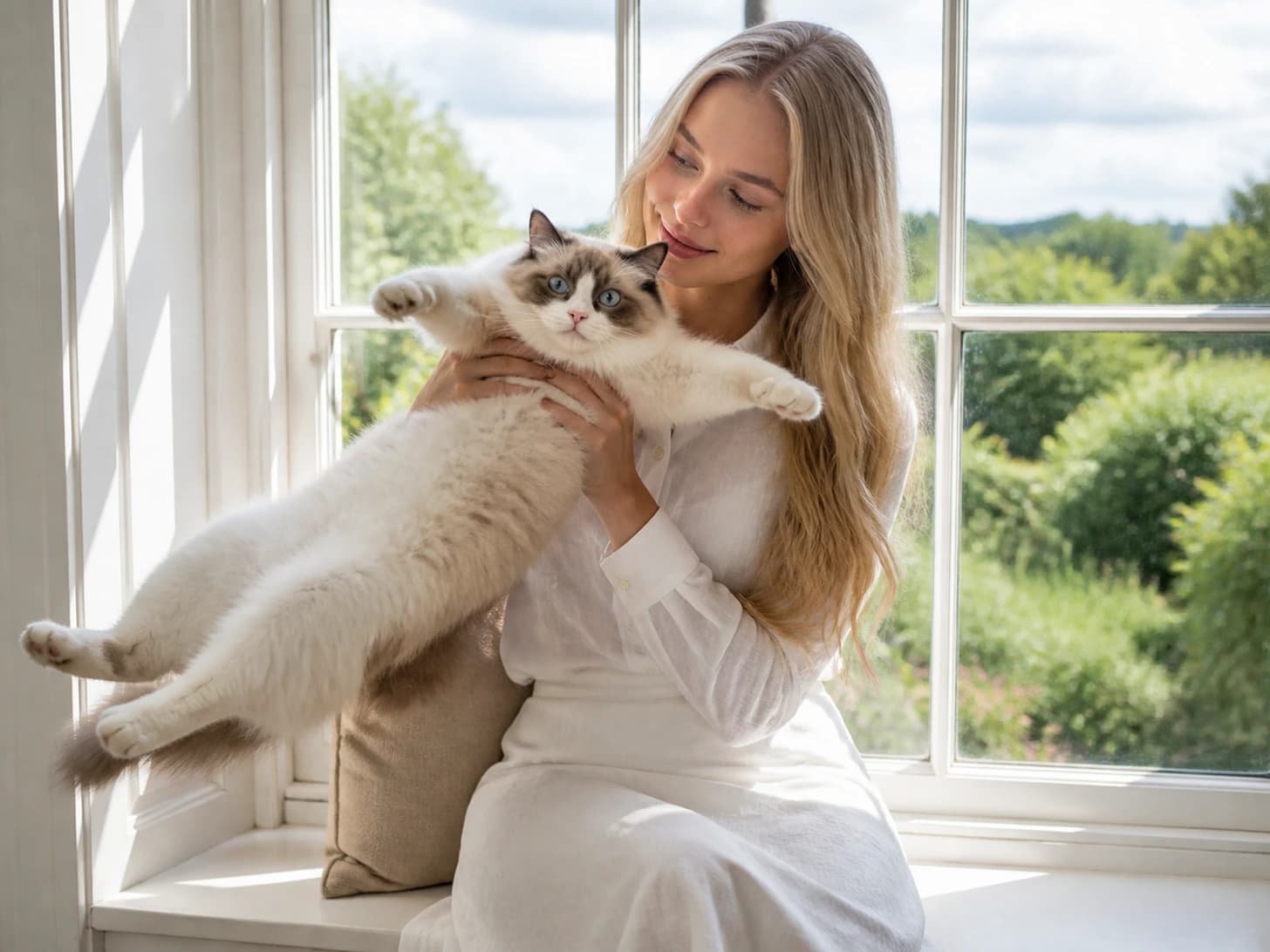
The name comes from the tendency of many ragdolls to go limp and relaxed when picked up.
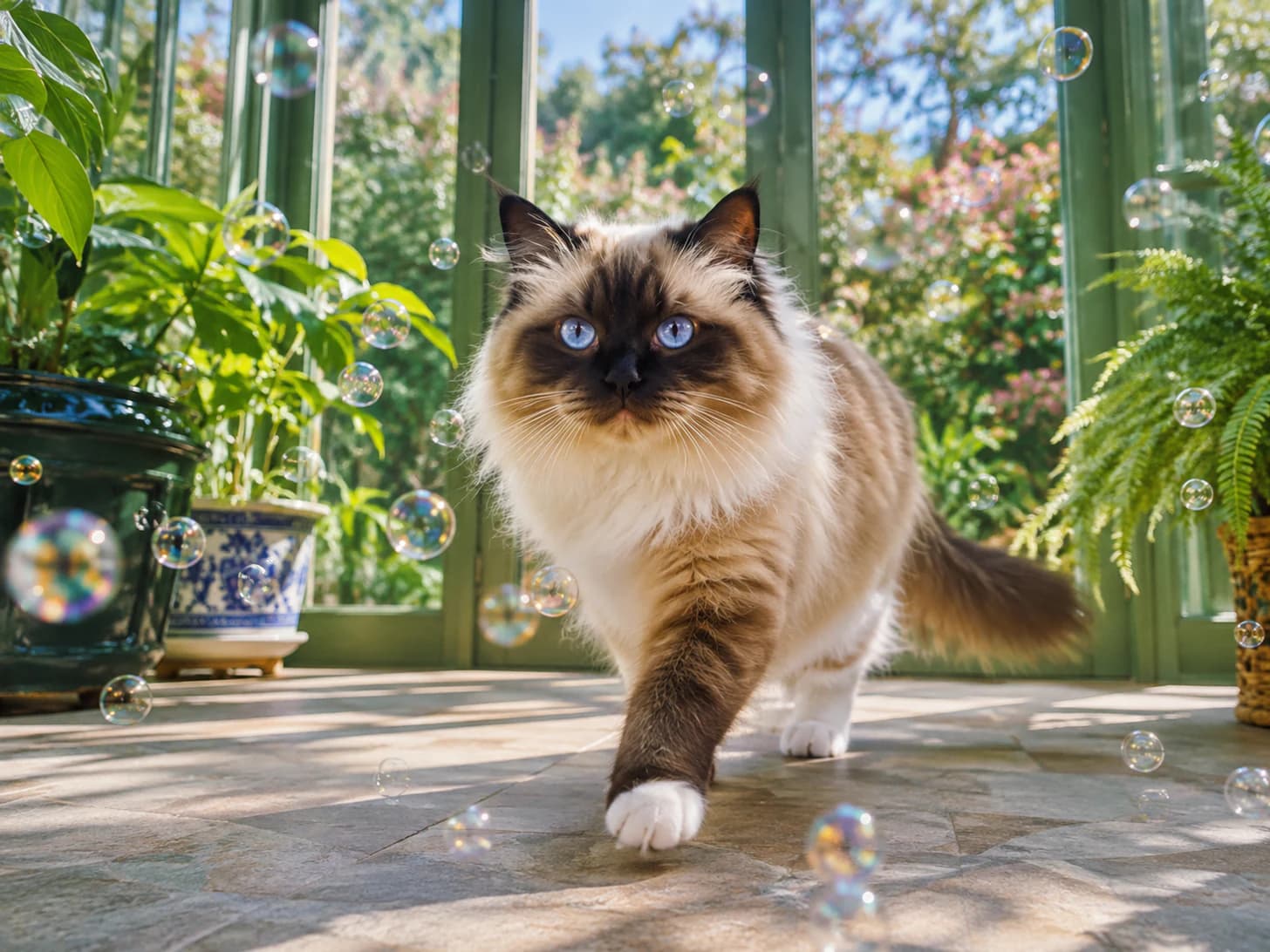
They are large, slow-maturing, semi-longhaired cats with blue eyes and a pointed pattern, coming in colourpoint, mitted and bicolour forms. The coat is plush and largely lacks a dense undercoat, so it mats less than its length suggests. Ragdolls are strikingly placid and follow their people from room to room, which is charming indoors and dangerous outdoors — this is not a streetwise cat.
- Origin
- California, United States, 1960s
- Size
- 4.5–9 kg; males considerably larger
- Lifespan
- 12–17 years
- Coat
- Semi-long and plush, with little undercoat
- Temperament
- Placid, affectionate, people-following, rarely vocal
- Grooming
- Twice weekly
Related: Domestic longhair
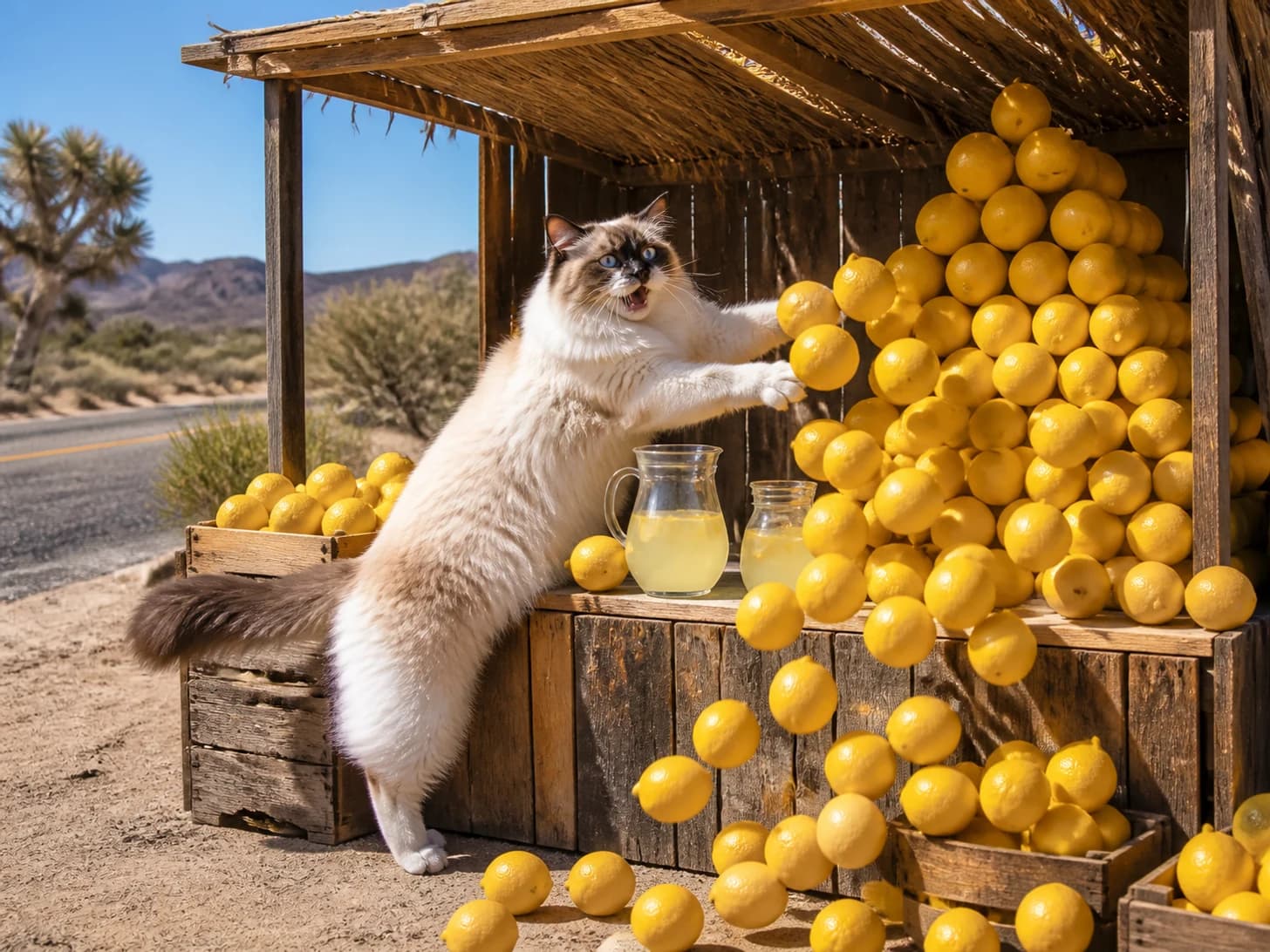
3 ragdoll photos, newest first
Living with a ragdoll
Two combing sessions a week keep the coat right, with more attention to the ruff and the britches, where mats start.
The docility is the thing to plan around. Ragdolls do not defend themselves well, do not read traffic, and are trusting with strangers, so most are kept indoors or given a secure garden. They also mature slowly, often taking three or four years to reach full size and colour.
Hypertrophic cardiomyopathy is the main inherited risk and a specific ragdoll mutation can be DNA tested; scanning is common in good lines. Bladder stones and polycystic kidney disease also appear.
General guidance, not veterinary advice. Individual cats vary, and anything about a specific animal is a question for a vet who has seen it.
Worth reading alongside this
More cats by breed
Every cat breed somebody has posted a photo of.