Birman
The Birman, the Sacred Cat of Burma, arrived in France in the 1920s and was rebuilt after the Second World War from a handful of surviving cats.
Its origin story involves temple cats and a blue-eyed goddess; its documented history begins in France.
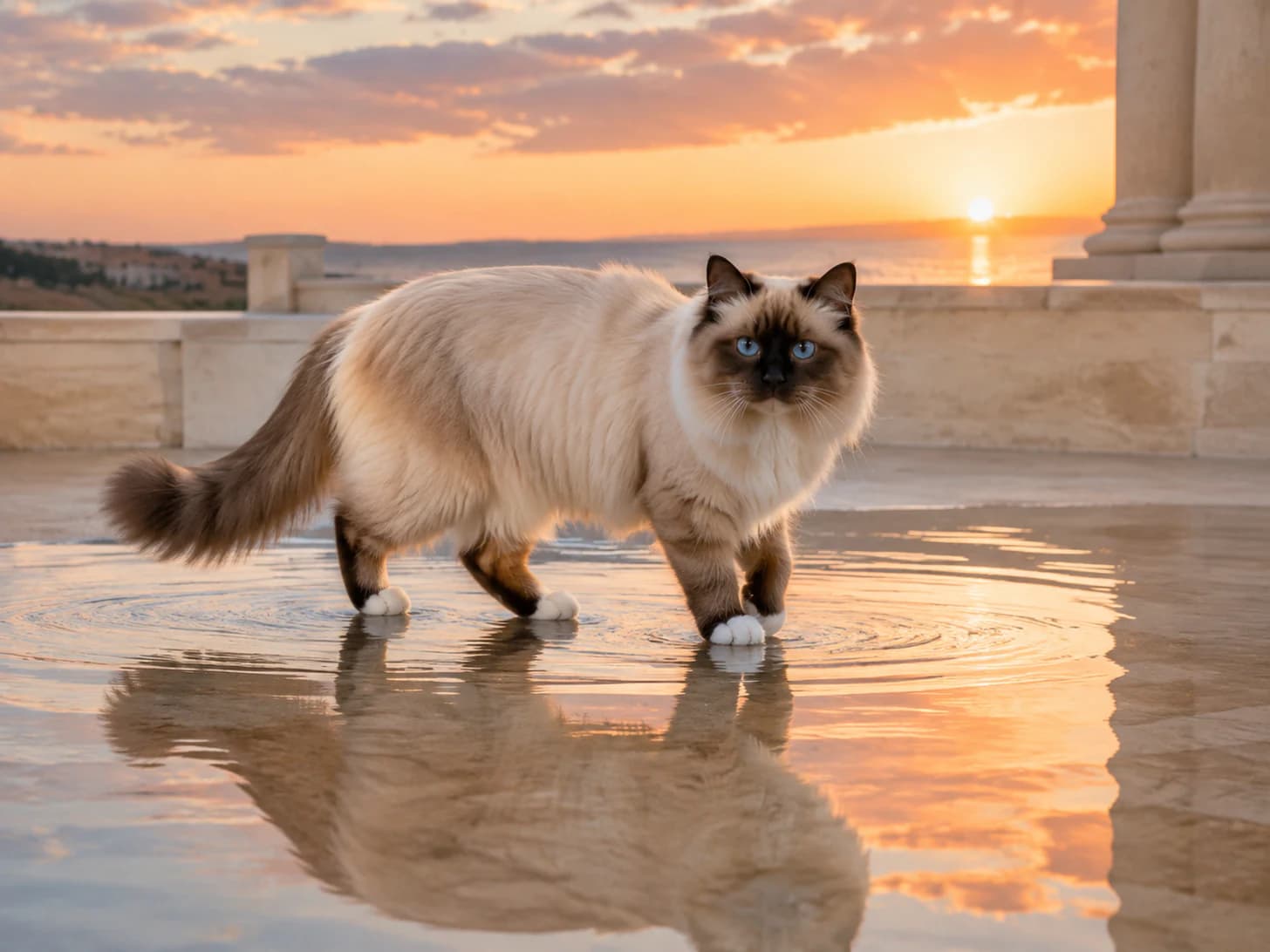
It weighs 4 to 6 kilograms, with a silky semi-long coat that does not mat readily, deep blue eyes, colourpoint markings and — the defining feature — pure white gloves on all four paws, symmetrical and sharply defined. Temperament is one of the breed's strongest selling points: gentle, quiet, people-following and notably tolerant, which makes it a common recommendation for households with children.
- Origin
- France, 1920s; rebuilt post-war from a few cats
- Size
- 4–6 kg
- Lifespan
- 13–16 years
- Coat
- Silky semi-long with little undercoat; mats less than it looks
- Markings
- Colourpoint with symmetrical white gloves on all four feet
- Health
- Hypertrophic cardiomyopathy and feline infectious peritonitis risk
3 birman photos, newest first



Living with a birman
Ask about cardiac screening. Hypertrophic cardiomyopathy occurs in the breed and is detected by echocardiogram rather than a DNA test, so breeders should be scanning their breeding cats annually.
The post-war bottleneck left the gene pool narrow, and the breed has an above-average reported incidence of feline infectious peritonitis in kittens. A breeder's answers about FIP history in their lines are worth listening to carefully.
The coat has little undercoat and mats far less than its length suggests. Twice-weekly brushing is enough.
They are quiet, gentle and sociable, and they follow people from room to room rather than demanding attention loudly.
Annual checks with a listen to the heart, moving to twice yearly past ten.
General guidance, not veterinary advice. Individual cats vary, and anything about a specific animal is a question for a vet who has seen it.
Worth reading alongside this
More cats by breed
Every cat breed somebody has posted a photo of.