Lykoi
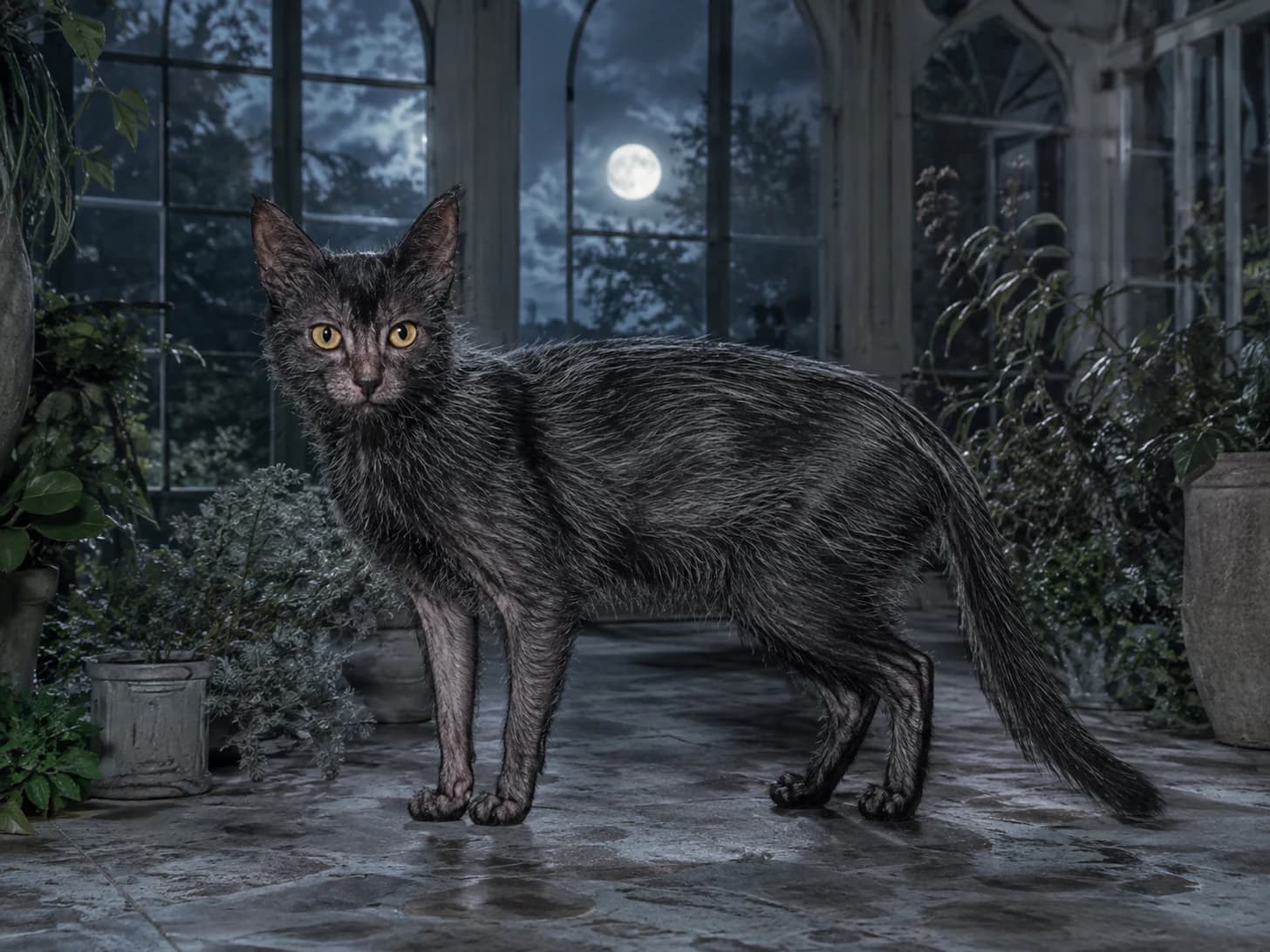
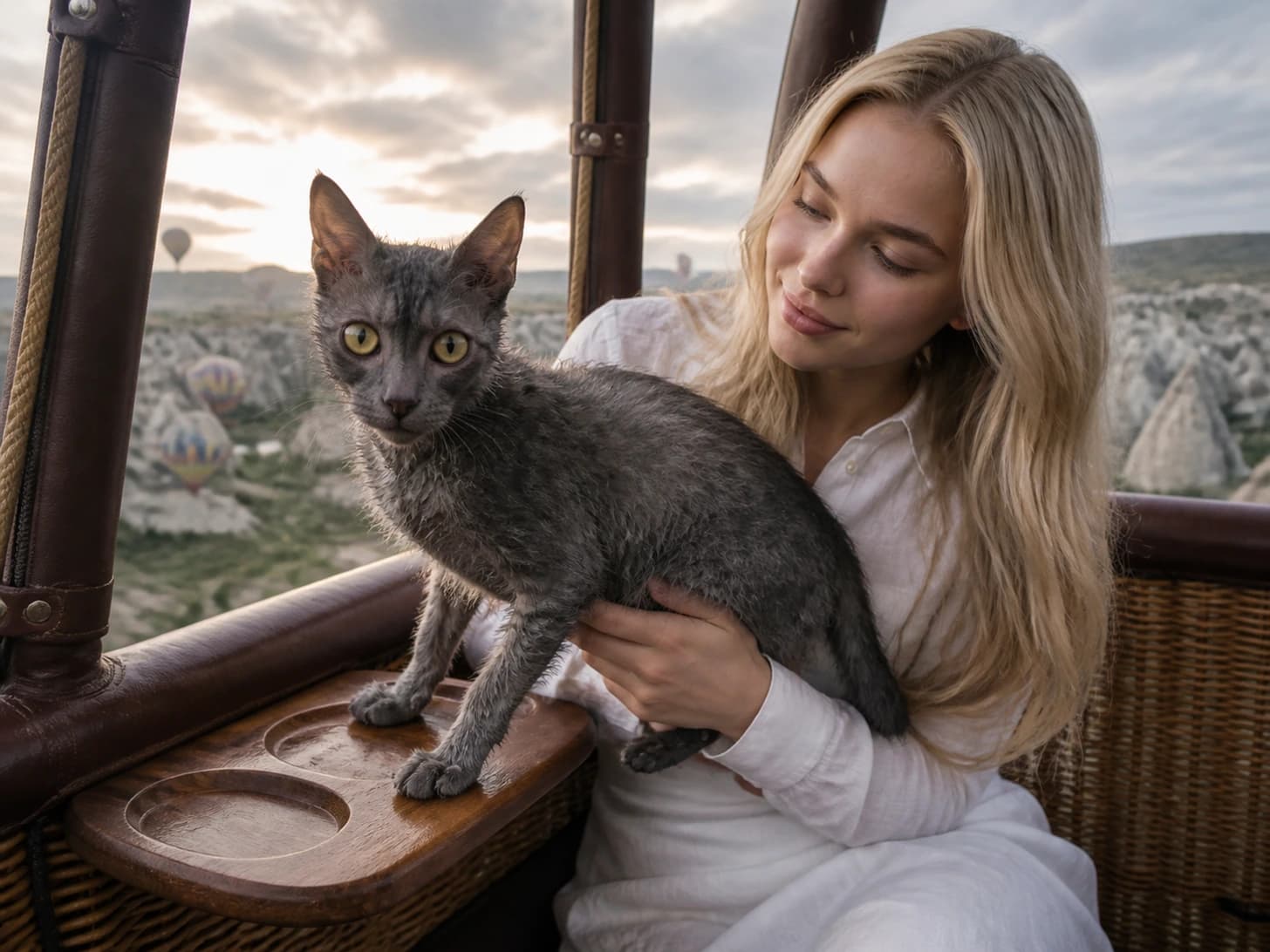
The Lykoi is a recent breed built on a natural mutation found in feral cats in Tennessee and Virginia around 2010, which produces partial hairlessness and a roan coat — black hairs mixed with white, with bare skin around the eyes, muzzle, chin and behind the ears.
The resemblance to a small werewolf gave it its name, from the Greek for wolf.
It weighs 2.5 to 5 kilograms and is lean and moderate in build. The mutation affects the hair follicles, which lack the components to maintain a full coat, so the cat moults periodically and can go nearly bald before regrowing. Veterinary examination of the founding cats confirmed the mutation is not associated with disease, which is unusual among coat mutations.
- Origin
- Tennessee and Virginia, United States, around 2010
- Size
- 2.5–5 kg
- Lifespan
- 12–15 years
- Coat
- Roan and partially hairless; moults periodically to near-bald
- Genetics
- Recessive; not linked to any disease in testing
- Temperament
- Active, intelligent, strong prey drive
3 lykoi photos, newest first

Living with a lykoi
The moulting is normal. A Lykoi may lose most of its coat and regrow it over weeks or months, sometimes several times a year, and it looks alarming the first time. Redness, flaking or itching alongside it is not normal and needs a vet.
The skin needs care like a partially hairless cat's: occasional bathing to manage oil, regular ear cleaning since there is little hair to hold wax back, and protection from sun on the bare areas.
They feel the cold. Warm beds and a warm house.
They are active and intelligent with a strong prey drive, and they need real play and puzzle feeding.
Outcrossing to black domestic shorthairs is part of the breeding programme, which keeps the gene pool reasonably wide for such a new breed.
General guidance, not veterinary advice. Individual cats vary, and anything about a specific animal is a question for a vet who has seen it.
Worth reading alongside this
More cats by breed
Every cat breed somebody has posted a photo of.