Bengal
The bengal is a hybrid breed, developed in the United States from the 1960s by crossing domestic cats with the Asian leopard cat, a small wild species.
Modern bengals are several generations removed from the wild ancestor and are fully domestic, though early-generation cats are restricted in some places.
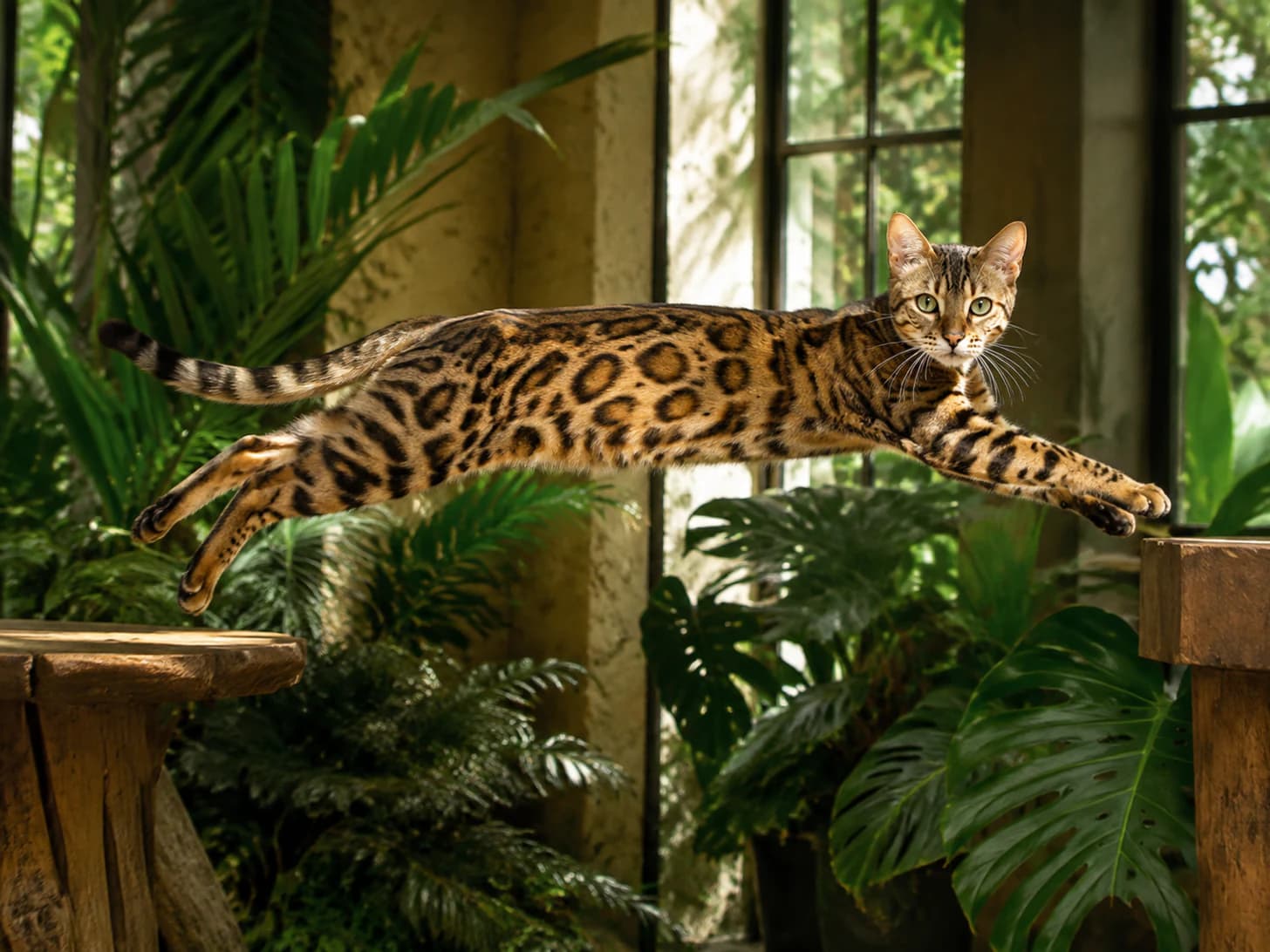
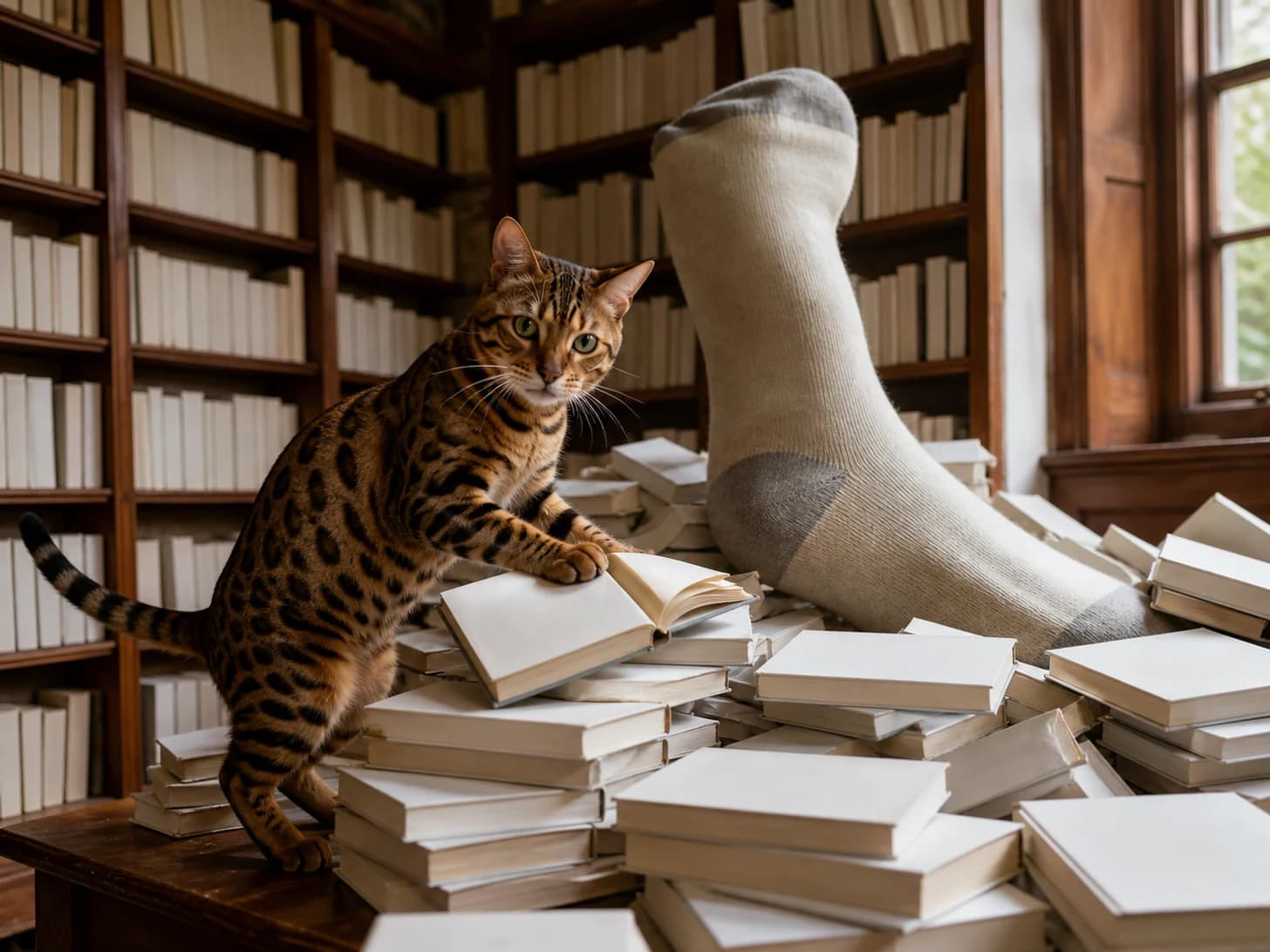
The point of the breed is the coat: rosetted or marbled, often with a glittered sheen, over a long muscular body. Bengals are among the most active cats kept — genuinely athletic, extremely intelligent, frequently interested in water, and inclined to open doors and cupboards that a normal cat would ignore.
- Origin
- United States, from Asian leopard cat crosses
- Size
- 4–7 kg
- Lifespan
- 12–16 years
- Coat
- Short and dense, rosetted or marbled, often glittered
- Temperament
- Highly active, vocal, intelligent, water-curious
- Grooming
- Weekly
Related: Asian
3 bengal photos, newest first
Living with a bengal
The coat is easy — a weekly rub over and it stays sleek.
Everything else about a bengal is about outlet. This is a cat that needs climbing height, puzzle feeders, wand play twice a day and ideally a companion; a bored bengal is destructive and loud in a way few other breeds manage. Many owners build catios.
Check local rules — early-generation hybrids are regulated in several countries and US states.
Health-wise, watch for hypertrophic cardiomyopathy, progressive retinal atrophy and pyruvate kinase deficiency, all of which have testing available.
General guidance, not veterinary advice. Individual cats vary, and anything about a specific animal is a question for a vet who has seen it.
More cats by breed
Every cat breed somebody has posted a photo of.