Bombay
The Bombay was created in Kentucky from 1958 by Nikki Horner, who set out to produce a miniature black panther by crossing sable Burmese with black American Shorthairs.
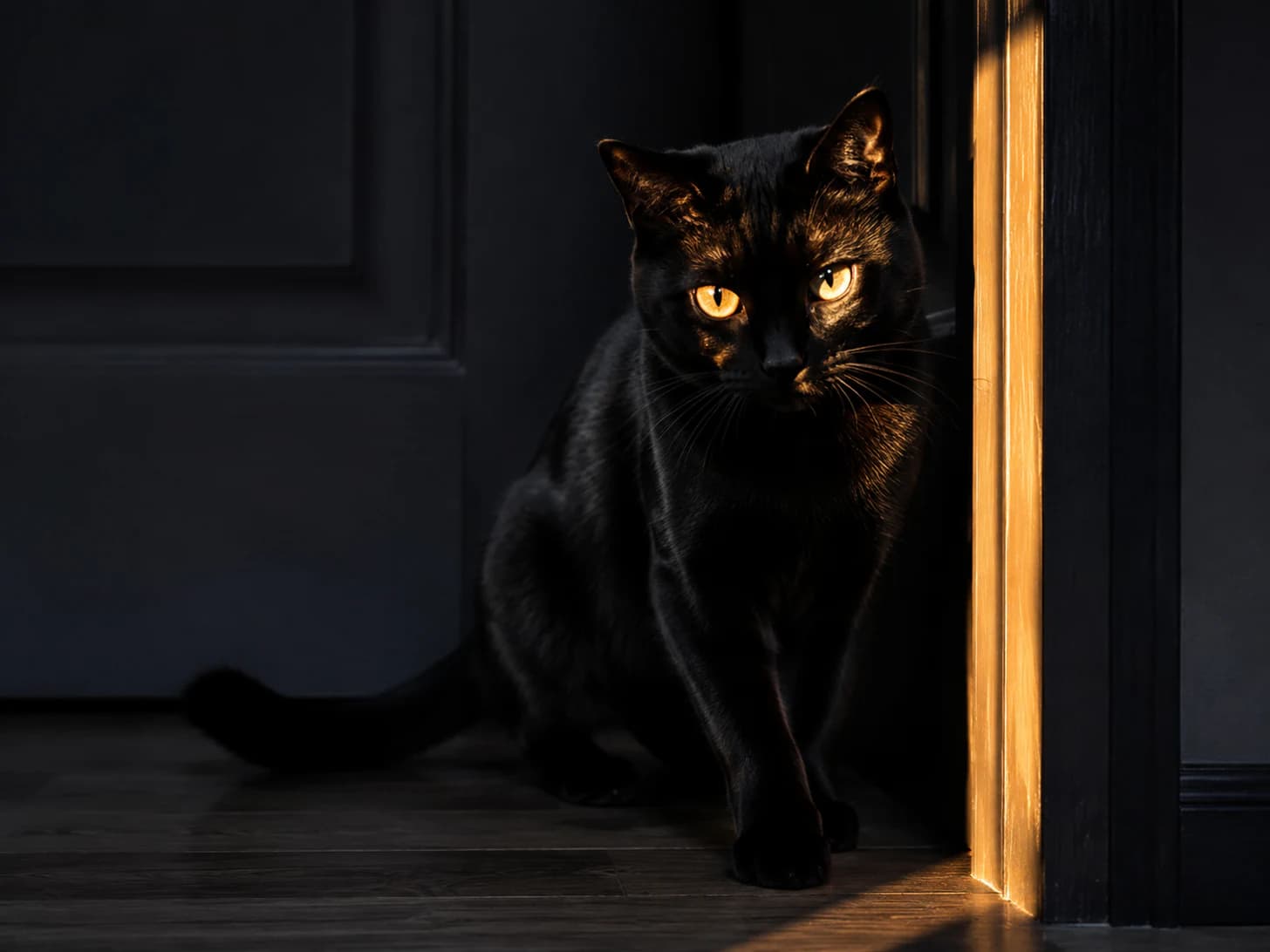
The target was specific: a solid jet-black coat to the roots, patent-leather glossy, with copper or gold eyes.
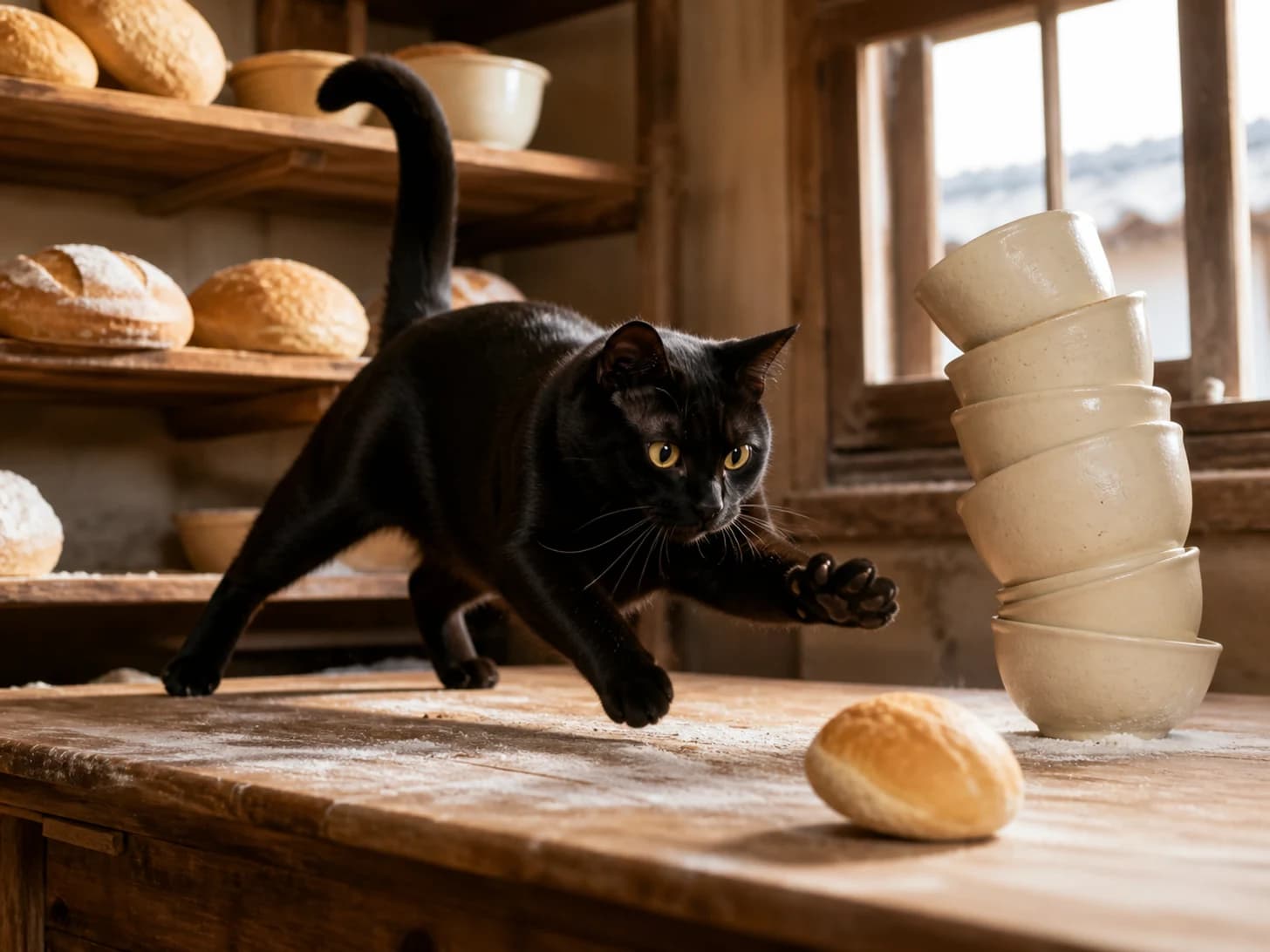
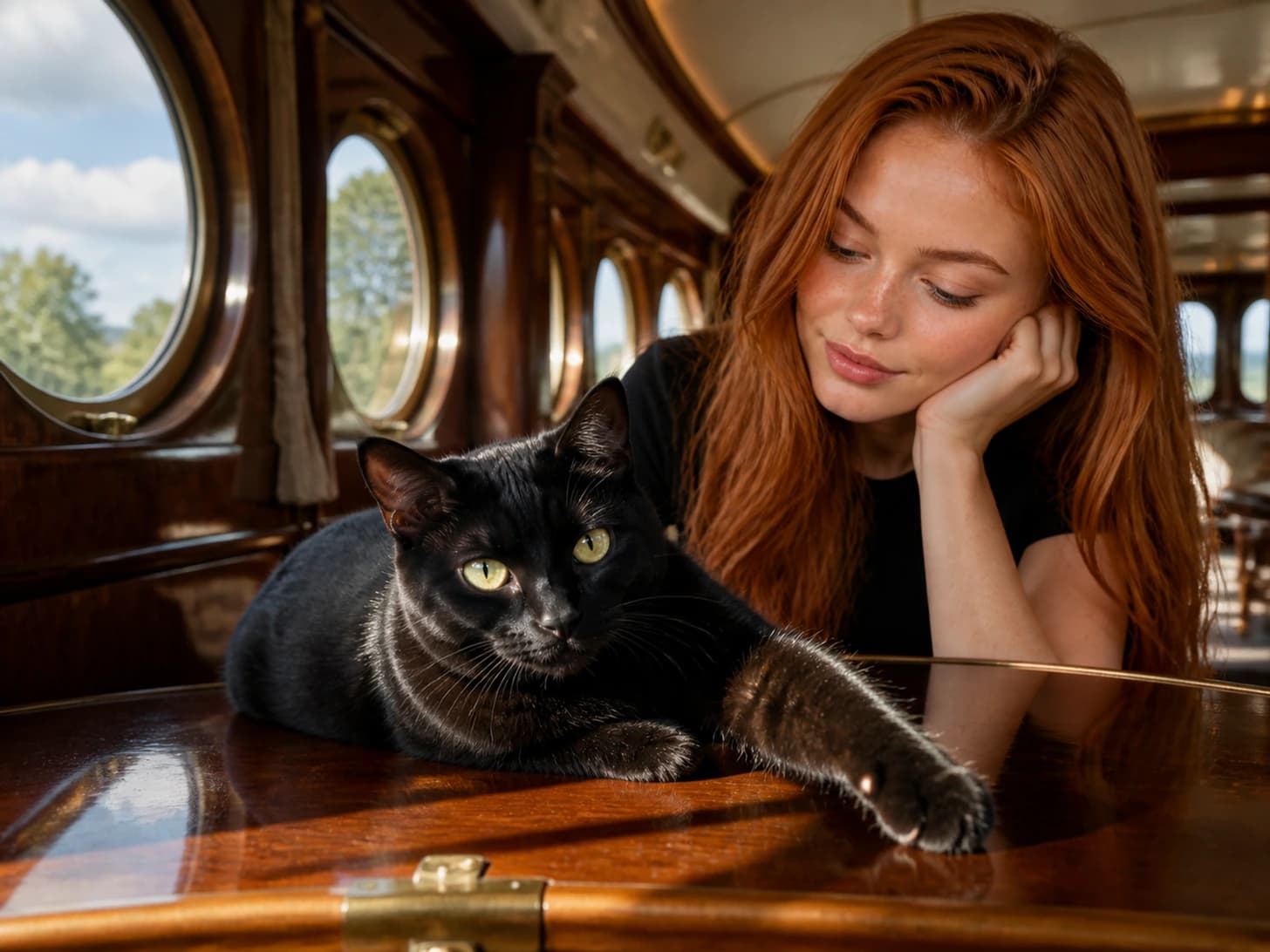
It weighs 3.5 to 5.5 kilograms and is deceptively heavy — muscular and dense under a very short, close coat. Temperament is Burmese-derived and strong: Bombays are sociable, vocal, attention-seeking and often described as dog-like, greeting visitors and following their owners about. They are also notably heat-seeking, and will find the warmest place in any house.
- Origin
- Kentucky, United States, from 1958
- Size
- 3.5–5.5 kg; heavier than it looks
- Lifespan
- 12–18 years
- Coat
- Jet black to the roots, short and patent-leather glossy
- Temperament
- Sociable, vocal, attention-seeking, dog-like
- Health
- Burmese hypokalaemia, HCM, and craniofacial defect in some lines
Related: Burmese
3 bombay photos, newest first
Living with a bombay
Ask about the Burmese-line tests: hypokalaemic polymyopathy has a DNA test, and hypertrophic cardiomyopathy needs echocardiographic screening of breeding cats.
Burmese head-fault craniofacial defect is a serious lethal condition in some Burmese lines and a breeder should be able to speak to it.
They are prone to weight gain and to diabetes, both inherited tendencies from the Burmese side. Measured meals, not a full bowl.
The coat needs almost nothing — a weekly rub with a chamois or a hand keeps the shine.
They demand company and are poor candidates for a house that is empty all day. They also seek out heat, so check tumble dryers, warm car bonnets and airing cupboards before closing them.
General guidance, not veterinary advice. Individual cats vary, and anything about a specific animal is a question for a vet who has seen it.
Worth reading alongside this
More cats by breed
Every cat breed somebody has posted a photo of.