Snowshoe
The Snowshoe was developed in Philadelphia in the 1960s, after a Siamese breeder found kittens in a litter with white feet.
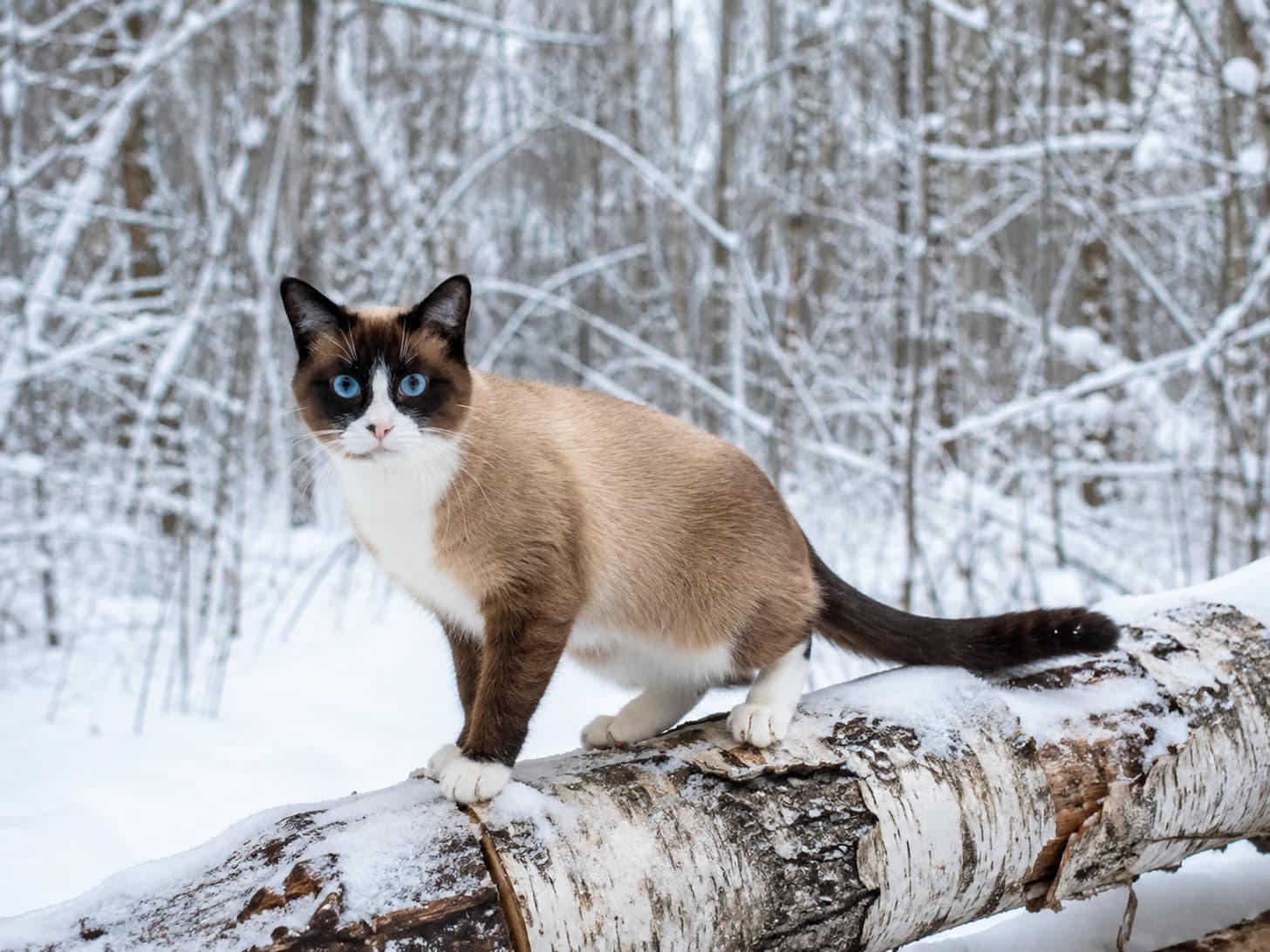
It was created by crossing Siamese with bicolour American Shorthairs, and it combines a colourpoint coat with white boots and, ideally, an inverted white V across the face.
It weighs 3.5 to 5.5 kilograms and is medium and muscular, heavier than a Siamese. The breed is uncommon, and the reason is genetic rather than commercial: the white markings are controlled by multiple genes and cannot be reliably reproduced, so even careful breeding produces many kittens that fall outside the standard. Temperament is Siamese-derived — vocal, social and strongly attached.
- Origin
- Philadelphia, United States, 1960s
- Size
- 3.5–5.5 kg
- Lifespan
- 14–19 years
- Coat
- Short colourpoint with white feet and ideally a facial V
- Breeding
- Markings are polygenic and hard to reproduce — hence rarity
- Health
- Siamese-line concerns; generally robust
Related: Siamese
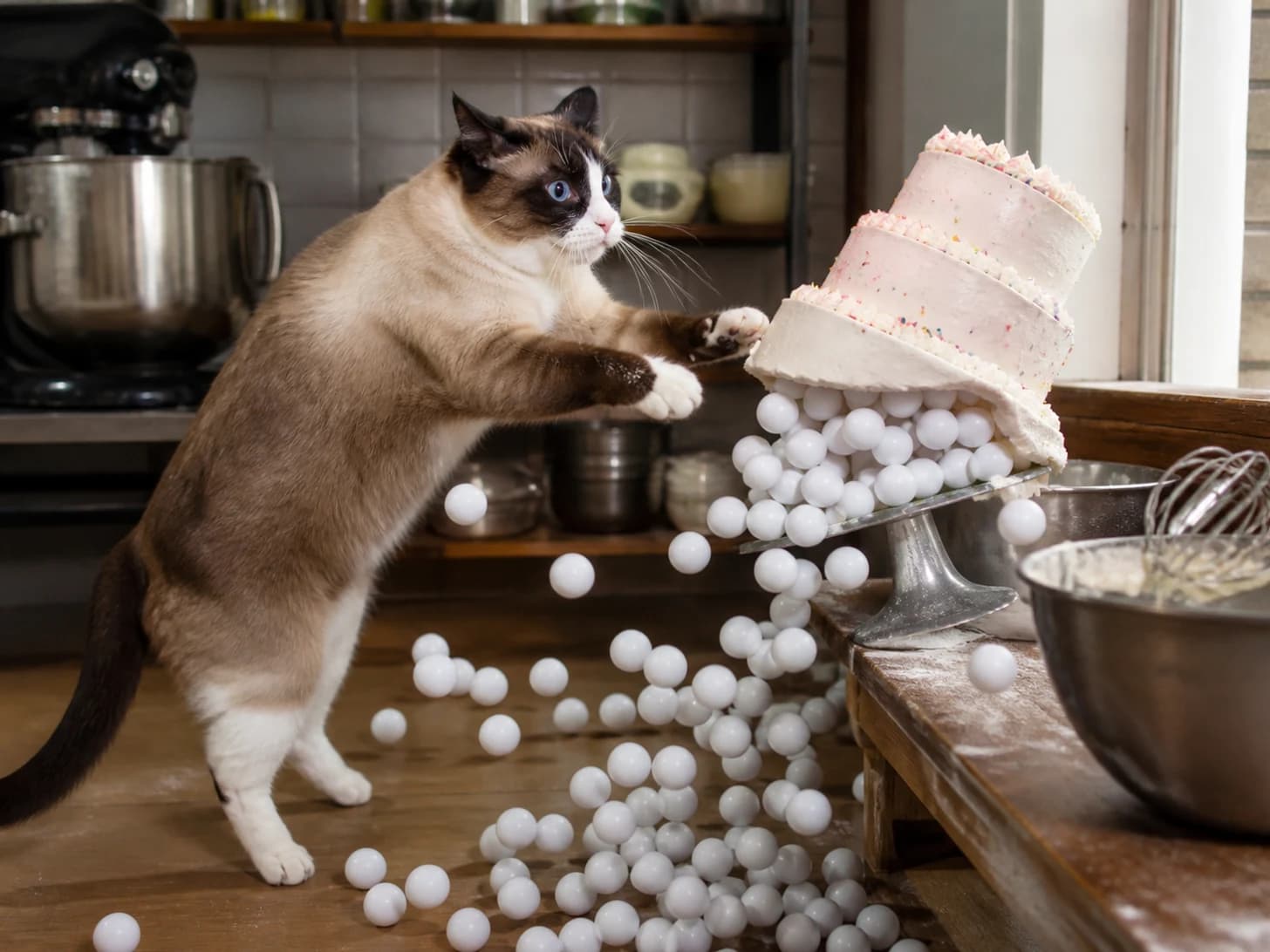
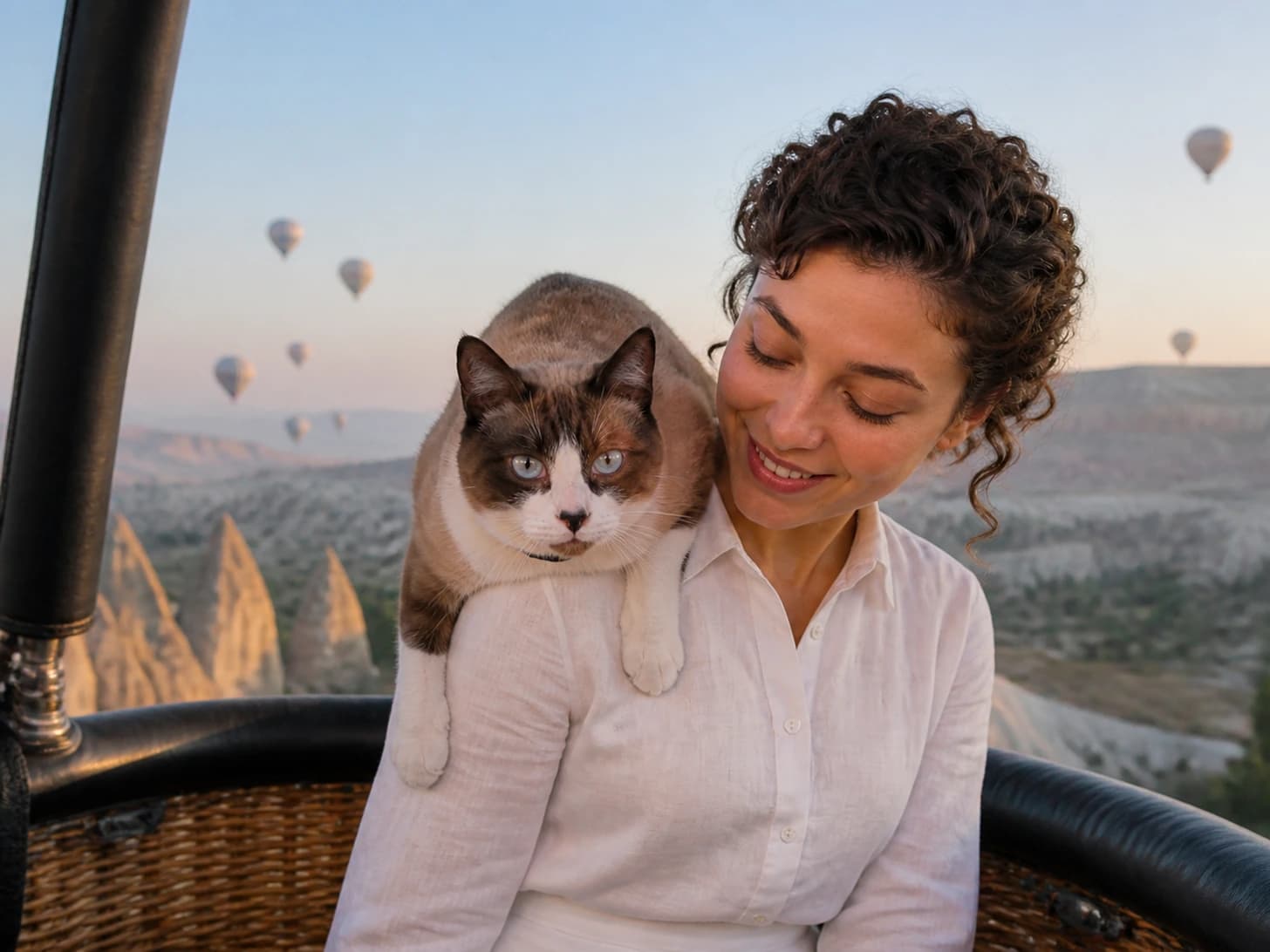
3 snowshoe photos, newest first
Living with a snowshoe
Markings vary and mean nothing medically. A Snowshoe with mismatched boots or no facial V is exactly as healthy as a show-standard one, and pet-quality kittens from good breeders are often the sensible buy.
Ask about progressive retinal atrophy testing from the Siamese side.
They are vocal — less piercing than a Siamese, but constant — and very social. They dislike being left alone and often attach intensely to one person.
Many like water and will join a bath or play with a running tap.
The short coat needs a weekly brush. Point colour darkens with age and cold, which is normal. Dental care from a young age, given the Siamese ancestry.
General guidance, not veterinary advice. Individual cats vary, and anything about a specific animal is a question for a vet who has seen it.
Worth reading alongside this
More cats by breed
Every cat breed somebody has posted a photo of.