German rex
The German Rex traces to a cat called Lämmchen, found in the grounds of a Berlin hospital in 1951 — one of the earliest documented rex mutations in cats, and predating the Cornish Rex's discovery by a year.
The two turned out to carry the same recessive gene and can be crossed.
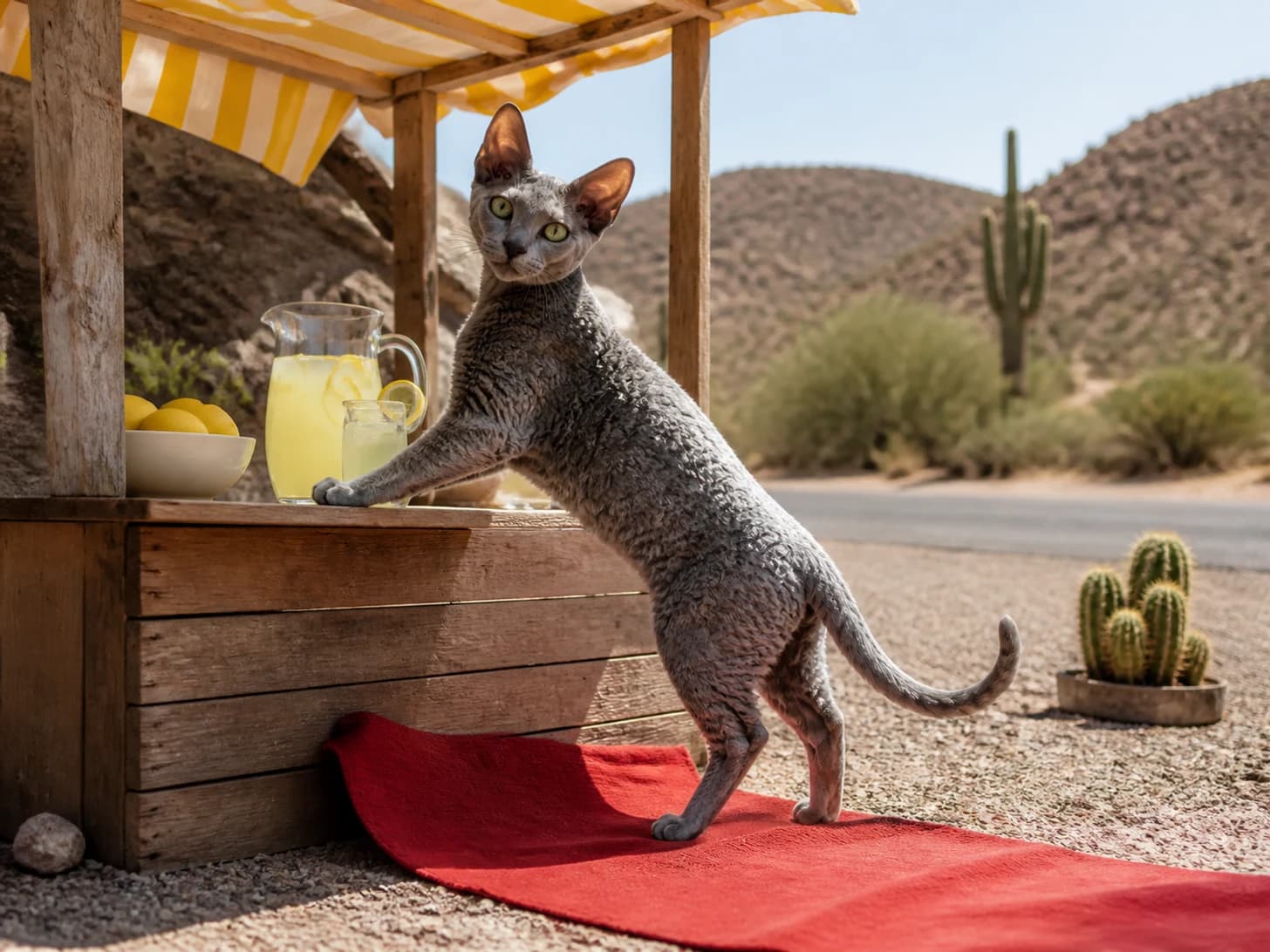
It weighs 2.5 to 4.5 kilograms, medium and muscular with a rounded head, and the coat is short, soft and wavy with no guard hairs, giving a texture often compared to velvet. The whiskers are crimped and often short or broken. The breed is rare, particularly outside Germany, and unlike many mutation breeds the rex coat carries no associated health problem.
- Origin
- Berlin, Germany, 1951
- Size
- 2.5–4.5 kg
- Lifespan
- 12–16 years
- Coat
- Short, soft and wavy with no guard hairs; crimped whiskers
- Genetics
- Recessive; the same gene as the Cornish Rex
- Health
- No conditions linked to the coat
Related: Cornish rex · Devon rex · Selkirk rex · Tennessee rex
2 german rex photos, newest first


Living with a german rex
The thin coat means they feel the cold. Warm sleeping places matter, and they will seek out radiators, laps and sunny spots.
They also sunburn on thinly covered areas, particularly the ears, so an unshaded sunny window is not the kindness it looks like.
Do not brush hard. The coat has no guard hairs and vigorous brushing breaks the wave; a hand or a soft cloth is enough. They tend to need their ears cleaned more often than most cats.
The coat produces the same allergens as any other, so the frequent claim that rex cats are hypoallergenic does not hold. Some allergic people do react less, but test before committing.
They are active, playful and affectionate, and comfortable in company.
General guidance, not veterinary advice. Individual cats vary, and anything about a specific animal is a question for a vet who has seen it.
Worth reading alongside this
More cats by breed
Every cat breed somebody has posted a photo of.