Black velvet chinchilla
Black velvet is a dominant colour mutation of the domestic chinchilla, producing a dark, glossy coat with a deep black veil over the head, back and flanks, fading to a white belly, and characteristic dark stripes down the front legs.
The mutation carries a genetic caveat that matters if breeding is ever considered: the black velvet gene is lethal in the homozygous form, so two black velvets bred together lose a quarter of the litter before birth. Reputable breeders always pair a black velvet with a standard grey or another non-velvet colour. As a pet it is an ordinary chinchilla in every respect.
- Origin
- A dominant colour mutation of the domestic chinchilla
- Size
- 400–600 g; females larger
- Lifespan
- 15–20 years
- Coat
- Dark glossy veil over a white belly; dark leg stripes
- Genetics
- Lethal when homozygous — never breed velvet to velvet
- Housing
- Cool — below 25°C — tall cage, daily dust bath
Related: Beige chinchilla · Black bear hamster · Black sable ferret
3 black velvet chinchilla photos, newest first
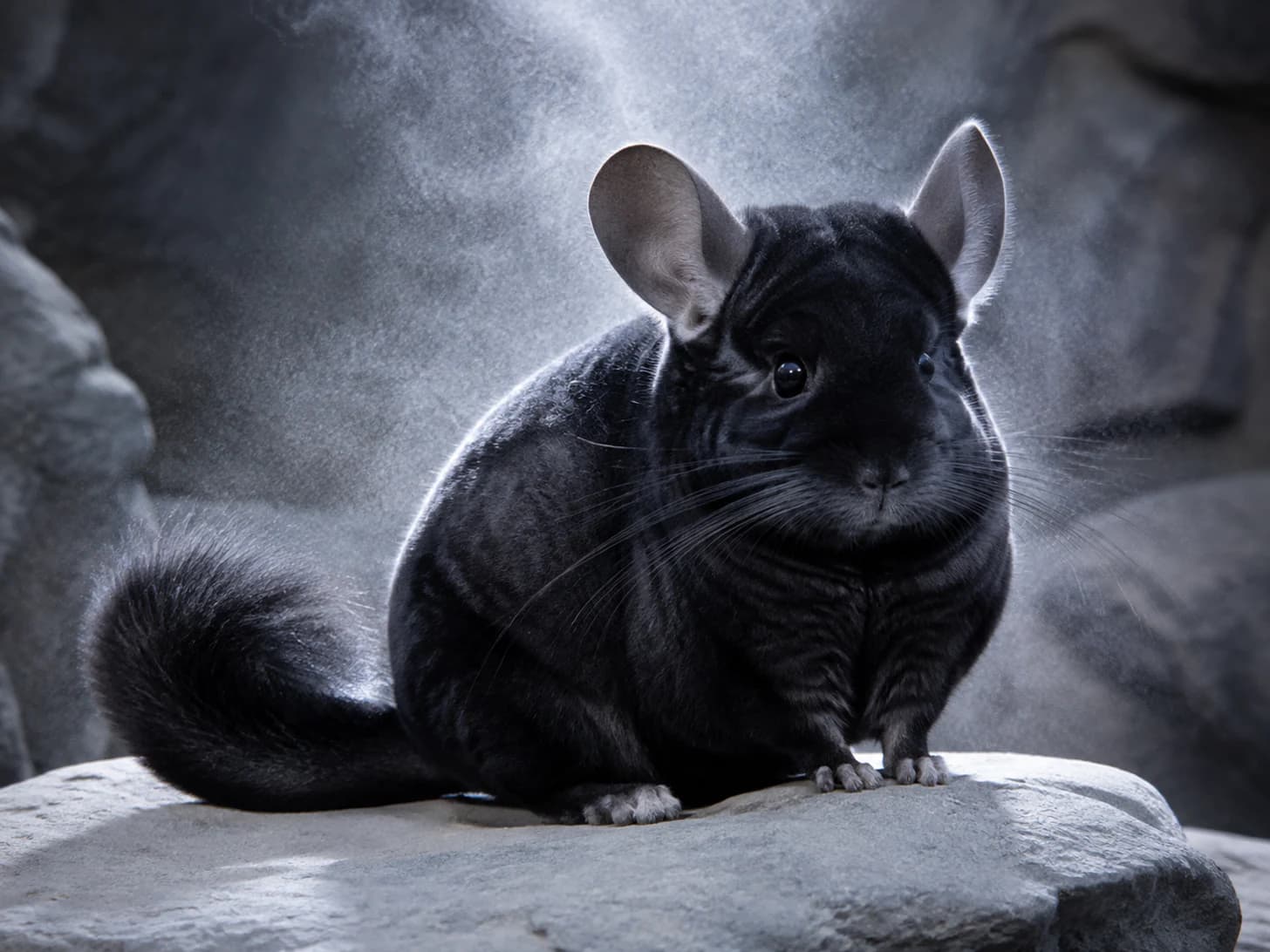

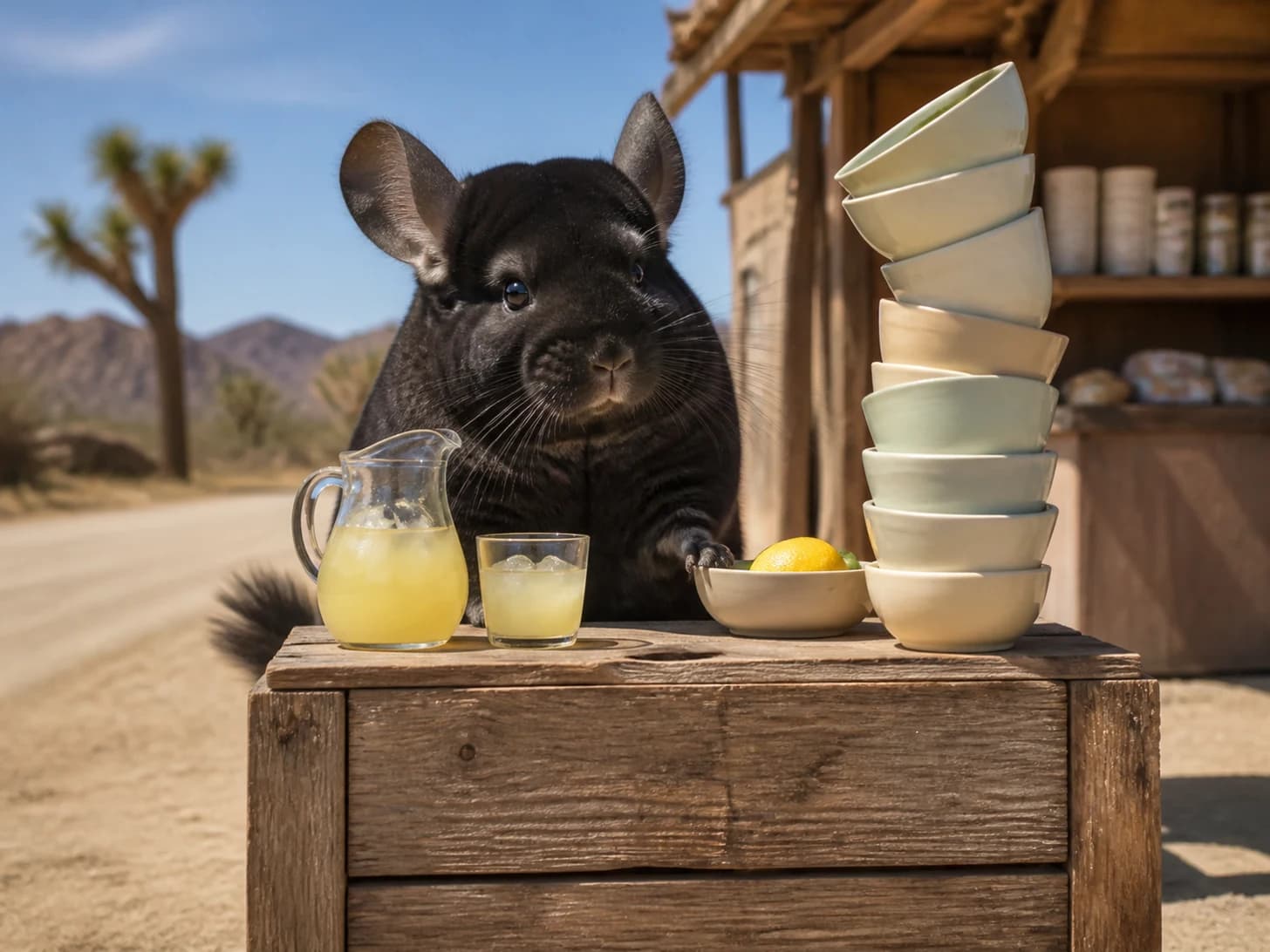
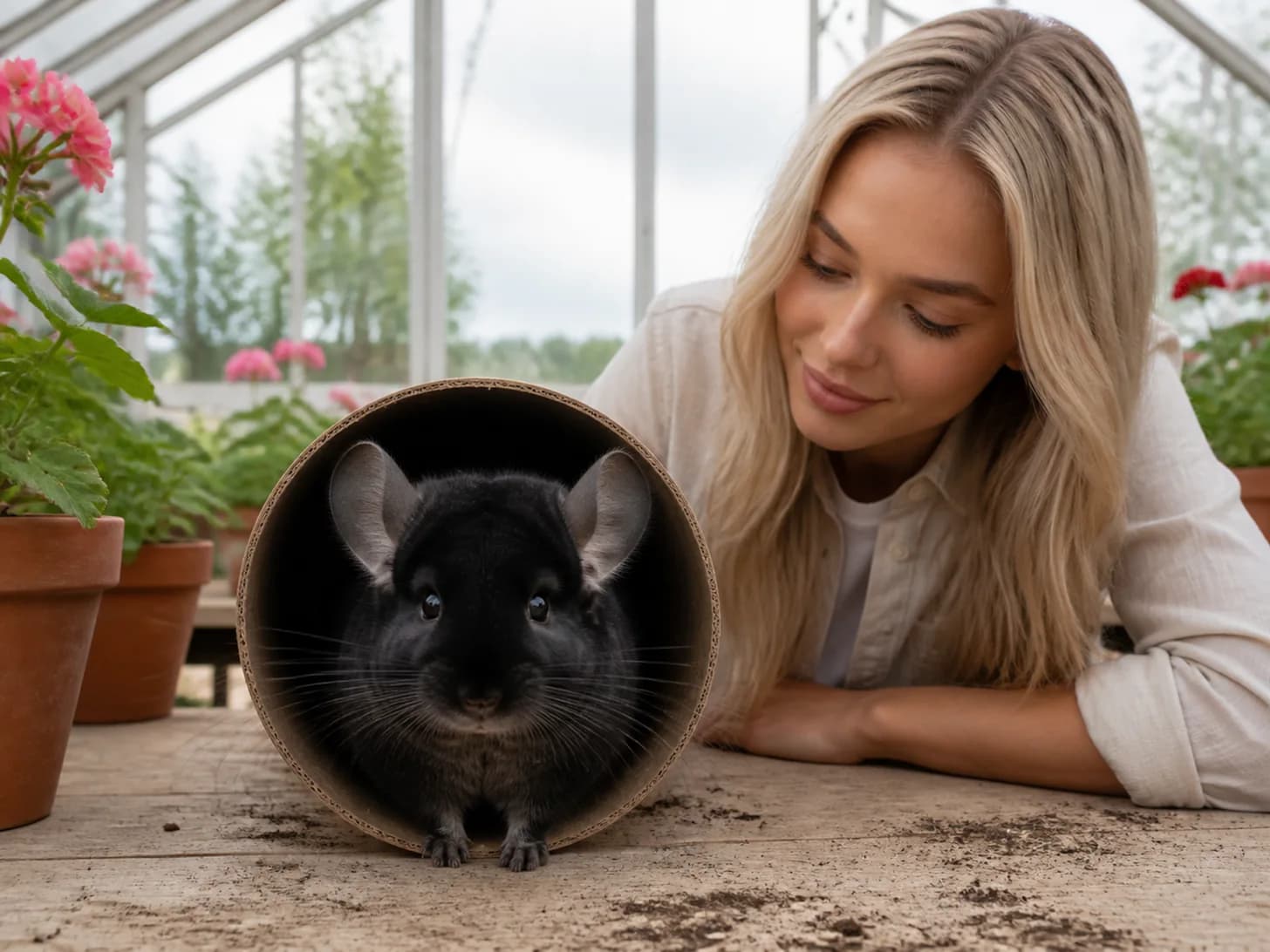
Living with a black velvet chinchilla
Never pair two black velvets if breeding; the gene is lethal in double dose.
As a pet, treat as any chinchilla. Heat is the principal danger — above about 25°C they cannot lose heat through that extraordinarily dense coat and can die of heat stroke. Keep the room cool, out of sun, with a stone tile to lie on.
Dust baths several times weekly, never water. A soaked chinchilla coat does not dry and fungal infection follows.
They climb, so height matters, and they chew constantly — dental disease is the main long-term health problem. Expect fifteen to twenty years.
General guidance, not veterinary advice. Individual critters vary, and anything about a specific animal is a question for a vet who has seen it.
Worth reading alongside this
More critters by breed
Every critter breed somebody has posted a photo of.
- Abyssinian guinea pig3
- African pygmy hedgehog3
- Albino ferret3
- Astrex mouse3
- Beige chinchilla3
- Berkshire rat3
- Black bear hamster3
- Black sable ferret3
- Ferret3
- Golden hamster3
- Guinea pig3
- Abyssinian satin guinea pig2
- Albino hedgehog2
- Algerian hedgehog2
- Alpaca guinea pig2
- American guinea pig2
- American satin guinea pig2
- Baldwin guinea pig2
- Blaze ferret2
- Blazed rat2