Japanese akita inu
The Japanese Akita is the larger of Japan's six native spitz breeds, from the mountainous Akita prefecture, where it hunted bear and boar.
It is a designated Natural Monument in Japan, and it is the breed of Hachikō, the dog that waited at Shibuya station for nine years after his owner's death.
It stands 61 to 70 centimetres, weighs 32 to 45 kilograms and lives ten to thirteen years. It is a separate breed from the American Akita in most registries, being lighter, foxier in the head and limited to fewer colours. Temperament is the defining consideration: Akitas are dignified, deeply loyal to their household, aloof with strangers, and frequently intolerant of other dogs.
- Origin
- Akita prefecture, Japan; a designated Natural Monument
- Size
- 61–70 cm; 32–45 kg
- Lifespan
- 10–13 years
- Coat
- Thick double coat; enormous twice-yearly moult
- Temperament
- Dignified and loyal; aloof, and often dog-intolerant
- Health
- Autoimmune conditions, sebaceous adenitis, anaesthesia sensitivity
Related: Akita · Japanese chin · Japanese spitz · Japanese terrier
2 japanese akita inu photos, newest first


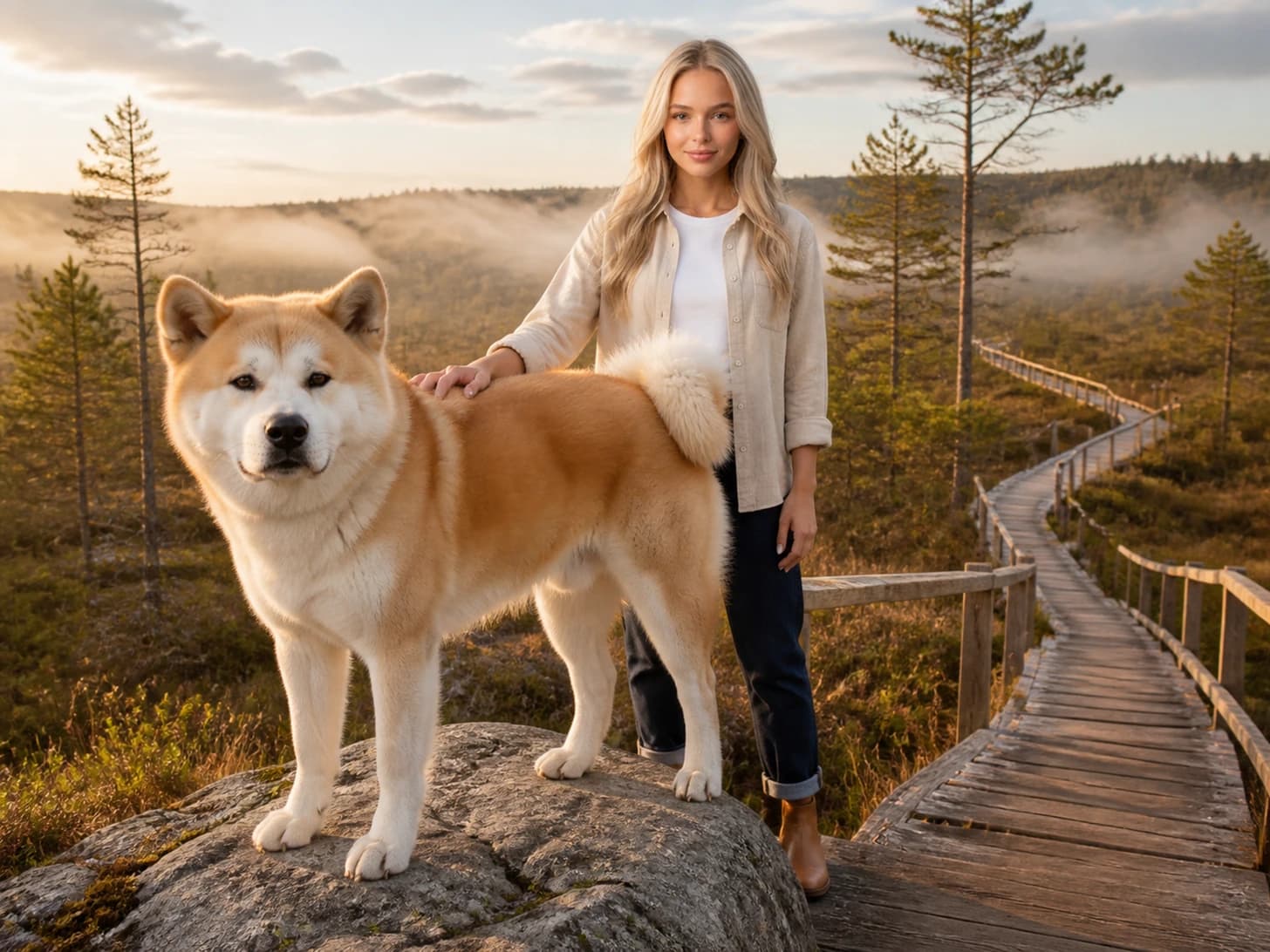
Living with a japanese akita inu
Dog tolerance is the honest issue. Many Akitas will not accept another dog of the same sex, and some accept none at all. This is temperament rather than training failure, and households with other dogs should think carefully.
They are sensitive to anaesthesia and to some drugs — tell any vet the breed before sedation or surgery.
Autoimmune disease is over-represented: sebaceous adenitis causes hair loss and scaling, and Vogt-Koyanagi-Harada-like syndrome affects eyes and pigment. Ask about both in the lines.
The coat blows twice a year in a startling volume. Brush weekly, daily through the moult, and never shave it.
They are quiet, clean and undemanding indoors, and they need firm, fair, early socialisation.
General guidance, not veterinary advice. Individual dogs vary, and anything about a specific animal is a question for a vet who has seen it.
Worth reading alongside this
More dogs by breed
Every dog breed somebody has posted a photo of.
- Labrador retriever18
- Afghan hound3
- Airedale terrier3
- Akita3
- Alaskan Klee Kai3
- Alaskan malamute3
- American bulldog3
- American eskimo dog3
- American hairless terrier3
- American pit bull terrier3
- Aussiedoodle3
- Australian cattle dog3
- Australian shepherd3
- Basenji3
- Basset hound3
- Beagle3
- Belgian Malinois3
- Bergamasco sheepdog3
- Bernedoodle3
- Bernese mountain dog3
- Bichon frise3
- Biewer terrier3
- Black and tan coonhound3
- Bloodhound3