Japanese terrier
The Japanese Terrier, or Nihon Teria, was developed in Japan from the eighteenth century, when smooth Fox Terriers brought by Dutch traders to Nagasaki were crossed with local small dogs.
It was standardised in the 1930s and remains very rare, with only a few hundred dogs, almost all in Japan.
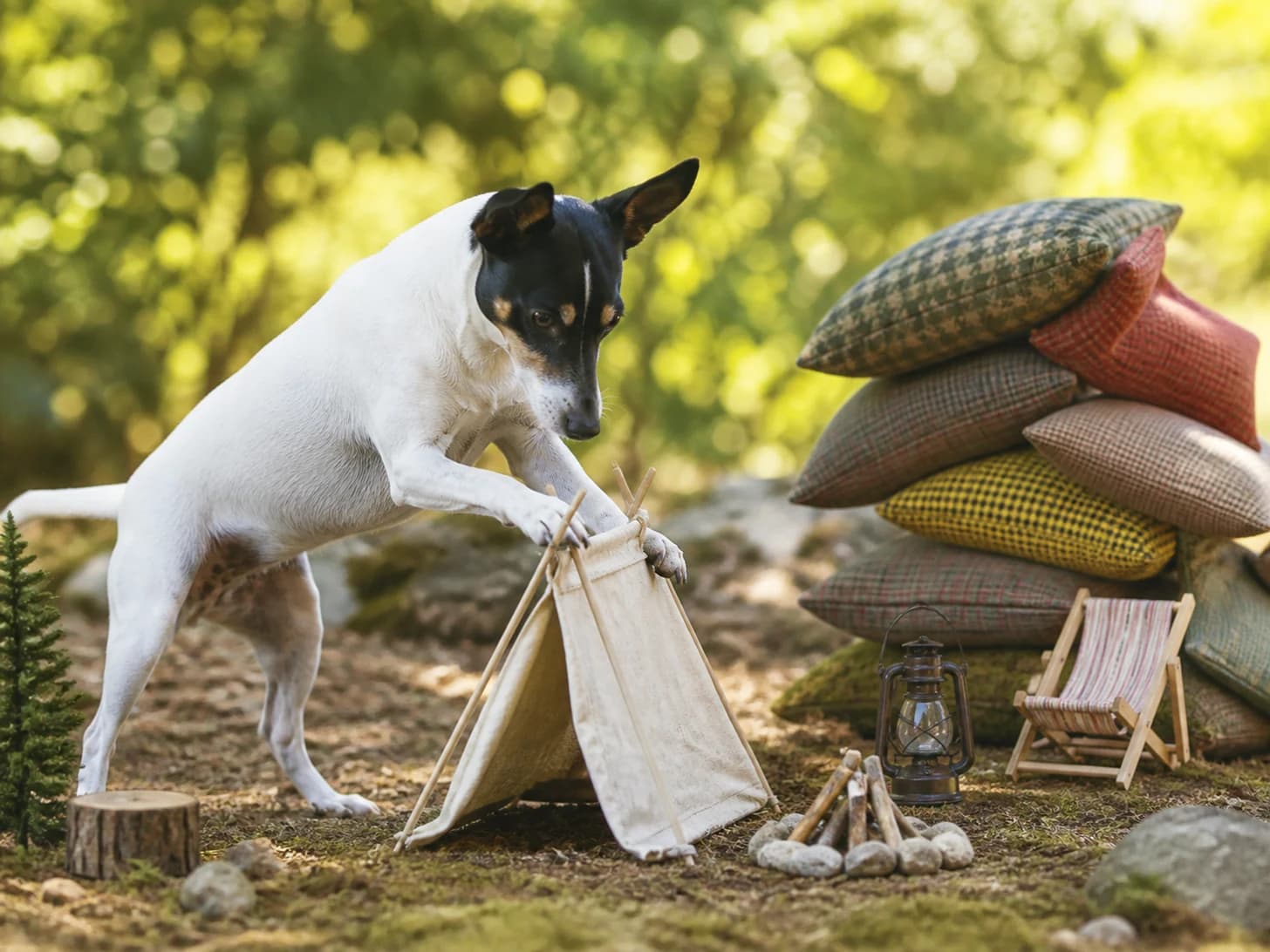
It stands 30 to 33 centimetres, weighs 2 to 4 kilograms and lives twelve to fifteen years, with a very short smooth coat — predominantly white with a black or tan head. It is lively, alert and affectionate, less driven than most working terriers, and it is essentially a companion breed. Its rarity is the main practical obstacle to owning one.
- Origin
- Nagasaki, Japan; from Dutch-imported Fox Terriers
- Size
- 30–33 cm; 2–4 kg
- Lifespan
- 12–15 years
- Coat
- Very short and smooth; white with a dark head
- Status
- Very rare — a few hundred dogs, almost all in Japan
- Temperament
- Lively and affectionate; softer than most terriers
Related: Airedale terrier · American hairless terrier · American pit bull terrier · American Staffordshire terrier · Australian terrier
2 japanese terrier photos, newest first


Living with a japanese terrier
The very short coat gives almost no insulation. They feel the cold badly and need a coat in winter, and the thin skin is easily scratched.
They are small and light — a dog of three kilograms is fragile and needs supervising around children and larger dogs.
Dental disease is the usual small-breed issue; brush daily.
The breed is extremely rare and largely confined to Japan, so acquiring one outside it means importing and verifying registration with the Japan Kennel Club.
Exercise needs are modest but real, and they are clever and enjoy training. Ask about patellar luxation.
General guidance, not veterinary advice. Individual dogs vary, and anything about a specific animal is a question for a vet who has seen it.
Worth reading alongside this
More dogs by breed
Every dog breed somebody has posted a photo of.
- Labrador retriever18
- Afghan hound3
- Airedale terrier3
- Akita3
- Alaskan Klee Kai3
- Alaskan malamute3
- American bulldog3
- American eskimo dog3
- American hairless terrier3
- American pit bull terrier3
- Aussiedoodle3
- Australian cattle dog3
- Australian shepherd3
- Basenji3
- Basset hound3
- Beagle3
- Belgian Malinois3
- Bergamasco sheepdog3
- Bernedoodle3
- Bernese mountain dog3
- Bichon frise3
- Biewer terrier3
- Black and tan coonhound3
- Bloodhound3