Curly-coated retriever
The Curly-Coated Retriever is the oldest of the retriever breeds, developed in England by the early nineteenth century for wildfowling, and covered in tight crisp curls that provide the same waterproofing other retrievers get from an oily double coat.
It stands 63 to 69 centimetres, weighs 29 to 41 kilograms and lives ten to twelve years. It is more aloof than other retrievers — friendly with its own people, reserved and watchful with strangers — and it is independent and slow to mature. It remains uncommon. One inherited metabolic disease is specific to the breed and has a DNA test.
- Origin
- England; the oldest retriever breed
- Size
- 63–69 cm; 29–41 kg
- Lifespan
- 10–12 years
- Coat
- Tight crisp curls over the whole body; waterproof
- Temperament
- Aloof with strangers, devoted at home; slow to mature
- Health
- Glycogen storage disease IIIa and EIC — both DNA testable
Related: Chesapeake bay retriever · Flat-coated retriever · Golden retriever · Labrador retriever
2 curly-coated retriever photos, newest first


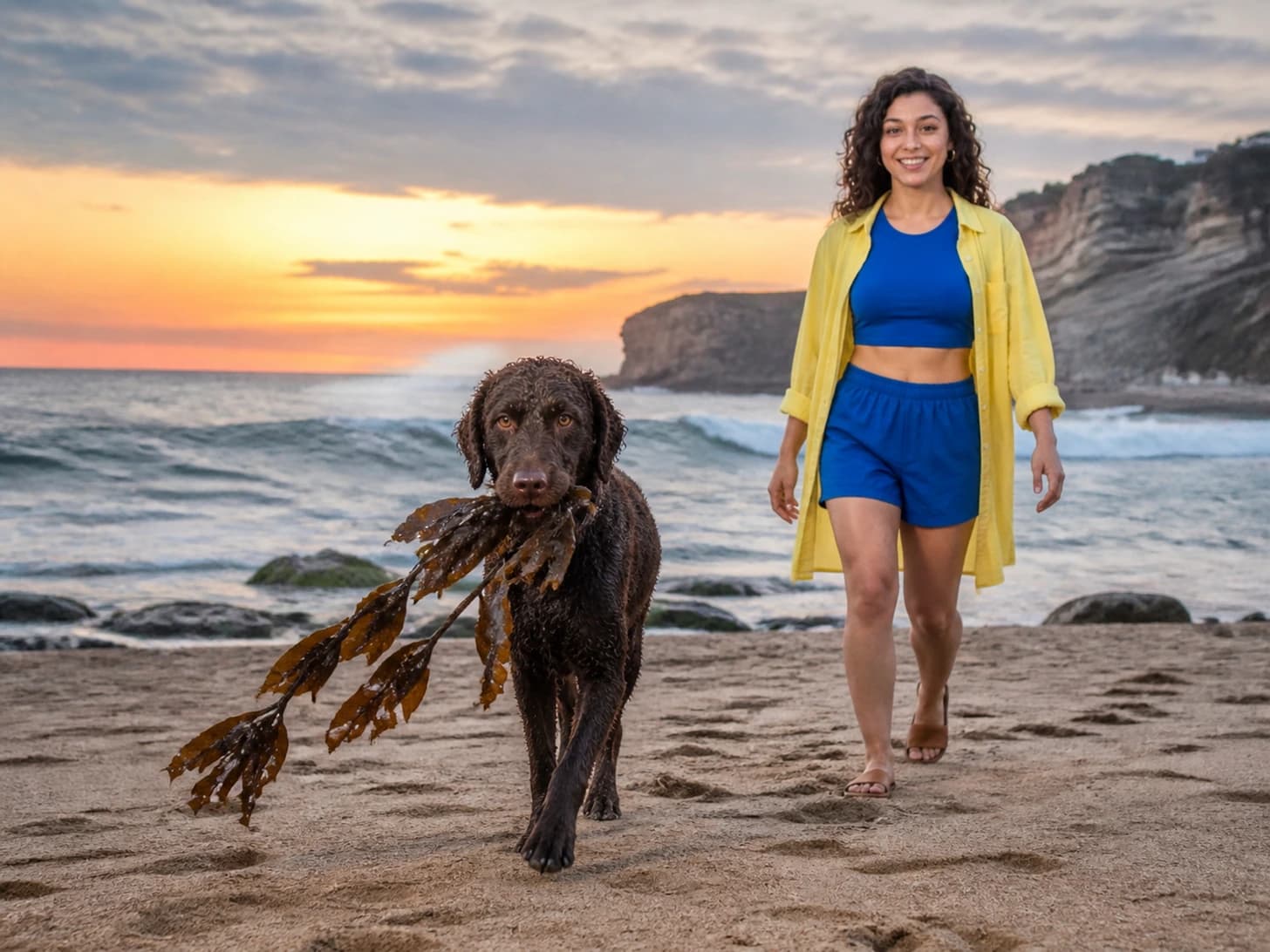
Living with a curly-coated retriever
Ask for the glycogen storage disease IIIa DNA test. It is specific to this breed, recessive, and causes progressive liver and muscle disease in affected dogs. Also ask for exercise-induced collapse testing, hip and elbow scores and eye testing.
Do not brush the coat. Brushing turns the curls to frizz; the coat is washed, allowed to dry and left alone, with occasional trimming of stray hairs. This is the opposite of most coat care and catches new owners out.
They are reserved rather than unfriendly. Early and broad socialisation prevents that from becoming suspicion.
They mature slowly and stay adolescent well into the third year.
Cancer rates are higher than average in the breed; ask about longevity in the lines.
General guidance, not veterinary advice. Individual dogs vary, and anything about a specific animal is a question for a vet who has seen it.
Worth reading alongside this
More dogs by breed
Every dog breed somebody has posted a photo of.
- Labrador retriever18
- Afghan hound3
- Airedale terrier3
- Akita3
- Alaskan Klee Kai3
- Alaskan malamute3
- American bulldog3
- American eskimo dog3
- American hairless terrier3
- American pit bull terrier3
- Aussiedoodle3
- Australian cattle dog3
- Australian shepherd3
- Basenji3
- Basset hound3
- Beagle3
- Belgian Malinois3
- Bergamasco sheepdog3
- Bernedoodle3
- Bernese mountain dog3
- Bichon frise3
- Biewer terrier3
- Black and tan coonhound3
- Bloodhound3