Boxer
The boxer was developed in Germany in the late 1800s from the Bullenbeisser, a hunting dog used to hold large game, crossed with imported English bulldogs.
The result kept the strength and the undershot jaw but lost most of the ferocity.
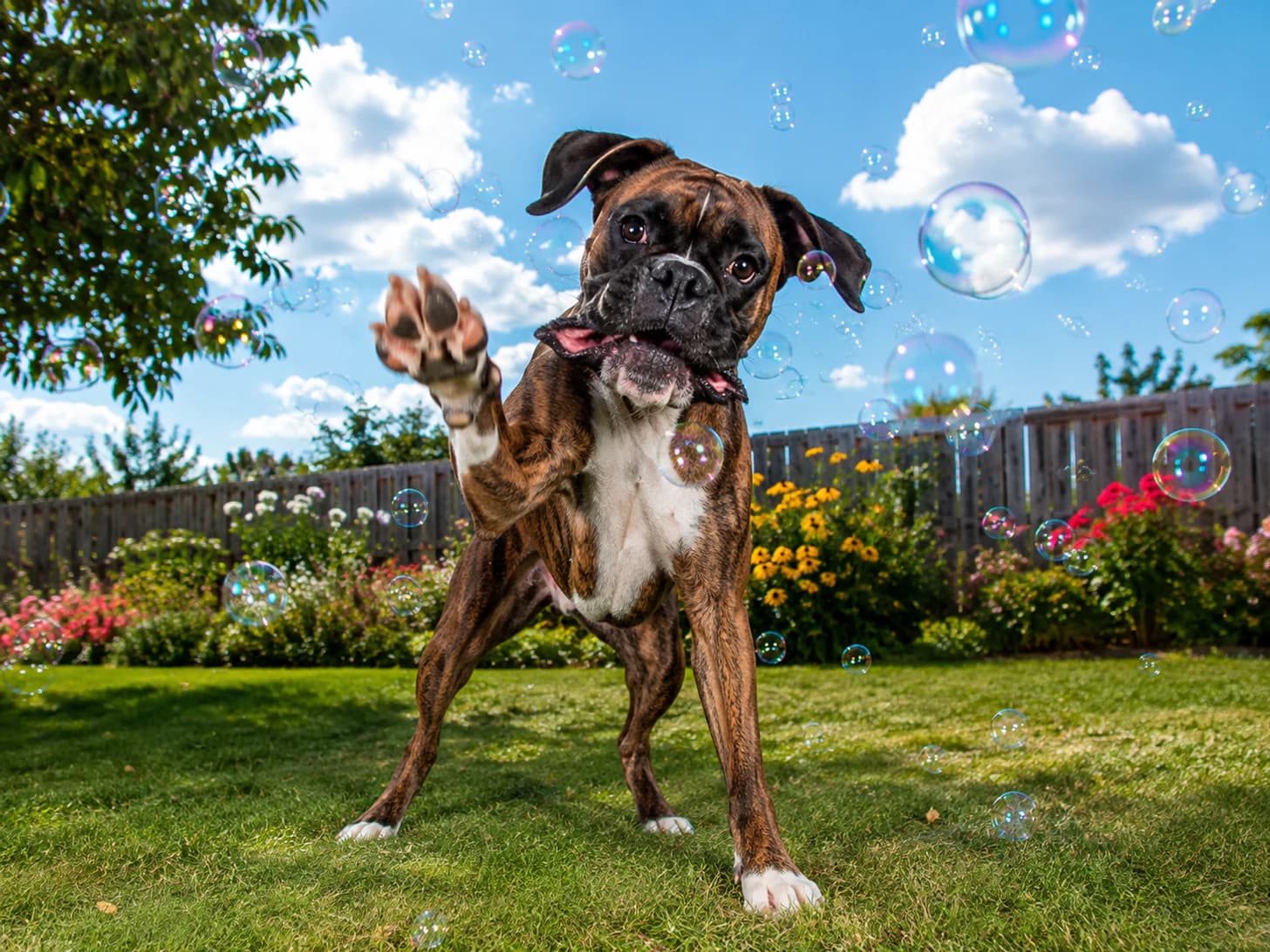
It is a medium-large, square, deep-chested dog with a short shining coat in fawn or brindle, usually with white markings. Boxers stay adolescent unusually long — three years is a fair estimate — and are known for greeting people by bouncing on their hind legs, which is where the name is generally thought to come from. Exuberant, patient with children, and permanently pleased to see you.
- Origin
- Germany, late 1800s
- Size
- 25–32 kg, 53–63 cm at the shoulder
- Lifespan
- 10–12 years
- Coat
- Short, tight and glossy
- Temperament
- Boisterous, playful, devoted, slow to mature
- Exercise
- 1–2 hours daily
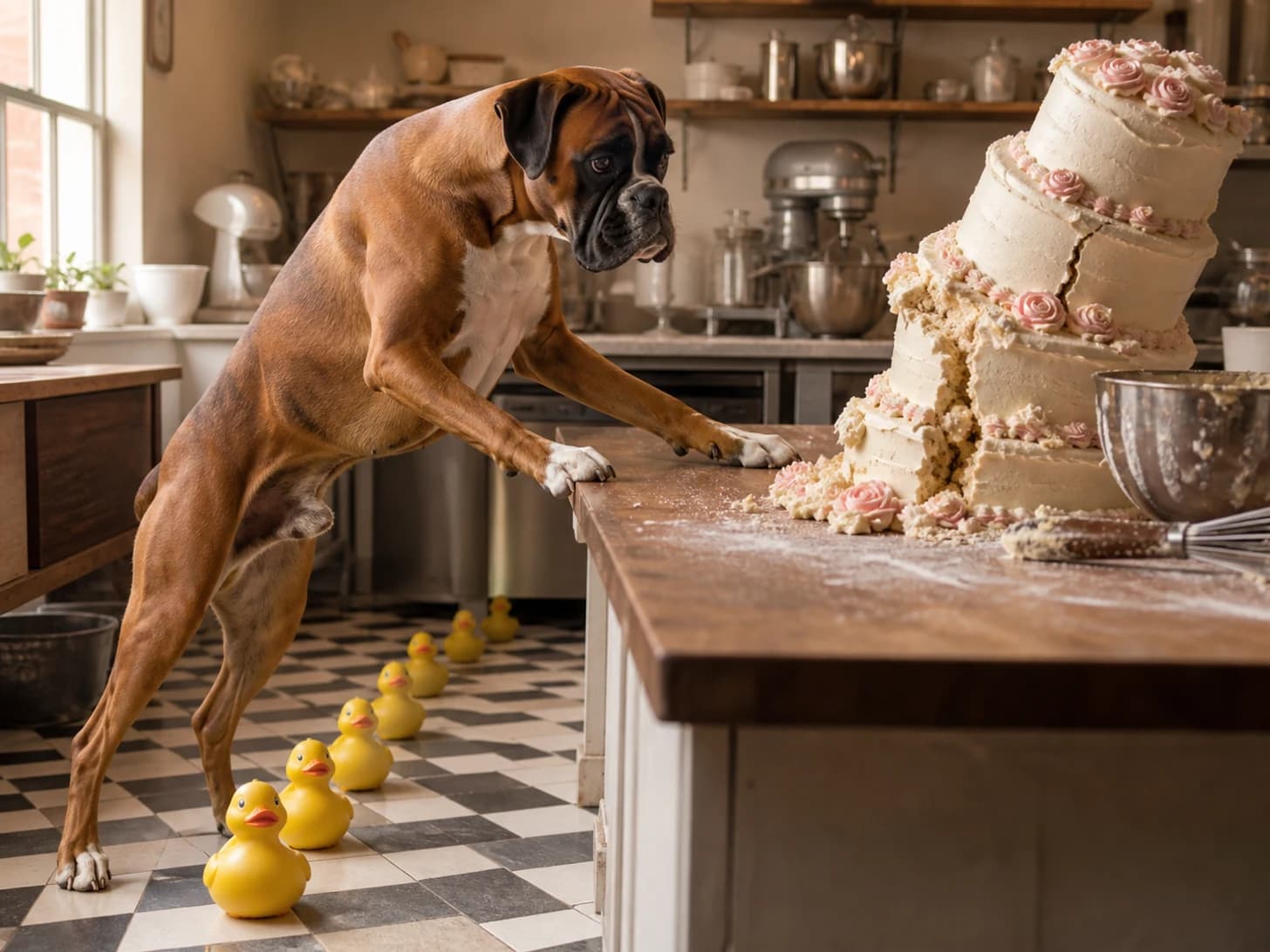
3 boxer photos, newest first

Living with a boxer
The coat needs almost nothing beyond a weekly rub over with a rubber mitt.
Temperature is the practical constraint. Boxers have a shortened muzzle and cope badly with heat and with hard frost, so exercise moves to the cool ends of the day in summer.
Health is where this breed asks most. Boxer cardiomyopathy and aortic stenosis are both significant, and the breed has one of the highest cancer rates of any dog — mast cell tumours and lymphoma especially — so any new lump warrants a vet rather than a wait. Degenerative myelopathy has a DNA test. Buying from a line with cardiac screening genuinely matters here.
Bloat is a genuine risk in this deep-chested breed. Gastric dilatation-volvulus kills within hours, and the signs are unproductive retching, a swelling abdomen and restlessness — an emergency vet the same hour, not the next day.
General guidance, not veterinary advice. Individual dogs vary, and anything about a specific animal is a question for a vet who has seen it.
Worth reading alongside this
More dogs by breed
Every dog breed somebody has posted a photo of.
- Labrador retriever18
- Afghan hound3
- Airedale terrier3
- Akita3
- Alaskan Klee Kai3
- Alaskan malamute3
- American bulldog3
- American eskimo dog3
- American hairless terrier3
- American pit bull terrier3
- Aussiedoodle3
- Australian cattle dog3
- Australian shepherd3
- Basenji3
- Basset hound3
- Beagle3
- Belgian Malinois3
- Bergamasco sheepdog3
- Bernedoodle3
- Bernese mountain dog3
- Bichon frise3
- Biewer terrier3
- Black and tan coonhound3
- Bloodhound3