American chinchilla
The American chinchilla was developed in the United States from the imported standard chinchilla, bred larger for meat and fur.
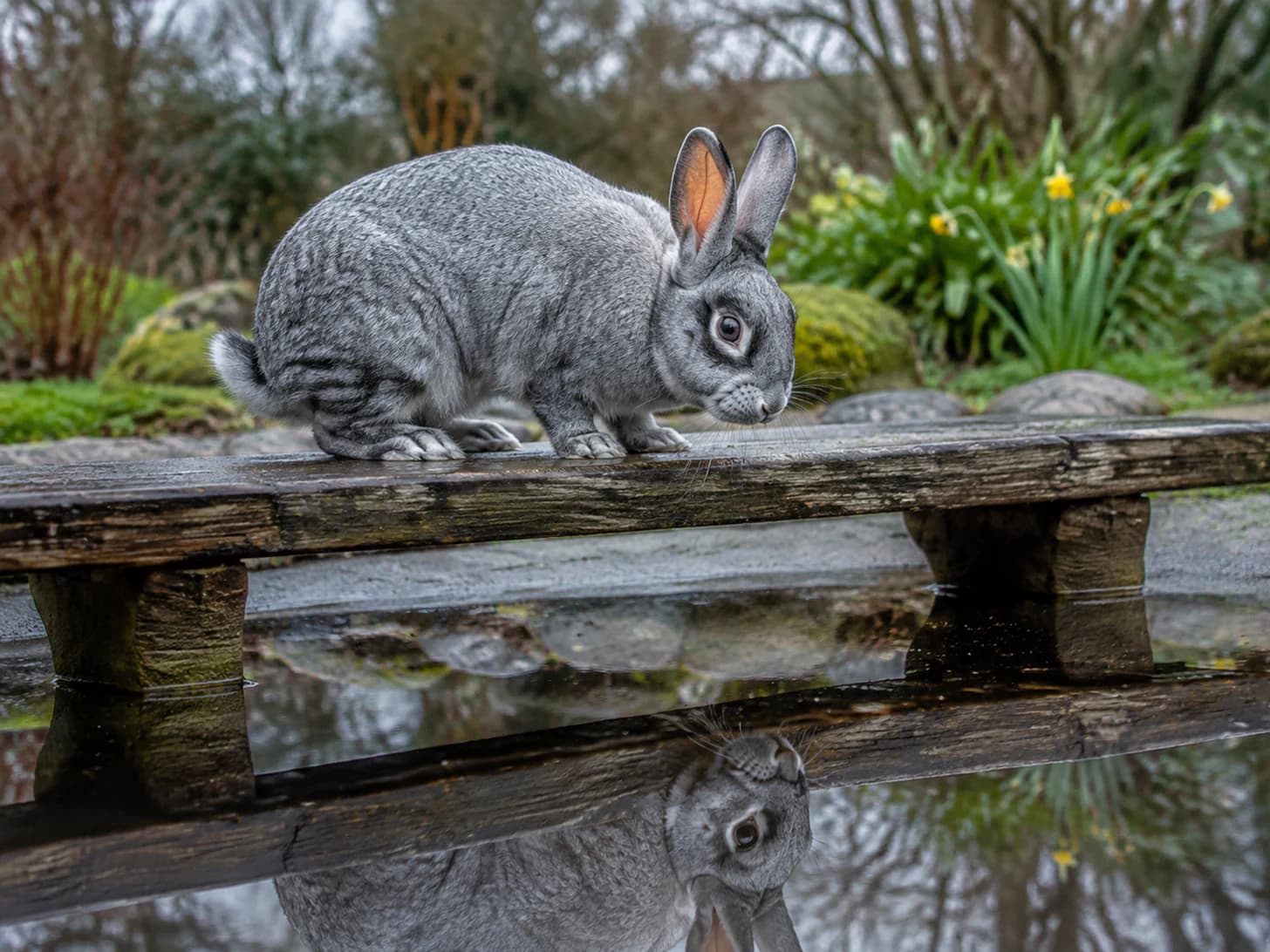
Its coat mimics the ticked grey of the South American chinchilla, an effect produced by banded hairs rather than by any relationship to that animal.
It is a large rabbit of commercial type weighing four to five and a half kilograms, with a dense rollback coat — push it the wrong way and it returns slowly to position. The breed is now rare and appears on conservation lists. Temperament is calm and it handles well, which along with the coat is why it stayed popular with small keepers.
- Origin
- United States
- Size
- 4–5.5 kg
- Lifespan
- 8–10 years
- Coat
- Dense rollback coat, ticked chinchilla grey
- Temperament
- Calm, gentle, handles well
- Recognition
- Rare; conservation priority breed
Related: American · American fuzzy lop · American sable
3 american chinchilla photos, newest first

Living with a american chinchilla
The dense rollback coat needs weekly grooming and considerably more during a moult, when rabbits ingest loose fur while self-grooming. Rabbits cannot vomit, so swallowed fur is a genuine risk — brushing during a moult is preventive medicine, not vanity.
House in neutered pairs with space to run and stand upright. Hay first, pellets sparingly, fresh greens daily.
Annual vaccination against myxomatosis and both RHD strains. Watch the hind feet for sore hocks, which larger breeds are prone to, and check weekly that the rabbit is eating and passing droppings — a rabbit that stops doing either is an emergency the same day.
General guidance, not veterinary advice. Individual rabbits vary, and anything about a specific animal is a question for a vet who has seen it.
Worth reading alongside this
More rabbits by breed
Every rabbit breed somebody has posted a photo of.