Black-capped conure
The black-capped conure, also called the rock conure, comes from the foothills of the Andes in Peru and Bolivia.
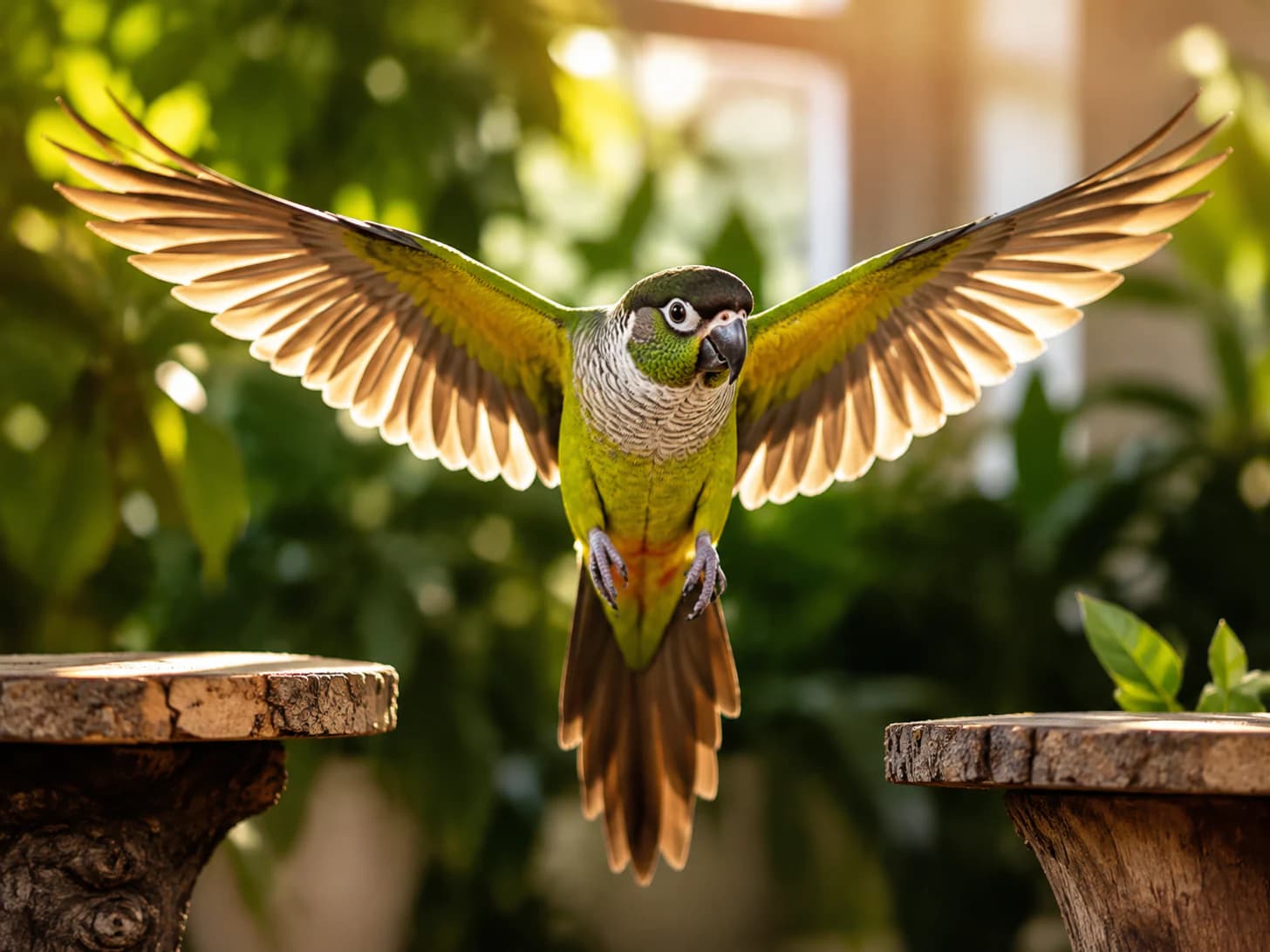
It is green with a distinctive scaled black-and-buff neck and breast and a black cap, and is a medium conure of about twenty-five centimetres.
Its reputation rests on being one of the quieter conures — still a parrot, and still capable of noise, but without the piercing constant screaming of a sun or jenday. Black-caps are curious, playful and affectionate, often described as more reserved than other conures with strangers while being thoroughly devoted at home.
- Origin
- Peru and Bolivia
- Size
- About 25 cm; 70–100 g
- Lifespan
- 25–30 years
- Diet
- Pellets with fresh vegetables and some fruit
- Temperament
- Playful, curious, affectionate, shy with strangers
- Noise
- Quiet for a conure, but not a quiet bird
Related: Blue-crowned conure
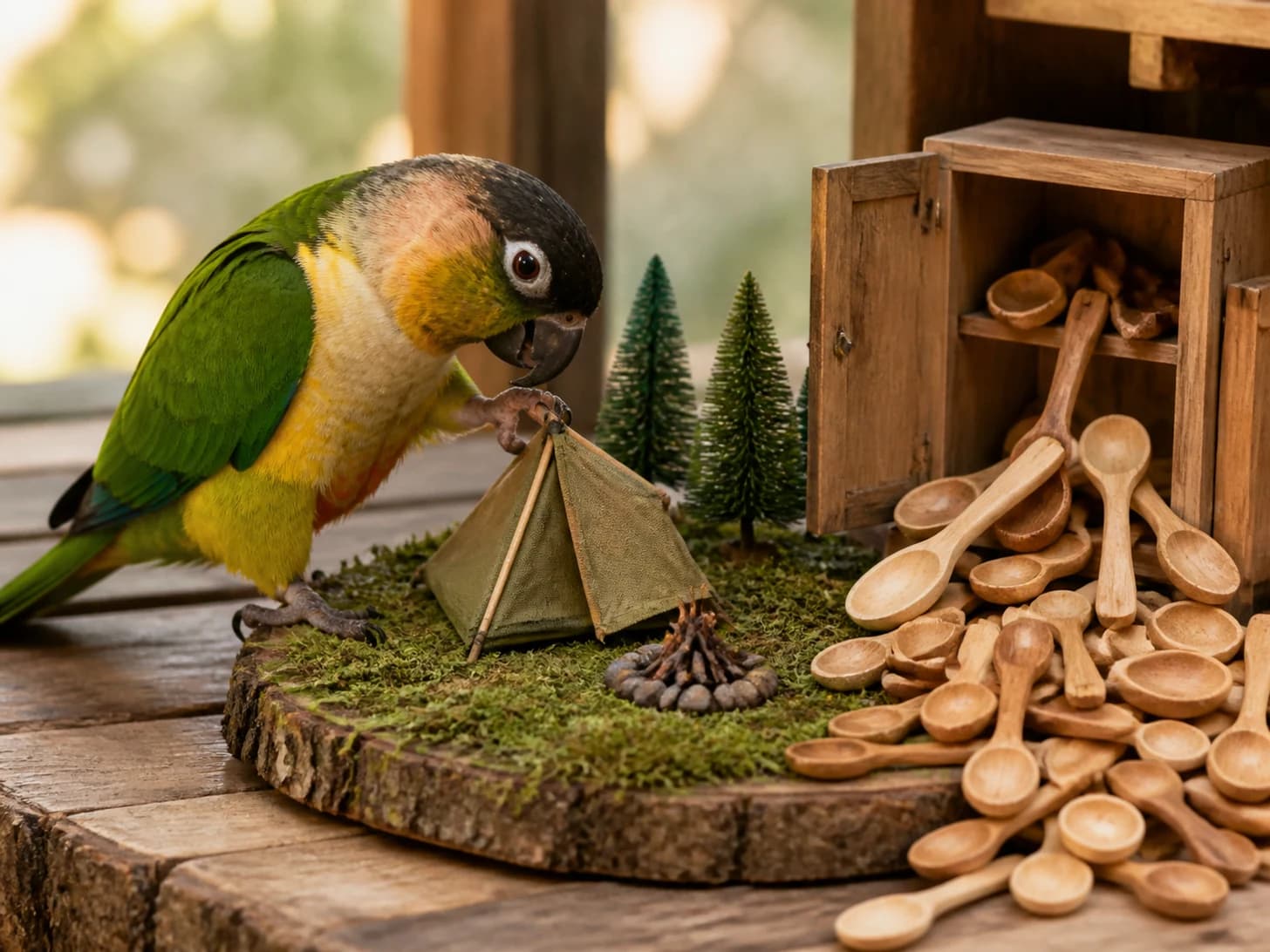
3 black-capped conure photos, newest first

Living with a black-capped conure
Conures need out-of-cage time daily and plenty to destroy — foraging toys, soft wood, paper to shred. A bored conure screams.
Many love to burrow and sleep in a tent or hut. If you provide one, check it constantly for loose threads, which cause serious injuries, and be aware that snuggle huts can trigger hormonal behaviour.
A seed-only diet causes vitamin A deficiency; use formulated pellets as the base.
Conures are prone to proventricular dilatation disease and to feather-destructive behaviour when under-stimulated. Non-stick fumes, aerosols and scented products kill birds.
General guidance, not veterinary advice. Individual birds vary, and anything about a specific animal is a question for a vet who has seen it.
Worth reading alongside this
More birds by breed
Every bird breed somebody has posted a photo of.