African grey parrot
The African grey is the parrot most often described as the most intelligent bird kept, and the research supports the reputation — Irene Pepperberg's thirty-year work with a grey called Alex demonstrated labelling, counting and categorisation rather than mere mimicry.
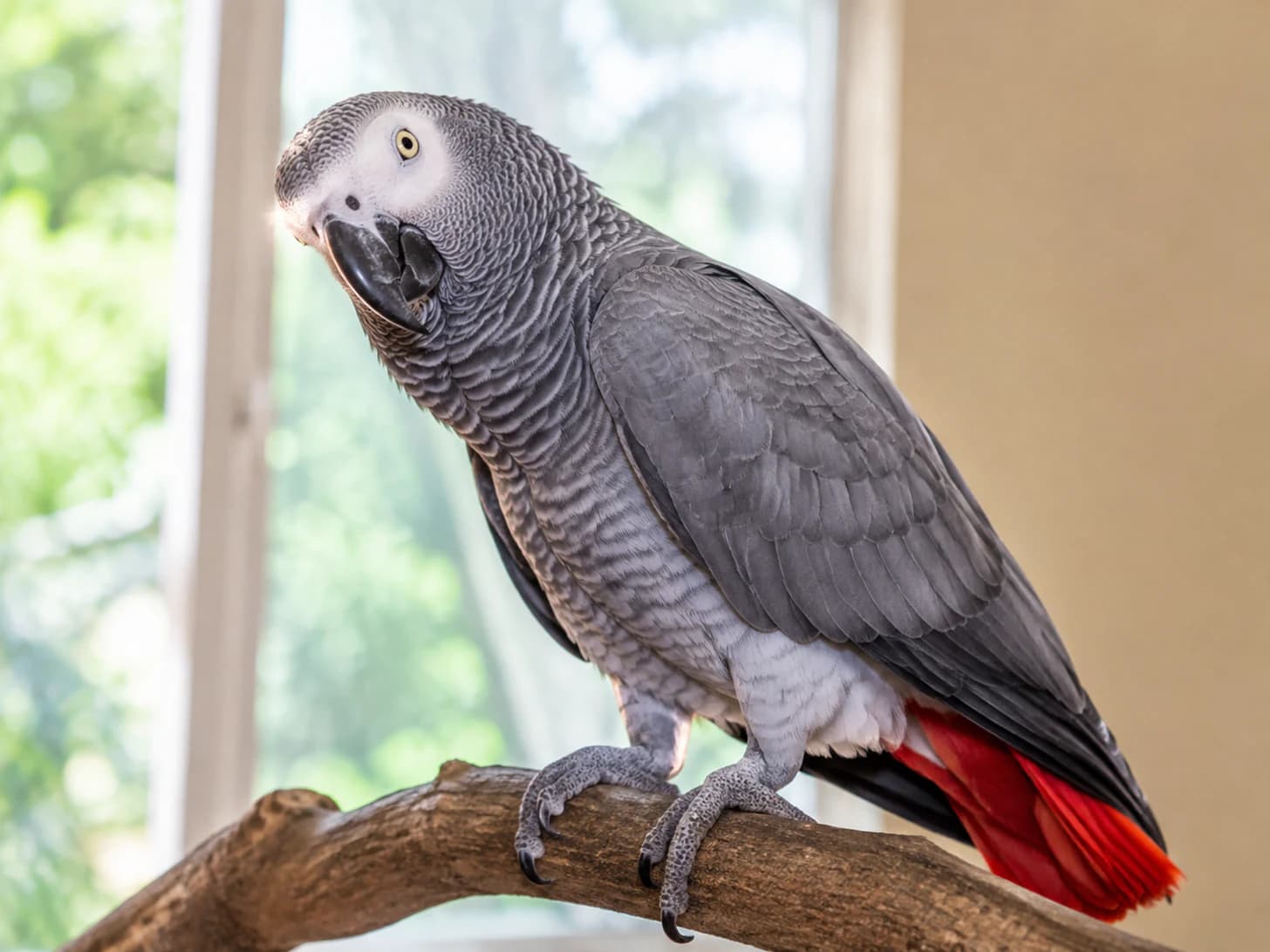
There are two forms: the larger Congo grey, with a solid black beak and scarlet tail, and the smaller Timneh, darker with a maroon tail and a horn-coloured upper mandible. Both are quieter than most large parrots but extraordinarily good talkers. They are also intensely sensitive to their environment, and are the species most associated with feather plucking when their needs are not met.
- Origin
- Equatorial west and central Africa
- Size
- 28–33 cm; 400–650 g
- Lifespan
- 40–60 years, sometimes longer
- Diet
- Formulated pellets with fresh vegetables; extra calcium
- Temperament
- Highly intelligent, sensitive, bonds closely to one person
- Noise
- Moderate for a large parrot; a gifted mimic
Related: Amazon parrot · Australian king parrot
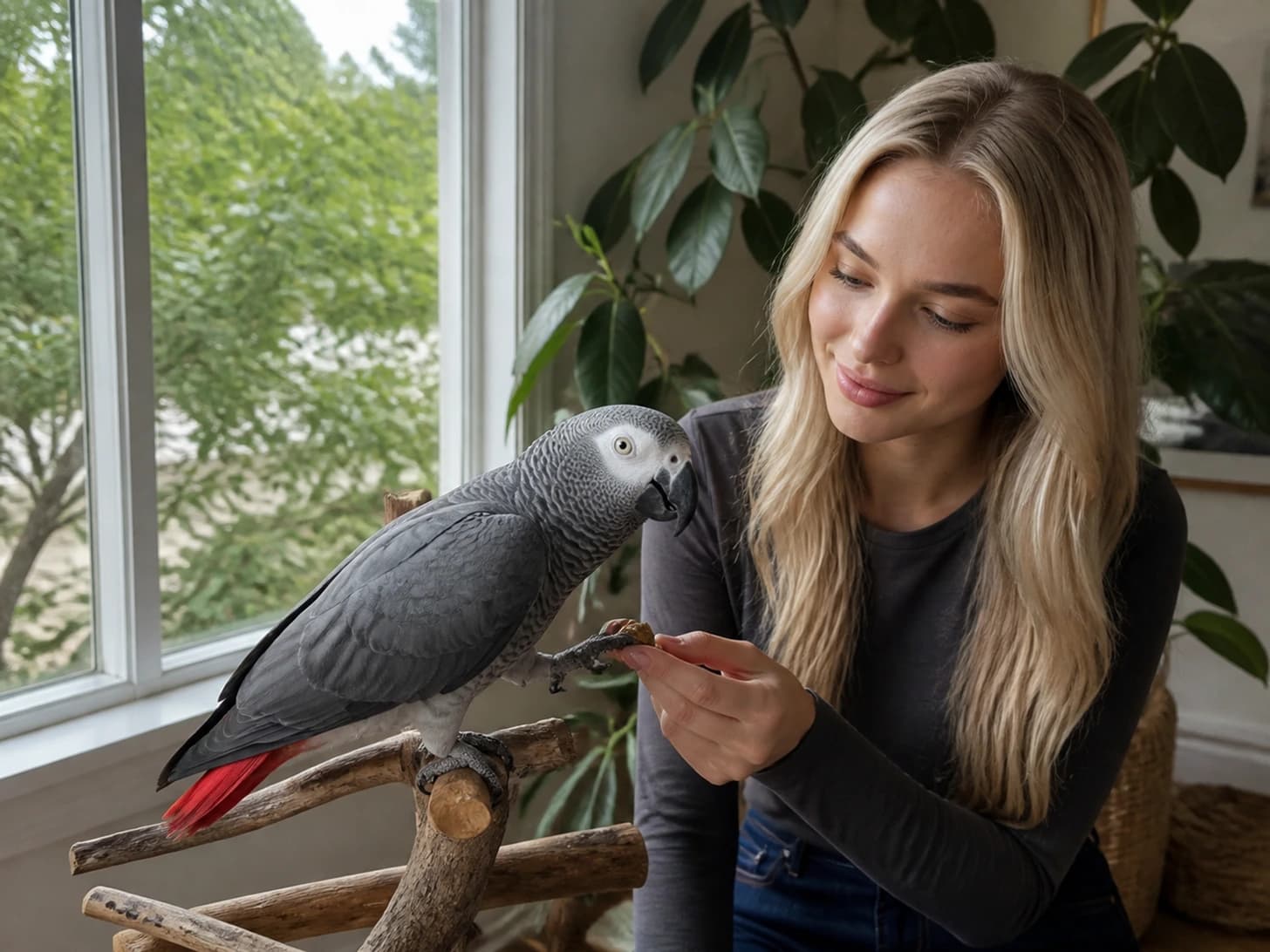
3 african grey parrot photos, newest first
Living with a african grey parrot
This is a fifty-year commitment and greys are routinely written into wills. Think about that before anything else.
They need several hours out of the cage daily and constant foraging enrichment. Boredom in this species shows as feather plucking, which is difficult to reverse once it becomes habit.
Greys are prone to hypocalcaemia and to vitamin A deficiency, so an all-seed diet is genuinely dangerous — formulated pellets plus fresh vegetables is the standard.
Avoid non-stick cookware entirely: fumes from an overheated pan kill birds in minutes. Aerosols, scented candles and smoke are equally hazardous. Wild-caught trade is restricted under CITES; buy captive-bred.
General guidance, not veterinary advice. Individual birds vary, and anything about a specific animal is a question for a vet who has seen it.
Worth reading alongside this
More birds by breed
Every bird breed somebody has posted a photo of.