German shepherd
The German Shepherd was standardised from 1899 by Max von Stephanitz, who bought a working herding dog named Horand and built a breed around him with the explicit principle that utility must come before appearance.
Within a few decades it had become the world's most widely used working dog.
It stands 55 to 65 centimetres, weighs 22 to 40 kilograms and lives nine to thirteen years. The breed has since split in two directions, and the split matters: working lines are straight-backed, level and bred for function, while some show lines have been bred toward a sloping, roached back and extreme hind angulation that has drawn sustained veterinary criticism and, in Britain, regulatory attention.
- Origin
- Germany, standardised from 1899 by Max von Stephanitz
- Size
- 55–65 cm; 22–40 kg
- Lifespan
- 9–13 years
- Coat
- Double coat, short or long; sheds constantly and heavily
- Lines
- Working lines are level-backed; some show lines are roached
- Health
- Hip and elbow dysplasia, degenerative myelopathy, EPI, bloat
Related: Anatolian shepherd dog · Australian shepherd · Bohemian shepherd · Bucovina shepherd dog · Caucasian shepherd dog
3 german shepherd photos of 2 dogs, newest first
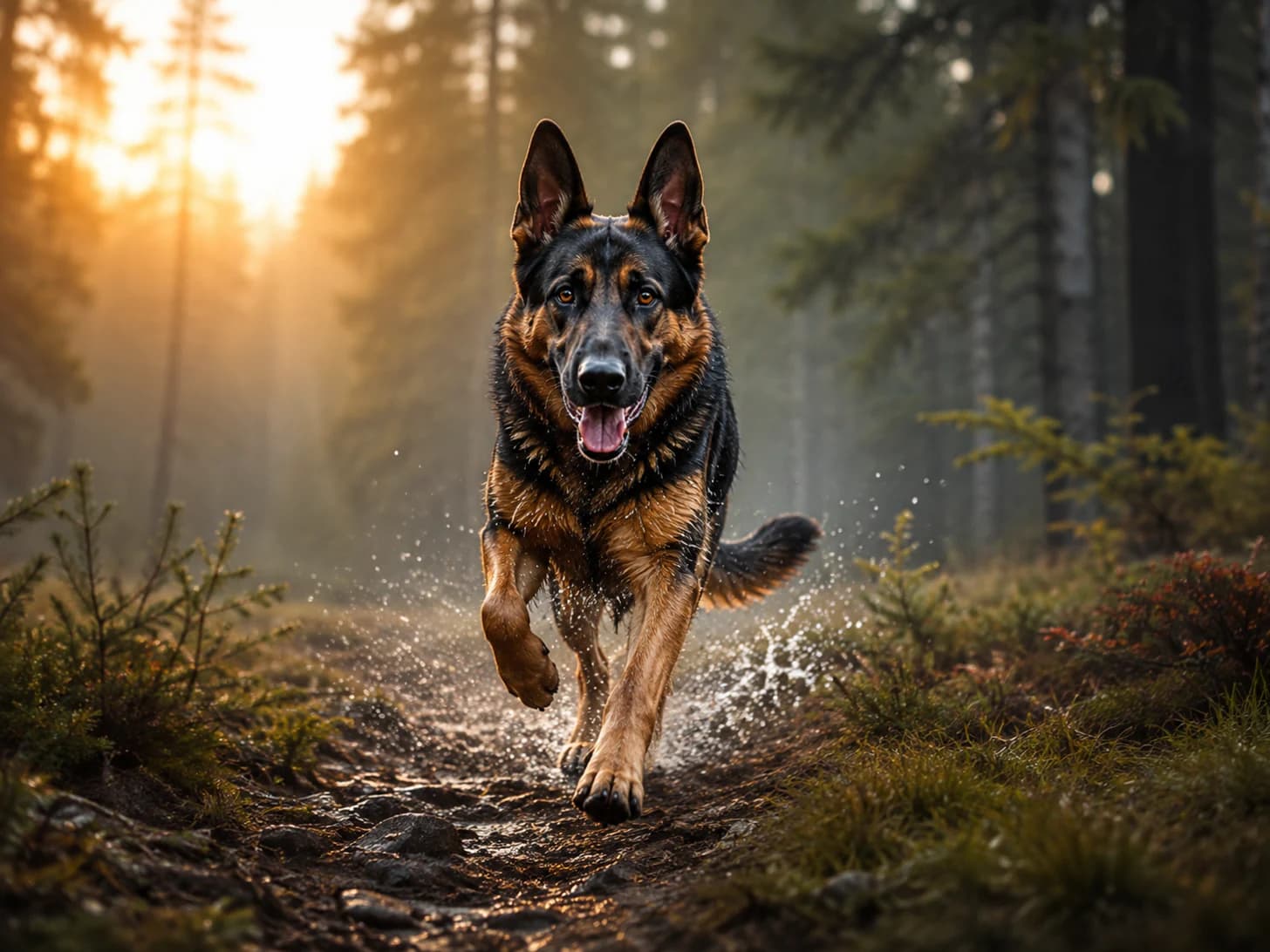

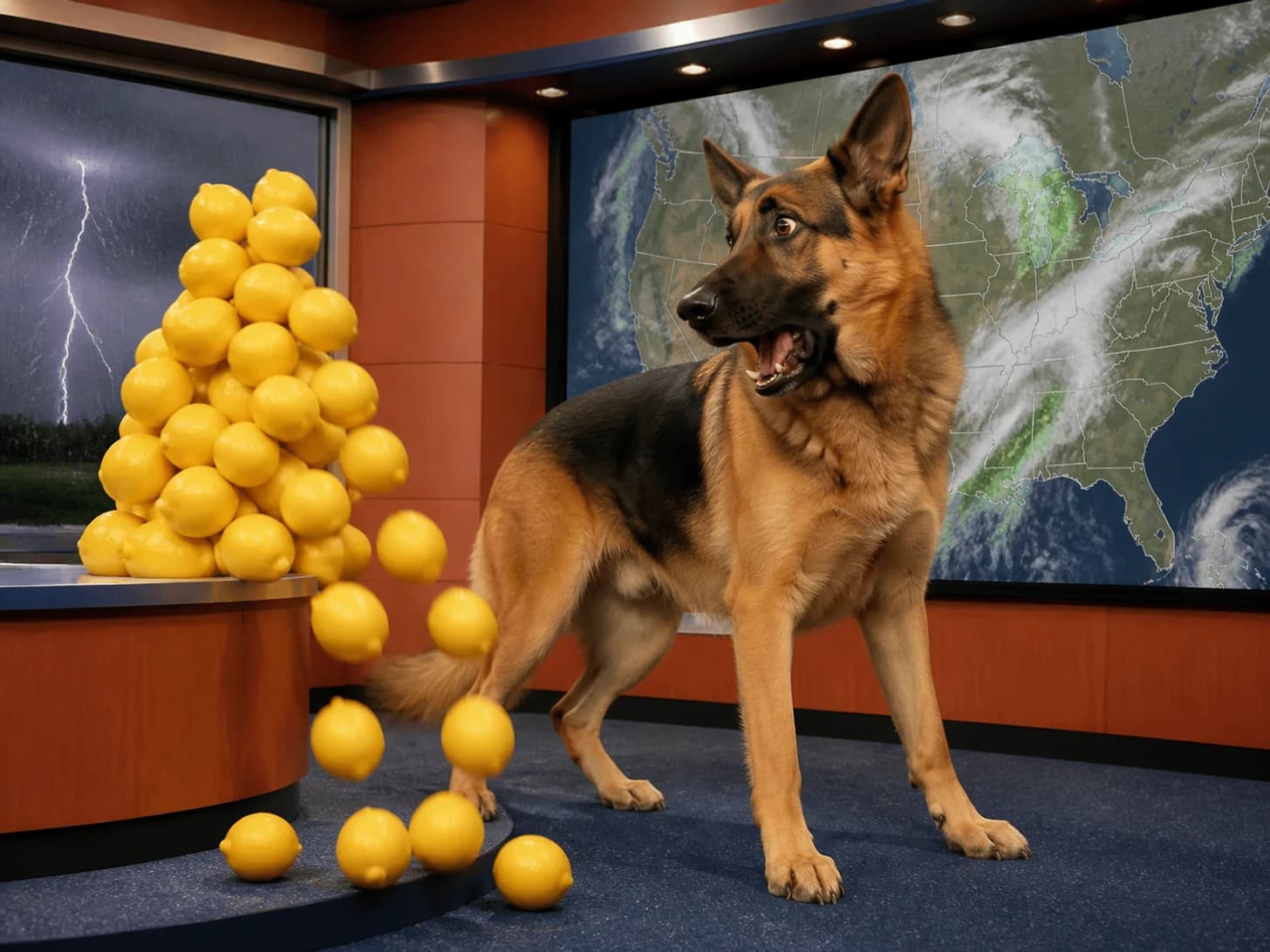
Living with a german shepherd
Look at the back and the hind legs. A dog whose topline slopes sharply and whose hocks are close to the ground is a conformation problem, not a breed feature — vets and welfare bodies have criticised it, and Crufts has been the subject of complaints about it. A level-backed working-line dog is the healthier animal.
Ask for hip and elbow scores and the degenerative myelopathy DNA test. Degenerative myelopathy is a progressive spinal disease causing hind-limb paralysis from middle age.
Exocrine pancreatic insufficiency is over-represented in the breed: a thin dog with a huge appetite and pale greasy faeces needs testing, and it is manageable with enzyme supplementation.
Deep chest means bloat risk. Learn the signs.
They need serious exercise and mental work, and they shed all year round.
General guidance, not veterinary advice. Individual dogs vary, and anything about a specific animal is a question for a vet who has seen it.
Worth reading alongside this
More dogs by breed
Every dog breed somebody has posted a photo of.
- Labrador retriever18
- Afghan hound3
- Airedale terrier3
- Akita3
- Alaskan Klee Kai3
- Alaskan malamute3
- American bulldog3
- American eskimo dog3
- American hairless terrier3
- American pit bull terrier3
- Aussiedoodle3
- Australian cattle dog3
- Australian shepherd3
- Basenji3
- Basset hound3
- Beagle3
- Belgian Malinois3
- Bergamasco sheepdog3
- Bernedoodle3
- Bernese mountain dog3
- Bichon frise3
- Biewer terrier3
- Black and tan coonhound3
- Bloodhound3