Bull terrier
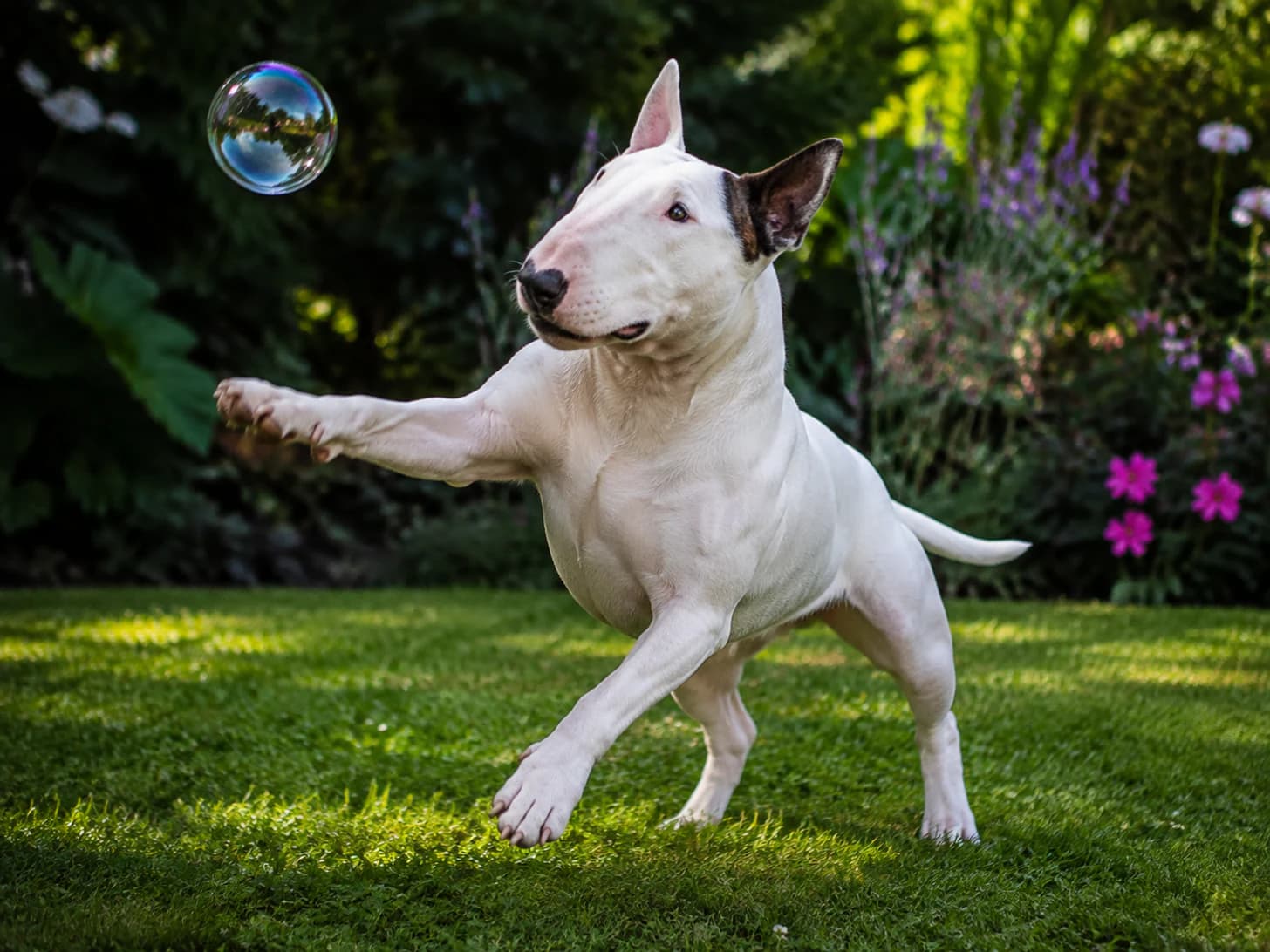
The bull terrier was created in nineteenth-century England by James Hinks, who crossed the bull-and-terrier with the now-extinct English white terrier and other stock to make a cleaner-limbed, all-white gentleman's dog.
The distinctive egg-shaped head with its downward-curving profile came later, through selective breeding in the twentieth century.
It is a muscular, deep-chested dog with small triangular eyes — unique among dogs in being triangular — and a purposeful, rolling gait. Bull terriers are famously comic, stubborn and boisterous, sometimes described as a three-year-old child in a dog suit, and they stay that way well into adulthood.
- Origin
- England, 1800s
- Size
- 22–38 kg, 53–56 cm at the shoulder
- Lifespan
- 10–14 years
- Coat
- Short, flat and harsh
- Temperament
- Comic, exuberant, stubborn, strongly attached
- Exercise
- About an hour daily plus play
Related: Airedale terrier · American hairless terrier · American pit bull terrier · American Staffordshire terrier · Australian terrier
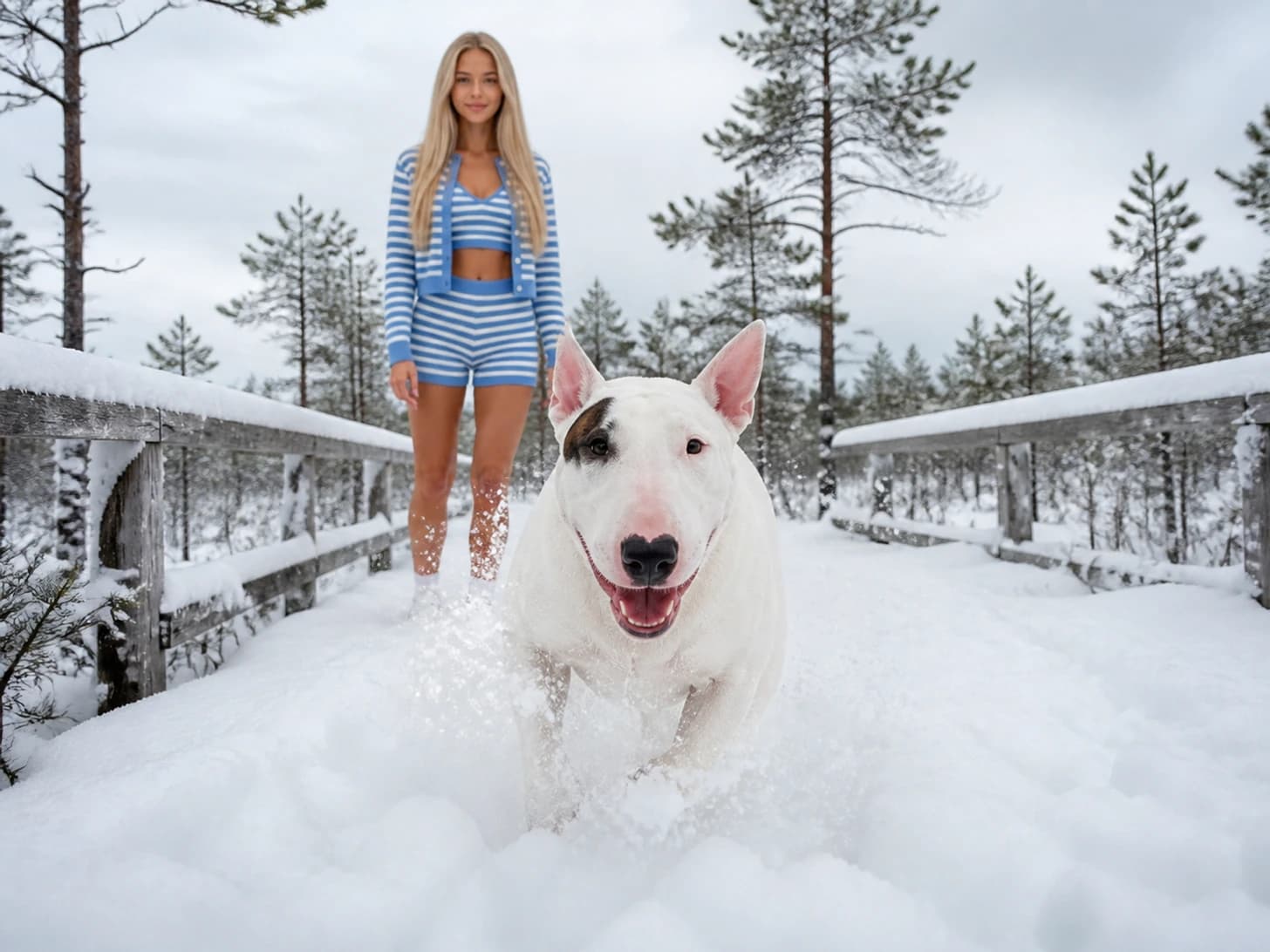
3 bull terrier photos, newest first


Living with a bull terrier
Weekly brushing. White dogs sunburn on the nose and thin skin, and pink-skinned bull terriers get more than their share of skin allergies.
They are strong, physical players and need training that starts early, because an untrained adult barges rather than obeys. They are also poor at being left alone.
Deafness is common in white dogs and litters should be BAER-tested. The breed carries hereditary nephritis, which a simple urine protein test screens for, plus luxating patellae and a compulsive tail-chasing behaviour that is genuinely neurological in some lines.
General guidance, not veterinary advice. Individual dogs vary, and anything about a specific animal is a question for a vet who has seen it.
Worth reading alongside this
More dogs by breed
Every dog breed somebody has posted a photo of.
- Labrador retriever18
- Afghan hound3
- Airedale terrier3
- Akita3
- Alaskan Klee Kai3
- Alaskan malamute3
- American bulldog3
- American eskimo dog3
- American hairless terrier3
- American pit bull terrier3
- Aussiedoodle3
- Australian cattle dog3
- Australian shepherd3
- Basenji3
- Basset hound3
- Beagle3
- Belgian Malinois3
- Bergamasco sheepdog3
- Bernedoodle3
- Bernese mountain dog3
- Bichon frise3
- Biewer terrier3
- Black and tan coonhound3
- Bloodhound3