The cat emergency you have hours, not days, for
4 min read · Updated
 Cats
Cats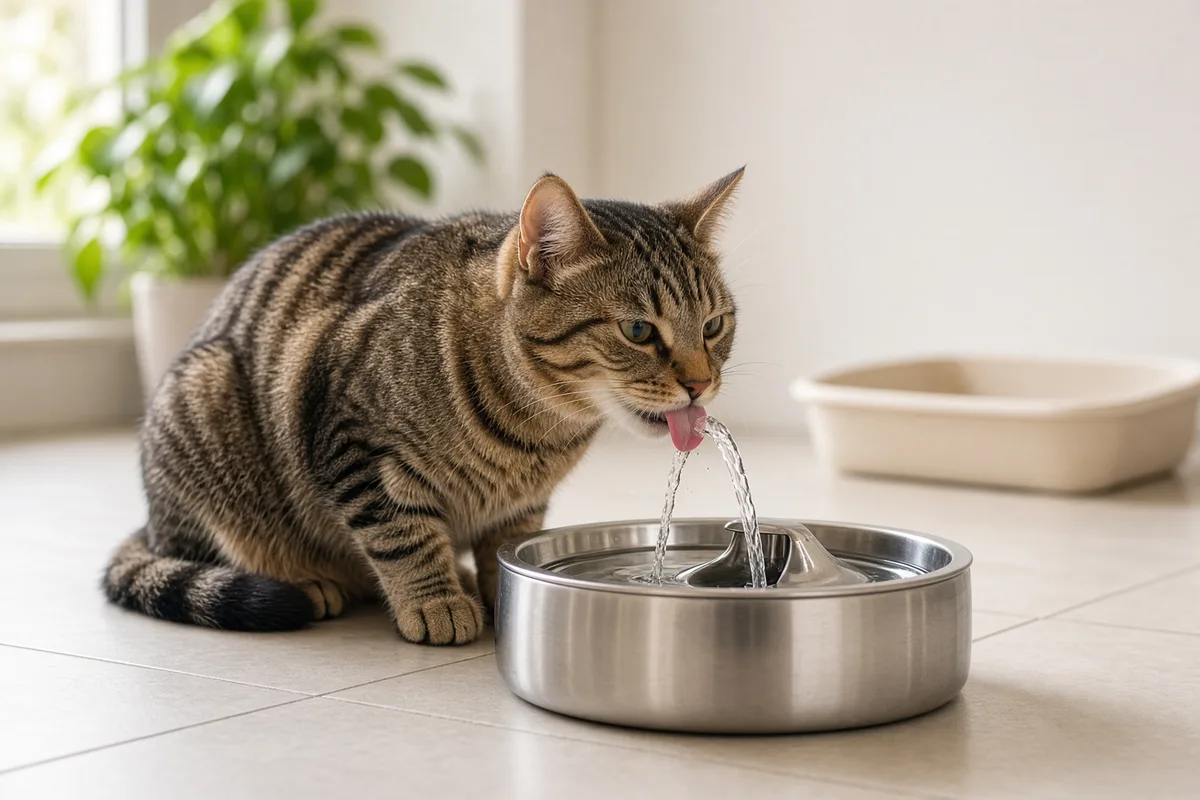
A cat straining in the litter tray and producing nothing is not constipated. In a male cat it is very likely a blocked urethra, and that is one of the few things on this site where the difference between going tonight and going tomorrow morning is the difference between a cat that comes home and one that does not.
What is actually happening
The urethra — the tube from the bladder out — is long and narrow in a male cat and much shorter and wider in a female. That single piece of anatomy is why this is overwhelmingly a male cat's disease.
A plug of crystals, mucus and inflammatory debris, or a small stone, lodges in that tube. Urine cannot leave. The bladder fills and keeps filling, because the kidneys do not stop producing just because there is nowhere for it to go.
From there it becomes a chemistry emergency rather than a plumbing one. Potassium builds up in the blood because it is normally excreted in urine, and potassium is what slows and eventually stops the heart. Waste products the kidneys cannot clear rise with it. The bladder wall, stretched past what it can take, can tear.
Untreated, most blocked cats die in somewhere between twenty-four and seventy-two hours. Cats that reach a vet and are unblocked have a good prognosis — this is a very treatable emergency, and the treatment is not exotic.
The reason it kills cats anyway is that the early signs look like a behaviour problem.
The signs, and the one everybody misreads
Repeated trips to the litter tray with little or nothing produced. This is the first sign and it is the one that gets read as constipation, as a urine infection that will pass, or as the cat being difficult.
Straining, and crying or growling while straining. A cat that vocalises in a litter tray is telling you something specific.
Urinating outside the tray, often somewhere cool and smooth — a bath, a sink, a tiled floor. This is not spite and it is not a training lapse. A cat that associates the tray with pain goes somewhere else.
Over-grooming the genital area, and blood in what little urine appears.
Then, as it progresses: hiding, refusing food, vomiting, a hard painful abdomen, and lethargy that turns into collapse. A cat at that stage is hours from dying.
The test at home is simple. If a male cat has made several trips to the tray and you have not seen a normal puddle of urine in twelve hours, that is a vet visit tonight, not in the morning. Out-of-hours fees are unpleasant. They are less unpleasant than the alternative, and every emergency vet would rather see a cat that turned out to be fine.
What the vet does
The bladder is felt first. A blocked cat has a bladder the size and firmness of an orange, and that finding alone usually settles the diagnosis.
Bloods go off to see how high the potassium has climbed, because that decides how urgently the heart needs supporting and whether the cat is stable enough for an anaesthetic.
The cat is sedated or anaesthetised and a catheter is passed to relieve the obstruction, flushing the plug back into the bladder. The catheter usually stays in for a day or two while the bladder recovers, with intravenous fluids running to flush the kidneys and correct the chemistry.
Imaging looks for stones, which change what happens next: some dissolve on a prescription diet and some have to come out surgically.
For a cat that blocks repeatedly, there is a surgery — perineal urethrostomy — that shortens and widens the urethra to something closer to a female cat's. It is a last resort rather than a first move, and cats do well after it.
Expect a few days in hospital and a bill that reflects it. Ask about payment plans rather than waiting: almost every practice has one, and almost nobody asks until afterwards.
Reducing the risk
Get water into the cat. This is the single most effective thing, and it is mostly about food: a cat on wet food takes in far more water than one on dry, because a cat's thirst drive is weak and evolved for prey that was about three quarters water. A cat on dry food alone does not make up the difference by drinking.
More water bowls, away from the food, and not in corners. Some cats will only drink from a running fountain, and for a cat with a history of blocking a fountain is worth the noise.
More litter trays than cats, cleaned more often than feels necessary. A cat holding urine because the tray is unpleasant is a cat concentrating it.
Keep the weight down. Overweight, indoor and inactive is the risk profile, and all three are things you control.
Take stress seriously, because a large share of these cats have no crystals or stones at all — the inflammation is idiopathic and stress-linked. A new cat in the house, building work, a move, a change of routine: these show up in bladders. Vertical space, hiding places, predictable feeding and a plug-in pheromone diffuser all help more than they sound like they should.
And if your cat has blocked once, ask about a prescription urinary diet and stay on it. Recurrence is common, and a diet is a cheap way to change the odds.