The four weeks before the fish go in
4 min read · Updated
 Fish
Fish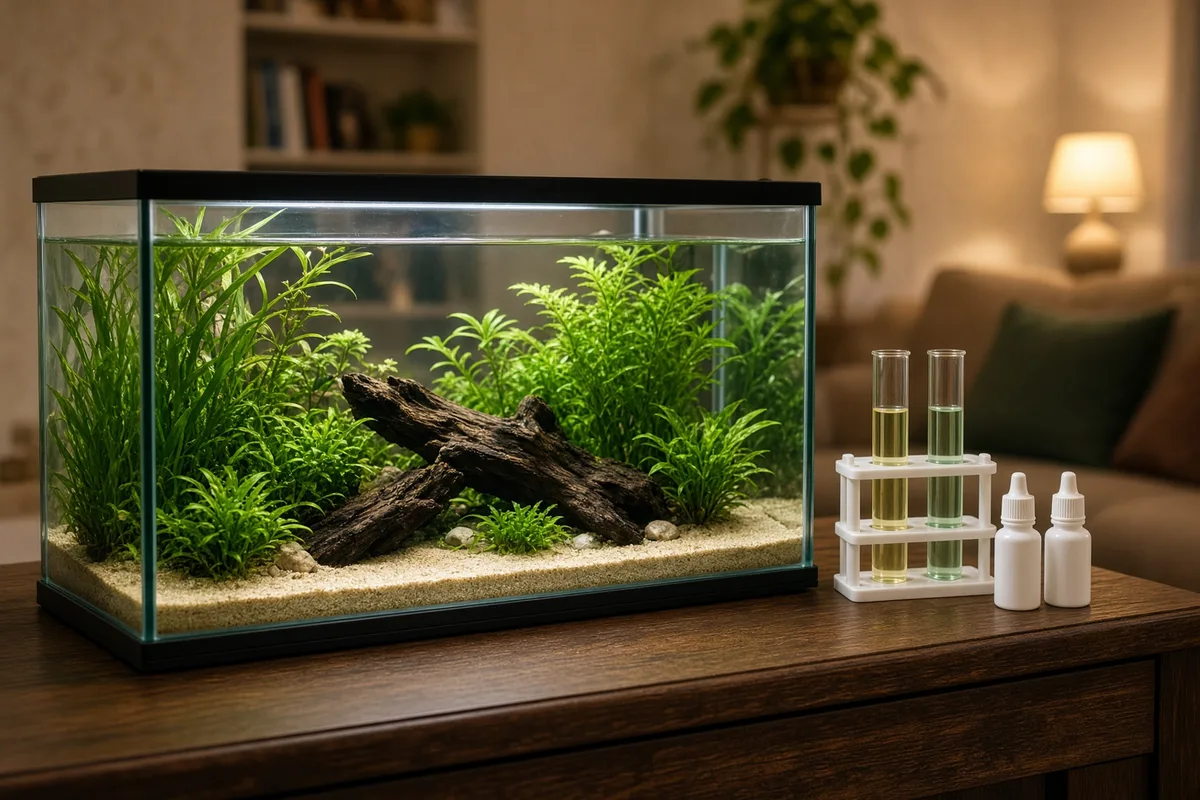
A new aquarium is not a bowl of water waiting for fish. It is a filter waiting for bacteria, and until that bacterial population exists the tank cannot process what fish produce. Nearly every first tank that goes wrong goes wrong for this one reason, and it is entirely avoidable by doing nothing for a month.
The nitrogen cycle, in plain terms
Fish excrete ammonia. So does uneaten food, and so does anything that dies in the tank. Ammonia is acutely toxic to fish and does its damage to the gills, and there is no safe level of it in an aquarium.
In an established tank, ammonia never accumulates, because two groups of bacteria living in the filter media consume it. The first converts ammonia to nitrite. Nitrite is also toxic. The second converts nitrite to nitrate, which is far less harmful and is removed by water changes and taken up by live plants.
That chain is the whole reason a filter exists. The sponge and ceramic media in it are not there to strain the water — they are there as surface area for bacteria to colonise. A filter with brand-new media in a tank of tap water is a house with nobody living in it.
Those bacteria take weeks to establish, not hours, and they cannot be hurried much. A tank filled on Saturday cannot process ammonia on Sunday, whatever the box says.
This is also why replacing all your filter media at once is a mistake, and why rinsing it under a hot tap is worse: both throw away the colony the tank depends on.
Cycling with no fish in the water
Set the tank up completely — substrate, hardscape, plants, heater, filter — and fill it with dechlorinated water. Chlorine and chloramine in tap water kill the bacteria you are trying to grow, so a dechlorinator goes in first.
Run the heater at the temperature the fish will eventually live at. Bacteria establish faster warm.
Then add an ammonia source, because bacteria need feeding. Bottled pure ammonia dosed to around two parts per million is the controlled way. A pinch of fish food every day or two is the low-effort way, and works, though less predictably.
Seed it if you can. A squeeze of dirty sponge from an established, healthy tank, or a handful of its filter media, carries the bacteria you want and can cut weeks off the process. A friend with a mature tank is worth more here than anything sold in a bottle, though the better bottled starters do help.
Then test, and wait. Ammonia rises first, then falls as the first bacteria establish. Nitrite rises next, often alarmingly, then falls as the second group catches up. Nitrate climbs steadily throughout.
The tank is cycled when ammonia and nitrite both read zero and nitrate reads something. Typically three to six weeks. Do a large water change to bring the nitrate down, and then add fish — a few at a time, not all at once.
Testing, and what the numbers mean
Buy a liquid test kit, not paper strips. Strips are imprecise in exactly the range that matters and are the reason many people believe their tank is fine when it is not. A kit covering ammonia, nitrite, nitrate and pH is the single most useful purchase for a new aquarium.
Test every day or two while cycling and keep the readings written down. A cycle is a shape over time, and one number in isolation tells you very little.
Ammonia above zero in a tank with fish in it is an emergency: water change, stop feeding, and dose a detoxifier while you sort out the cause.
Nitrite above zero, the same.
Nitrate is the one you manage rather than eliminate. Keep it low with weekly partial water changes; live plants use it and reduce how much work those changes have to do.
Do not trust the shop test, or the tank's own clarity. Ammonia and nitrite are invisible, and the clearest water you have ever seen can be lethal.
One warning about pH and ammonia together: ammonia is far more toxic in alkaline water than in acidic water, because more of it exists in its free form. A reading of one part per million is a different problem at pH 6.5 and pH 8.2.
The mistakes that kill the first fish
Adding fish on day one. This is fish-in cycling, it means the fish live in their own ammonia for a month, and the survivors often carry gill damage for life. If it has already happened, the rescue is small daily water changes, minimal feeding and a detoxifier until the readings settle.
Buying a tank that is too small. A larger volume dilutes mistakes and is genuinely easier to keep stable. Nothing about a two-litre betta cube is beginner-friendly.
Overstocking, and stocking everything at once. Every fish added is more ammonia for the same bacterial colony, and the colony grows to match its food supply with a lag.
Overfeeding, which is the commonest ongoing error. What is not eaten in a couple of minutes becomes ammonia.
Cleaning the filter in tap water, or replacing all the media together. Rinse it in a bucket of the tank's own water, and swap media a piece at a time weeks apart.
Not dechlorinating a water change. It is the same mistake as day one, just later.
And trusting the fish shop that sells you fish on the same visit as the tank. Some are excellent. Enough are not that the test kit is the only referee worth having.